
Judas?
It is exactly 60 years since Bob Dylan appeared with an electric band at the Newport Folk Festival and played three songs, Maggie’s Farm, Like a Rolling Stone and Phantom Engineer (an earlier version of It Takes a Lot to Laugh, It Takes a Train to Cry)
The crowd were dismayed. The folk purists were angry about the electric set and yelled ‘Judas’.
Sitting in front of my laptop aboard our new (to us), 48 year old boat in Valencia, Spain, I think I can hear a few cries of ‘Judas’ echoing round the world from the southern hemisphere.
Your editors have had a dream for about thirty years, of moving aboard a yacht and living a traveller’s life, facing the challenges and reaping the rewards of a more gentle nomadic existence, while at the same time following our passion for creating and sharing words and pictures. In our twenties we bought a 30ft boat and sailed it from Plymouth to France before dropping her mast, lining the the hull with tyres and travelling from north to south, via the French canals, We had a couple of years cruising in the Med. It was a wonderfully happy time and the memories it gave us have persisted and energised through thirty years of intense careers, child raising and mortgage payments .
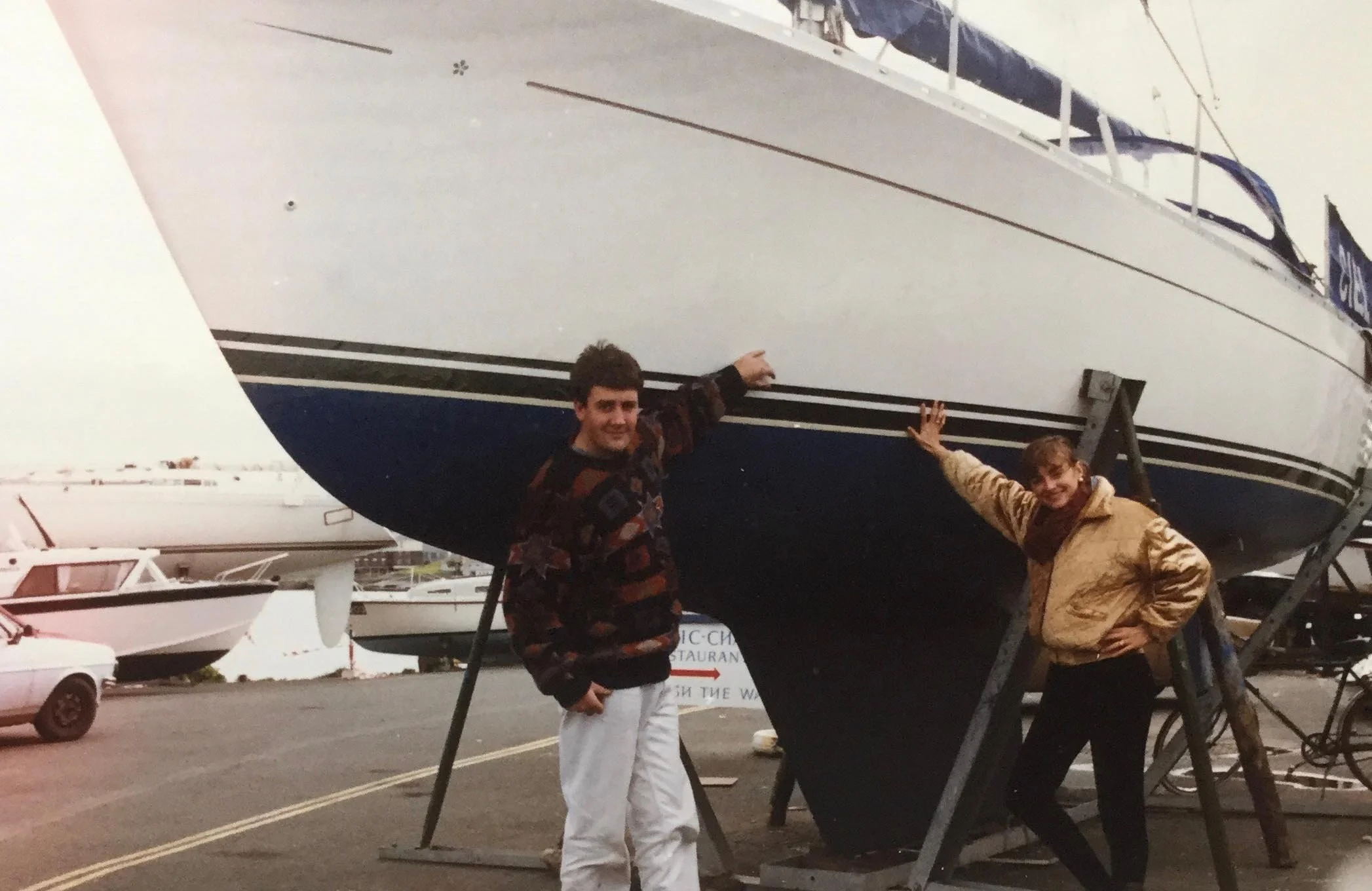
Plymouth 1992
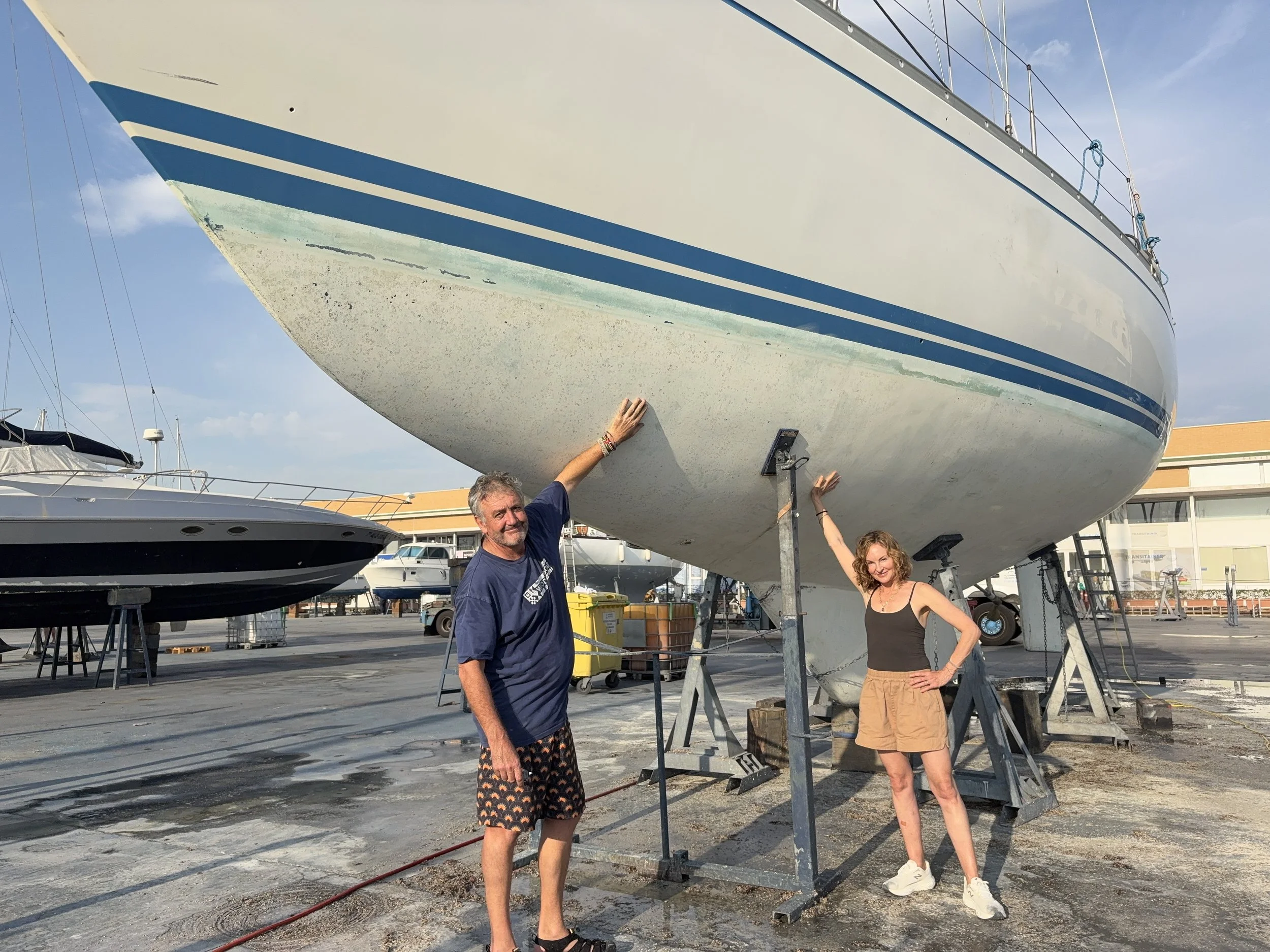
Valencia 2025
Last year we sold our beloved third boat of 24 years, FAIR WINDS. It was time to try to make the dream of building on that early adventure into a reality. And although extremely capable, FAIR WINDS wasn’t the right boat. With very limited space, basic systems and minimal comfort, she made life a little hard. So after the sale, the hunt began. Our requirements were quite demanding. The new boat would have to be of shallow draft. She had to be a proper sailing boat, not a motor sailor. She had to be beautiful and safe with good spaces to set up for us both to write. She had to have good provenance. And most importantly we had to be able to pay for her and look after her without bankrupting the family!
A few boats came close. Perhaps MARNIE (which we heard this week is still on the market) came closest, but she was a bit big, and the strong American dollar wasn’t doing us any favours. There were other great boats with restoration potential but we wanted to go now, not in three or four years time.
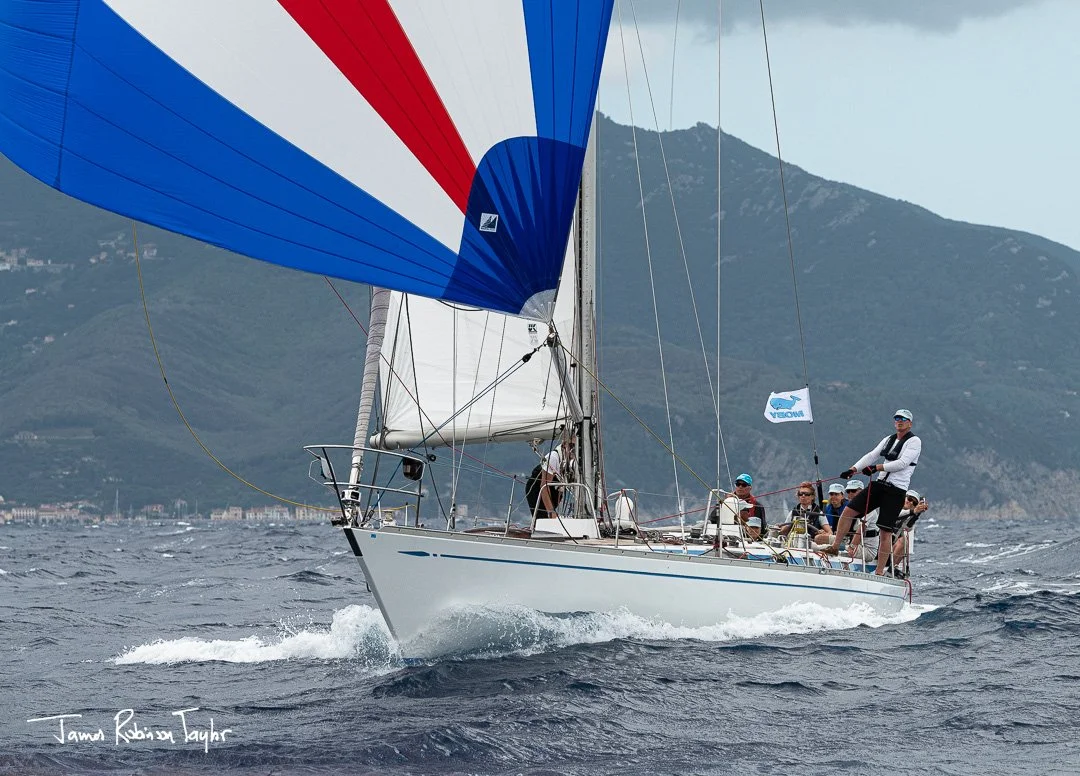
In May this year we saw an advertisement for an S&S 47CB Swan designed in 1974 and built in 1978. We had previously owned a timber S&S and we’d loved the centreboard on FAIR WINDS and of course we are fully aware of the Nautor Yard’s reputation. Buying a GRP boat was never really on our radar, but the more we thought about it the more it seemed to make sense. We are story tellers not shipwrights, and we want the next few years to be about the places we get to and the people we meet, rather than the work we have to do to the boat. And to top it all off she was and is called MATILDA, so how could we not at least take a look.
We organised a survey and flew to Palma, Majorca to see her. The vendors are likeminded sailors and I think we can now call them our friends, which is a rare outcome from selling and buying a boat. The negotiations were simple and good natured. Peter and Meli were transparent about what needed to be done and the amount of work they had put into her. They also added a clause to the contract stating that if and when she ever comes up for sale again they should be given the first right of refusal. We spent a couple of days and late nights together and really, the whole experience was incredibly special.
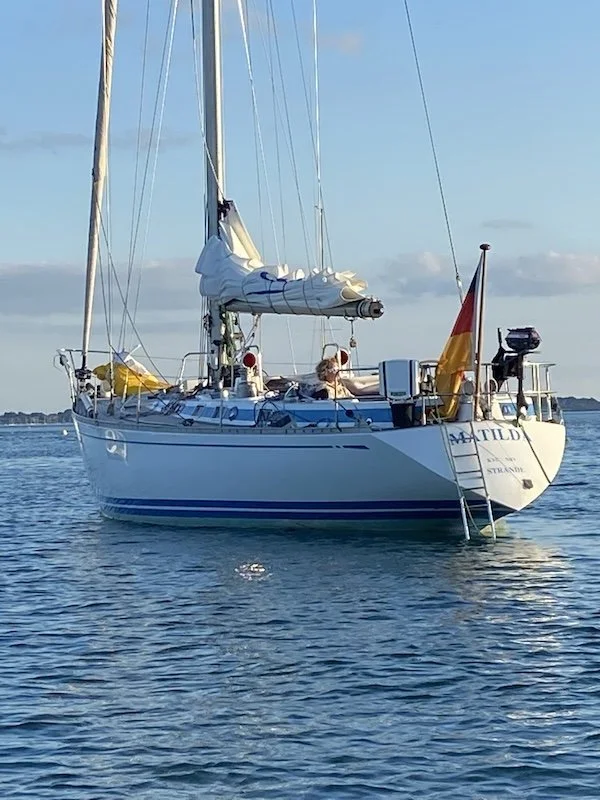
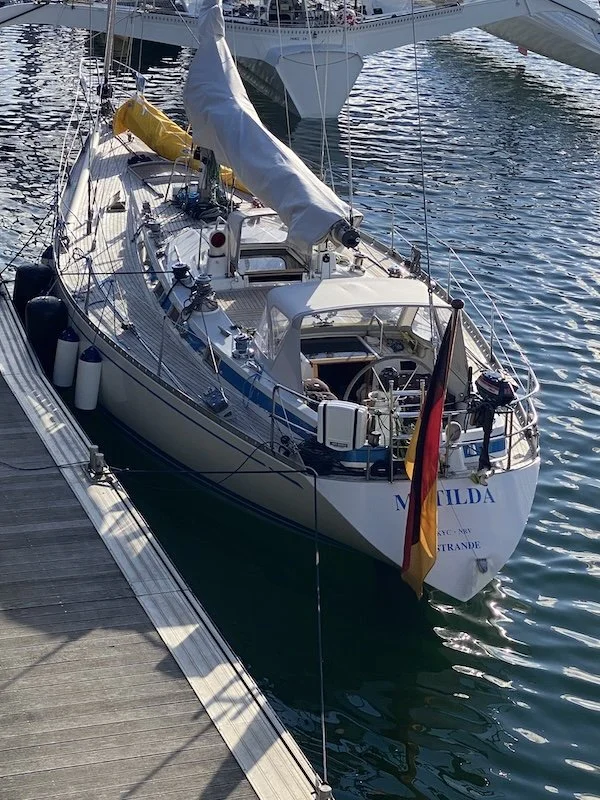

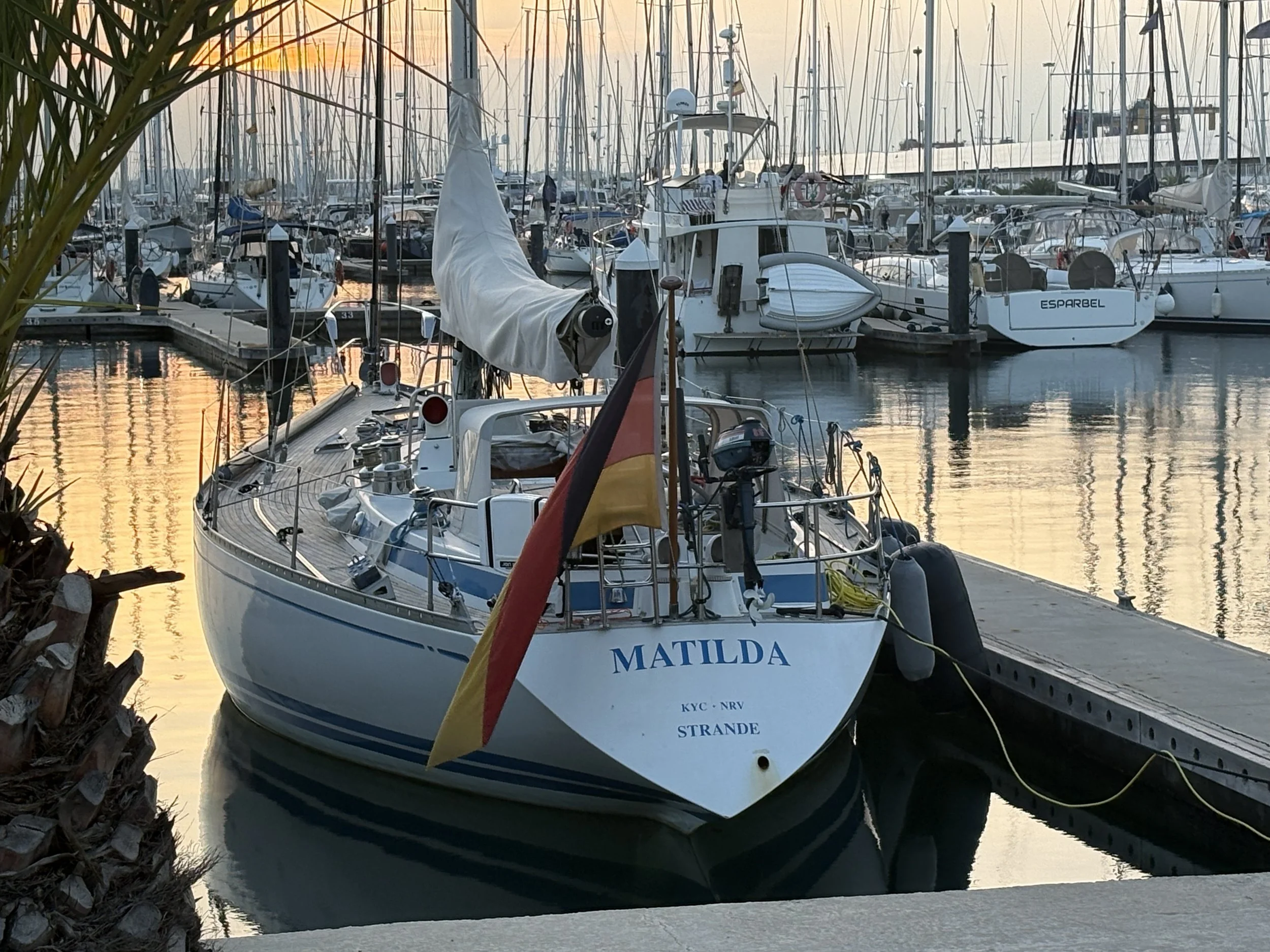
So we returned to Australia to pack up our lives. The house needed to be rented, a new home had to be found for our beloved dog, immediate family had to be persuaded that what we were doing was not completely crazy, and friends had to be farewelled and encouraged to come and visit. After a month of sorting, we packed 120kgs of possessions into nine cases and climbed aboard a flight from Melbourne to Madrid. On arrival, a four hour drive through rolling hills covered in vineyards and olives groves brought us to Spain’s third biggest city, where MATILDA lay waiting in the marina, near the Real Club Náutico de Valencia.
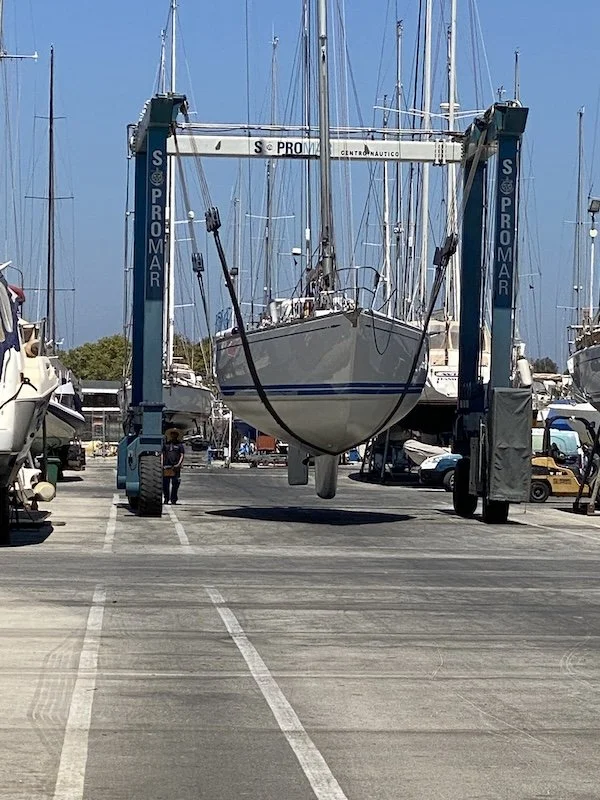
That was on Saturday. It’s now Thursday and a lot has happened. Every locker has been emptied, and refilled, she has been slipped and cleaned under the water, a holding tank, a water maker and Starlink have been installed. We have visited IKEA, twice. The 120kgs of luggage have disappeared somewhere into the vessel, and we are almost ready to make the most of what’s left of the northern summer. And all this with daytime temperatures hovering around 40°C.
At this stage the long term plans are for another year in the Med in 2026 and then a slow trip home, perhaps with a stop in the Baltic before the real ocean passage begin. As I said before, this is day five onboard of what might be a ten year odyssey. We need to slow down and understand what we have done, and learn to live with our new normal!
We invite you to metaphorically come on the journey with us - watch and read this space.
What this means for SWS
It was always our intention to keep SWS going whatever boat we moved aboard. I’m no friend of Elon’s, but Starlink allows us to do that. Obviously running an online magazine called Southern Woodenboat Sailing from a GRP boat has its contradictions, but I can get over that if you can!
We plan to still bring you content steeped in the values of the wooden boat sailing world, and if there the odd article about a lovely craft made from a different sort of carbon then we hope that’s OK with you! But what’s for sure is that the values of authenticity, community, history and adventure won’t change a bit, as we move forward aboard MATILDA.
Fair winds.
Mark and Sal
SV MATILDA S&S 47 // Currently lying Valencia Mar
A little bit bout the S&S Swan 47 CB
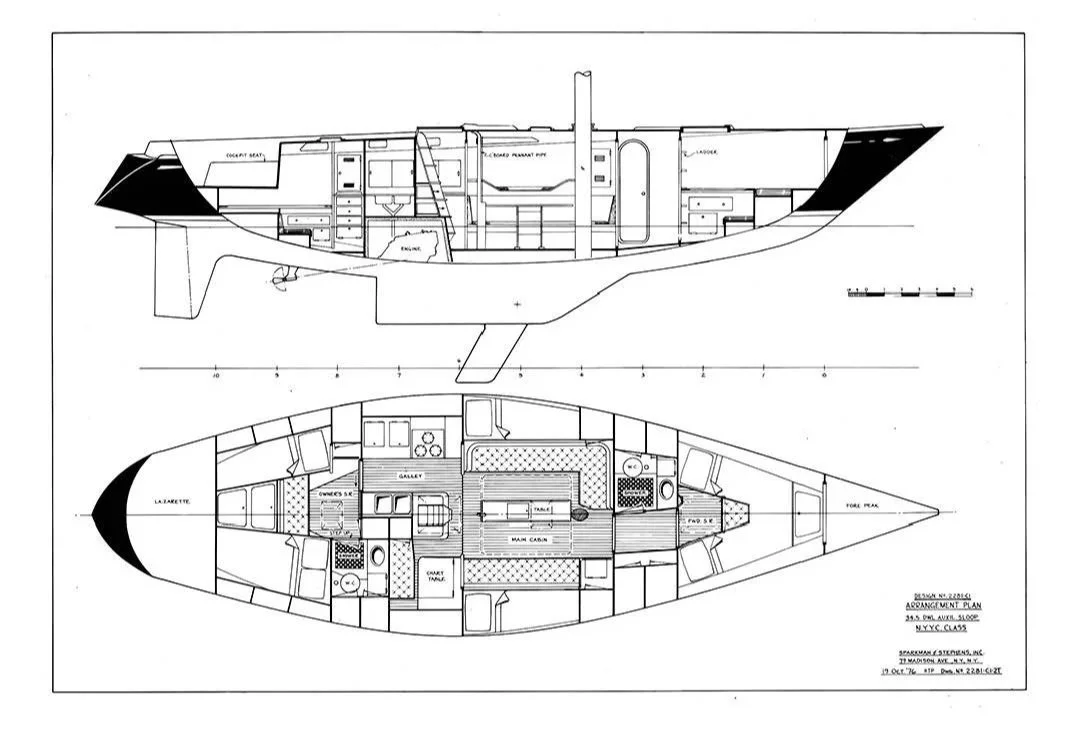
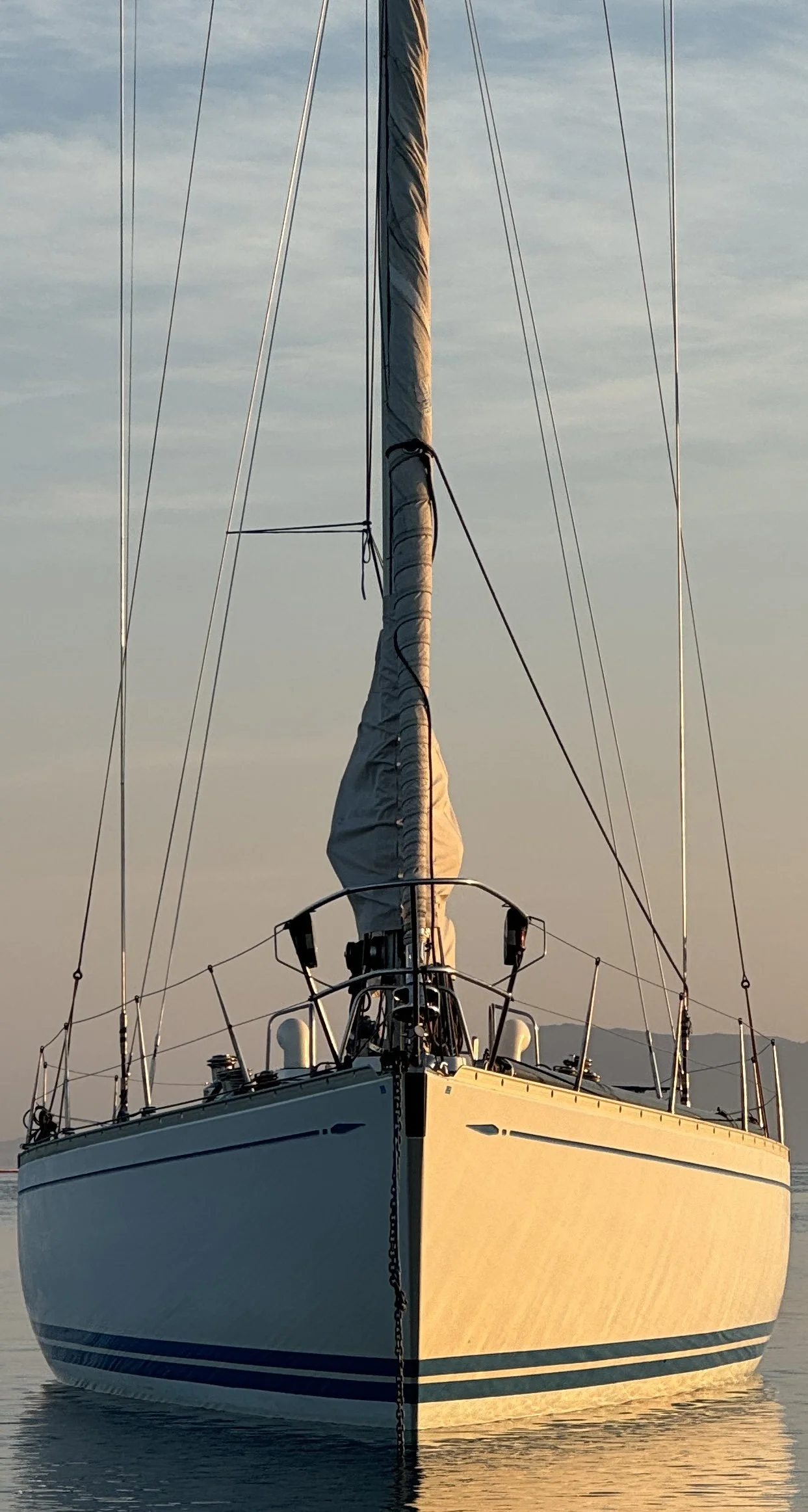
The Swan 47 design was built between 1974 and 1985 and stand as one of the quintessential yachts from Nautor’s collaboration with Sparkman & Stephens. 70 hulls were built, but only 10 of these were the centreboard variant This version often referred to as the Swan 47-2 S&S CB or NYYC 48, features a retractable keel that gives the yacht a draft of 1.8 m with the centreboard up and 2.4 m when fully down.
Measuring 47ft 10in overall, with a 36ft 4in waterline and a beam of about 13ft 10in, the centreboard variant is robustly constructed with fiberglass hull and lead ballast—displacing approximately 15,600kgs and carrying 8,000kgs of ballast. This combination lends it excellent seaworthiness, solid upwind performance, and striking stability.
Because only 10 of the centreboard versions were produced, they are uncommon and highly prized by traditional sailors. The design is celebrated for marrying the performance of a racer with the comfort expected of a cruising yacht.