
London and Turner
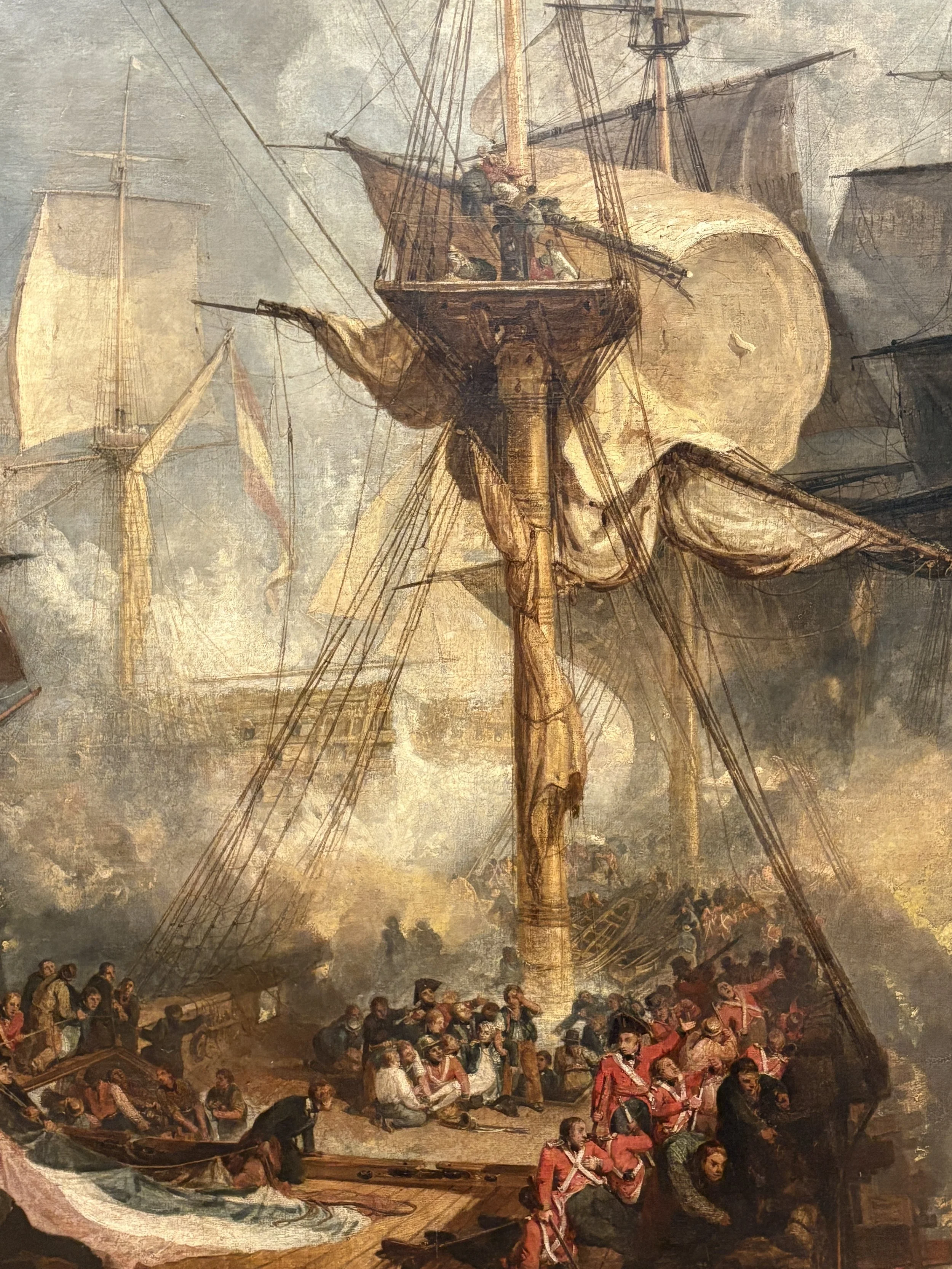
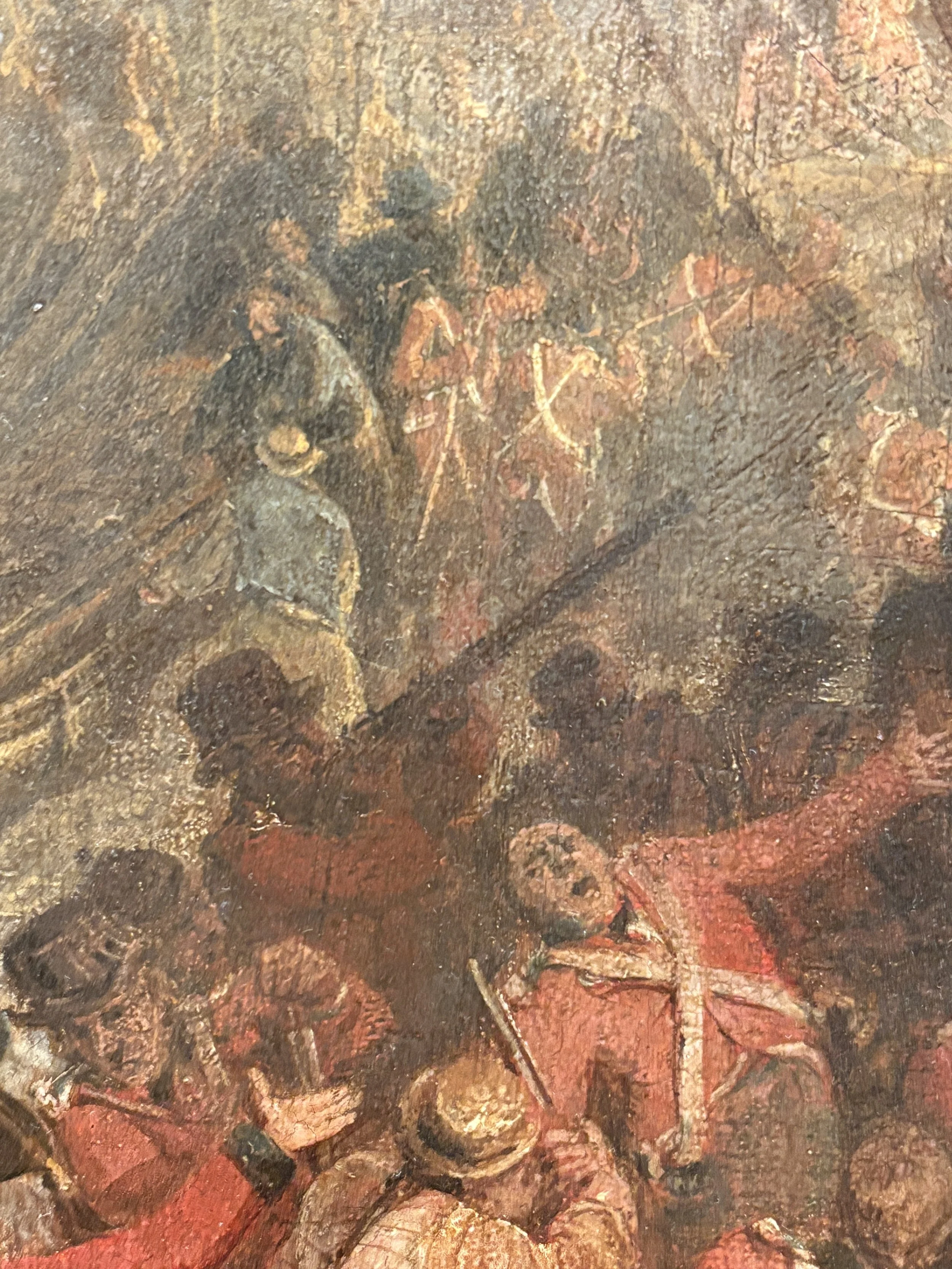
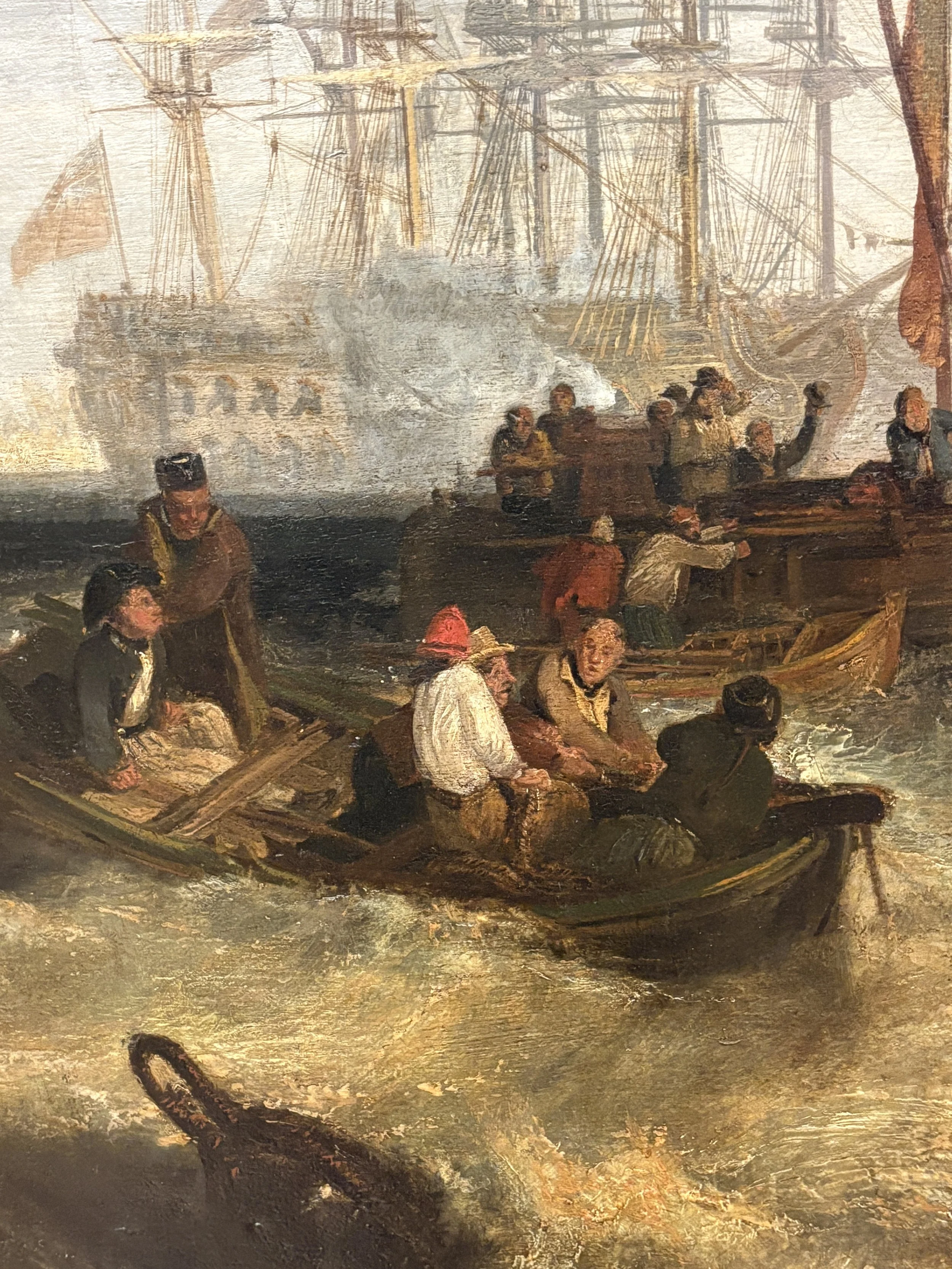
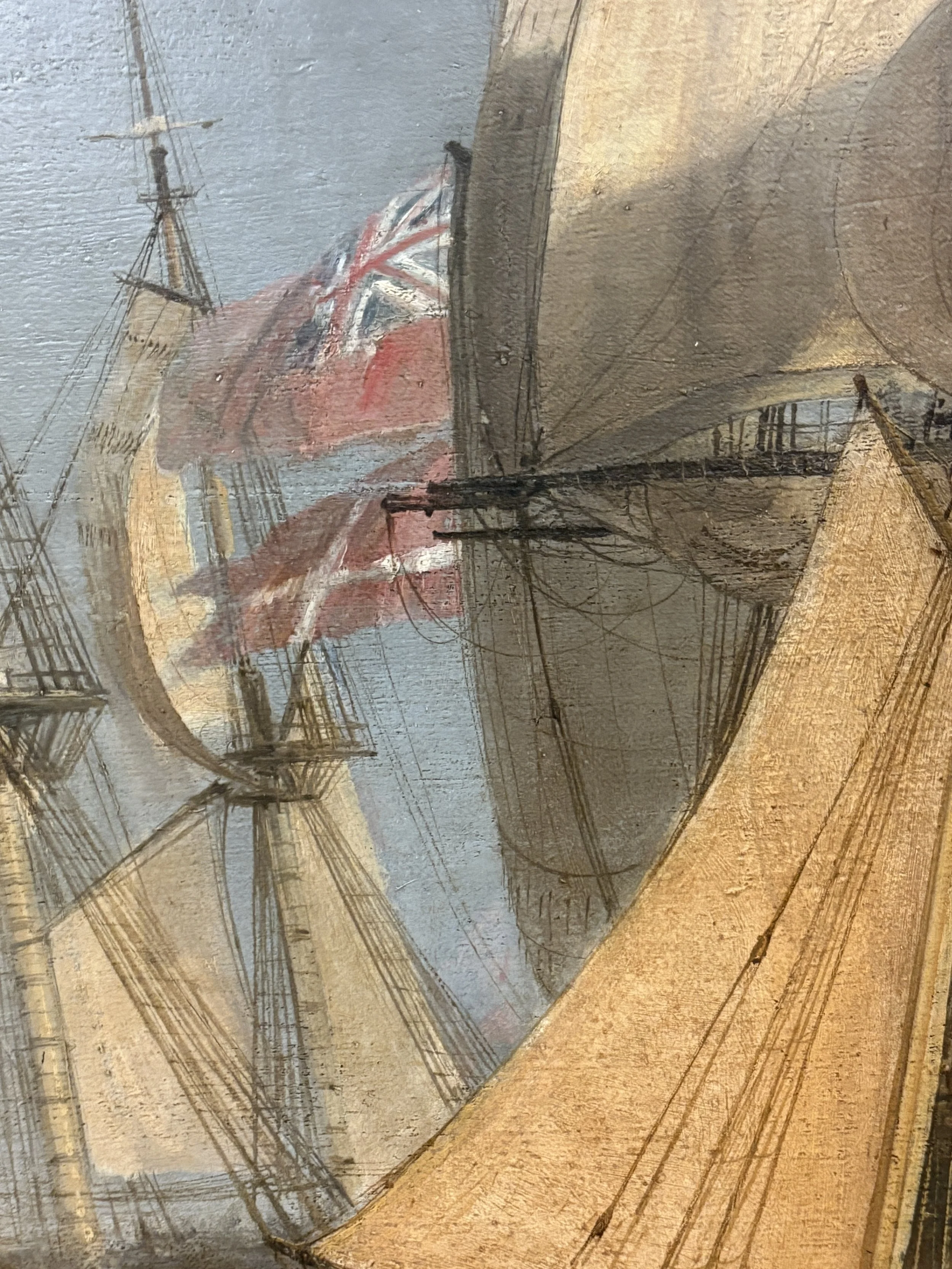
Thirty-five years ago, I used to live in London. Nowadays it’s a city of nearly nine million people, a little less than Sydney and Melbourne combined. It covers an area of 600 square miles twenty-five times the size of Manhattan Island. And the diversity of each area within Greater London might make you think that it is more than one country.
Everything in the city is now monetised, whether it be a swim in the ponds on Hampstead Heath (£5), a ride on a Lime Bike across town (£1 to unlock and then 27p per minute), sitting on a deckchair in St James Park (£2/hour) or using a public toilet (50p).
But there are some things that have improved since the days when in my mid-twenties, I lived here, starting out on the road to a career in photography. The coffee is better, the air is cleaner, the plumbing sometimes works, and despite five years of Brexit, the place feels more European.
So, with a few days to spend in the capital, I set out on my usual pilgrimage to find a new connection to the city, via the world of wooden boats. A tour of the second-hand bookshops in Soho leads down through Covent Garden to the Embankment on the north side of the Thames and along past Cleopatra’s Needle.
Skirting the Palace of Westminster, the tourist hoards thin and it’s a more peaceful stroll along the river through Victoria Tower Gardens, to the Tate Britain. This was my own very simple pilgrimage to see the collection of paintings by the artist JMW Turner, perhaps the greatest ever painter of Maritime life.
Turner was born in 1775 in Covent Garden, (the area I had just walked through), to a modest family—his father was a barber and wig-maker, his mother suffered from mental illness. From a young age, Turner showed an obsessive talent for drawing, and his father proudly displayed his son’s early sketches in the shop window. By the age of 14, he was admitted to the Royal Academy of Arts—already a prodigy in the making.
Though famous and respected, Turner wasn’t exactly sociable. He could be gruff, secretive, and deeply private. In later life, he often disappeared under aliases (he once went by “Mr. Booth”), living quietly in rented rooms near the Thames in Chelsea. Even his close friends were often kept at arm’s length.
Turner was obsessed with nature—especially storms, shipwrecks, light, and atmosphere. He is said to have lashed himself to the mast of a ship during a storm just to observe the sea’s fury firsthand (though that story is likely embellished, it certainly feels true). Whether sketching in the Alps, observing a sunrise over Venice, or chasing a storm across the English coast, Turner painted with a weather-watcher’s passion and precision.
He never married, though he had two daughters with his longtime mistress, Sarah Danby. His relationship with women remains ambiguous and largely undocumented. His mother’s mental illness haunted him, and he often carried a kind of emotional reserve—some say his art was how he coped with a world that felt too fragile and too fleeting.
Though eccentric, Turner was deeply committed to his legacy. He insisted that many of his best paintings be left to the British nation—what we now call the “Turner Bequest.” Over 300 oil paintings, 30,000 sketches and watercolours, and reams of notebooks ended up forming the heart of the Tate Britain’s Turner collection, housed in the Clore Gallery.
I had come to the right place!
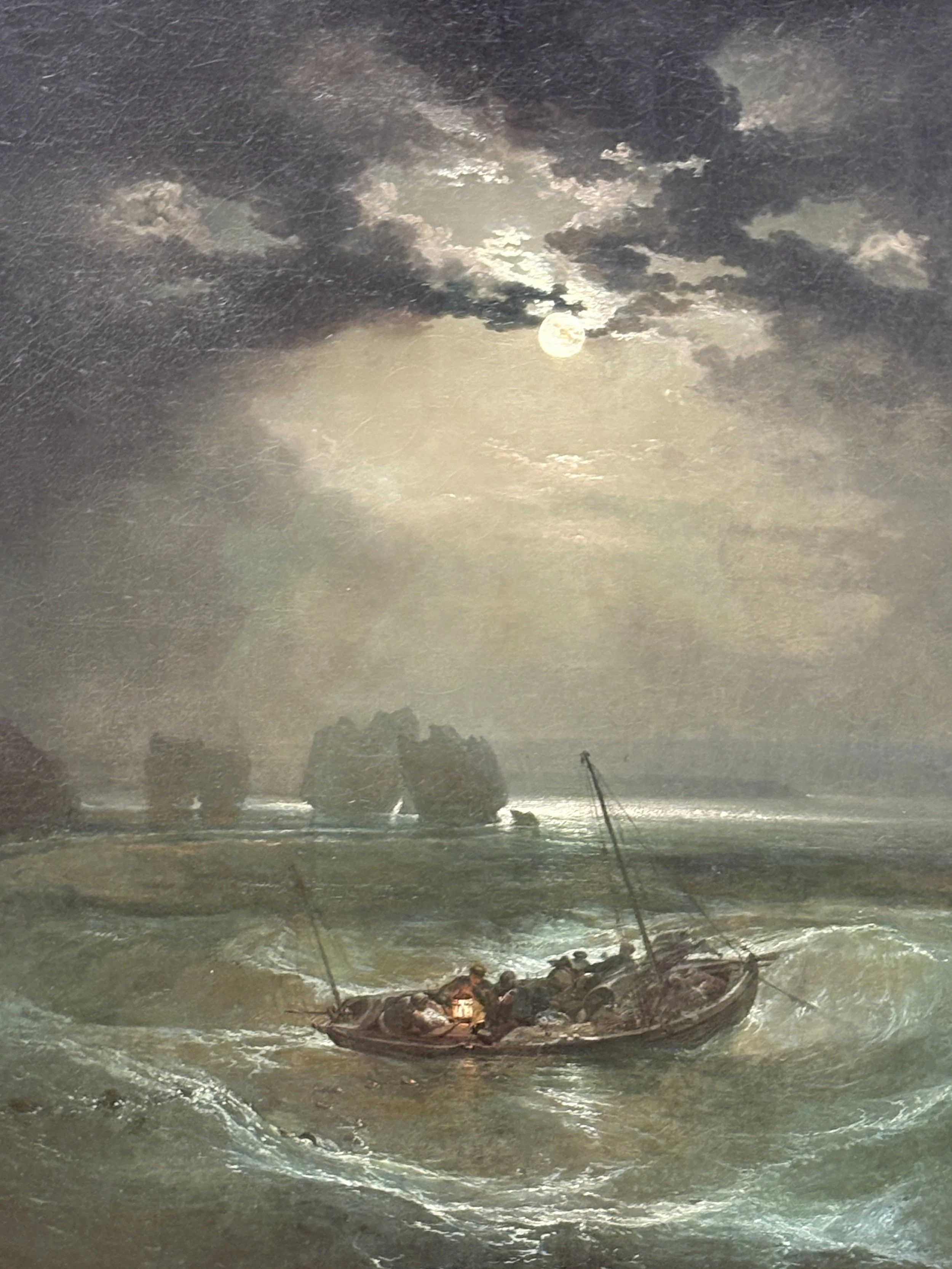
Fishermen at Sea, 1796, the first oil painting by J. M. W. Turner to be exhibited at the Royal Academy, in 1796
As you walk north up the imposing steps of the Tate Britain, it almost feels like you are entering a religious building. Huge spaces filled with whispering visitors, and shafts of light illuminating chosen sculptures.
Off to the right of the great central hall, the Clore Gallery is dedicated entirely to Turner’s maritime works. It’s in this room that I realise that Turner wasn’t just a painter of ships and harbours—he was a storyteller.
The paintings churn with energy. Ships fight to survive the wild, heaving waves. Apparently his use colour and movement was considered shocking at the time. You don’t just see his paintings, you feel them.
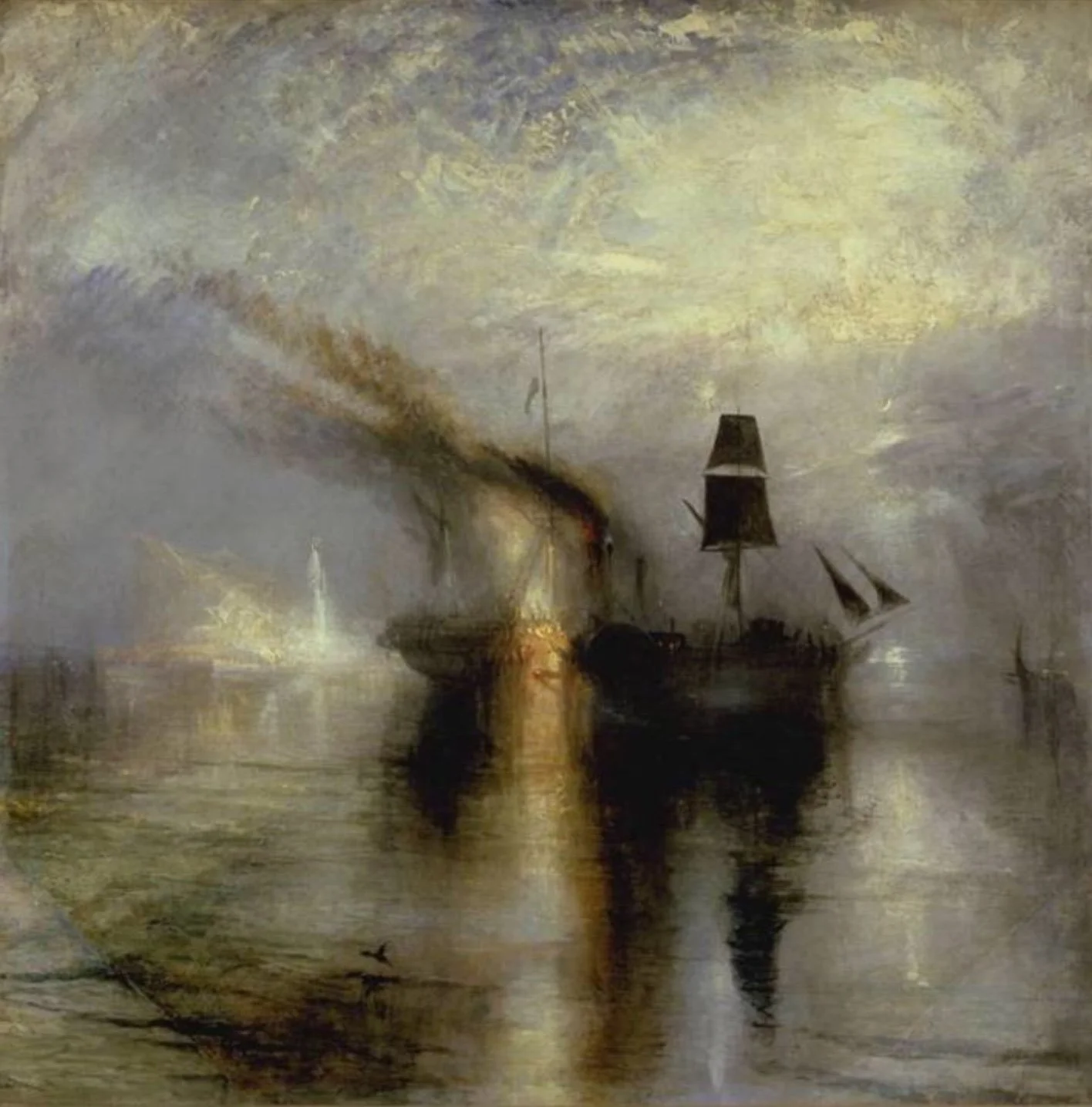
“Peace – Burial at Sea” from 1842. It’s typical of Turner’s inexplicably complex use of light and composition to evoke emotion and a story. It shows a ship in the central foreground, its sails silhouetted, emitting a trail of black smoke that billows into the air. It was painted as a tribute to Turner's contemporary, the Scottish painter Sir David Wilkie depicting Wilkie's his burial at sea off Gibraltar.
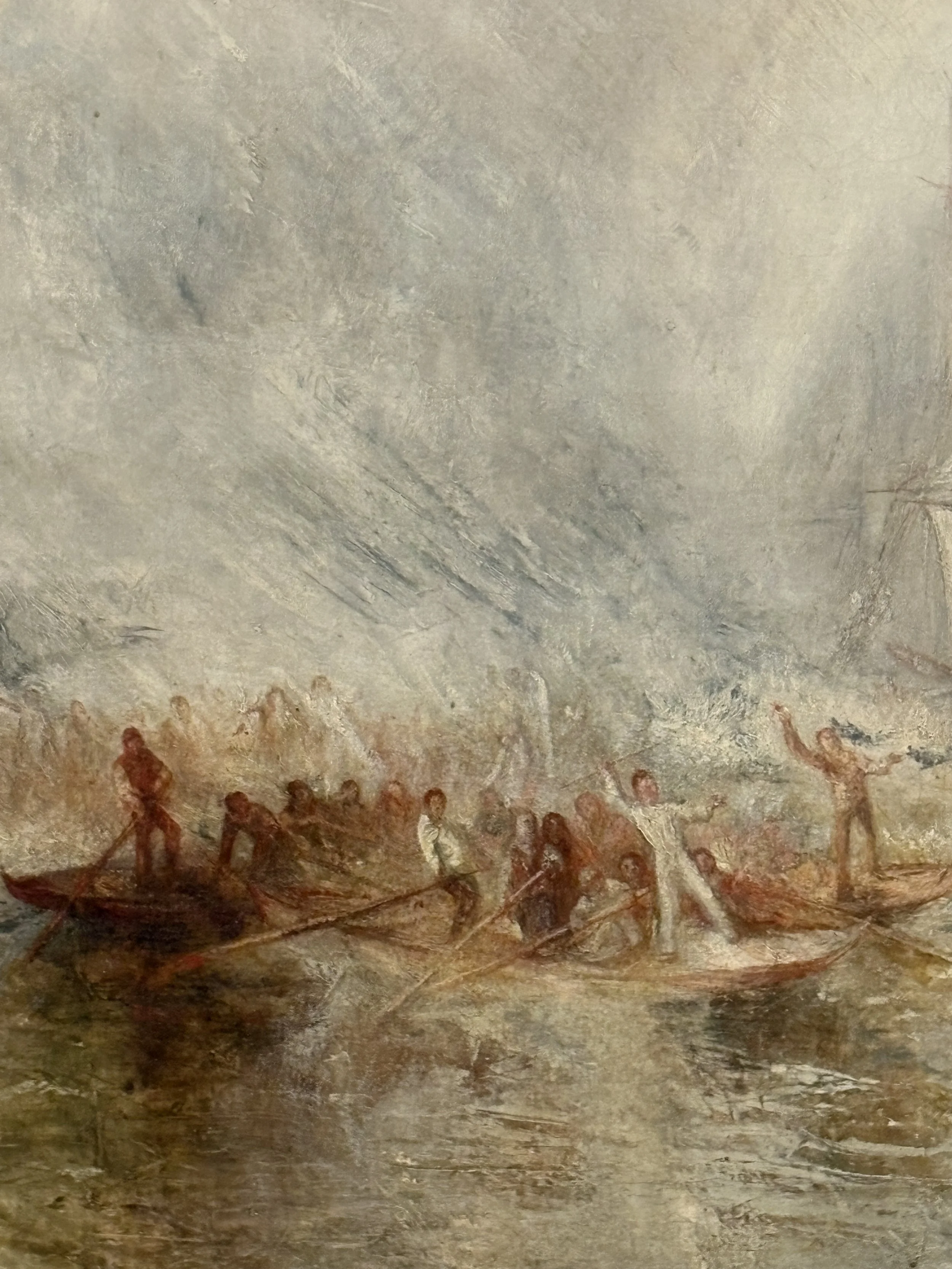
Though trained in traditional marine art, Turner often pushed the boundaries of realism. His later maritime works became more abstract, where detail gives way to impressionistic swirls of colour and movement, as in “Snow Storm: Steam-Boat off a Harbour’s Mouth” (1842).

Whether showing a heroic naval battle or a lone vessel lost in fog, Turner’s recurring theme seems to be how small we are in the face of nature.
After an hour I need the relatively fresh air of a beautiful London summer day and stroll across Lambeth Bridge to the south side of the Thames. It’s an unremarkable structure but someone once explained to me that the bridge connects the Palace of Westminster on the north side to Lambeth Palace on the south—home to the Archbishop of Canterbury, the head of the Church of England. A subliminal link between the separated church and state.
As the river flowed inland under my feet with the rising tide, a few clouds were building up to the south east. The humid air hinted at the potential of thunder. I wondered if the ghost of JMWT would be gathering his brushes and heading down to the docks.