
Long Story Long
Digital environments like the one you are reading now, encourage us to rapidly shift focus — from apps, to notifications, to messages. Studies show people working at computers switch tasks between 40 seconds to 3 minutes on average. That doesn’t mean we can’t focus, but that our environment trains us to scan rather than linger.
Cognitive scientists argue that what’s happening is less a decline in attention, and more a shift: we’re becoming experts at fast filtering, skimming, and deciding what deserves deeper attention. In a sense, the brain is evolving for a world of overwhelming input. Even though we feel like we’re multitasking, research shows we’re actually just rapidly switching between tasks, and each switch comes with a mental cost. This is why frequent task-switching can increase mistakes and reduce memory of what was just done.
That’s why you should try to carve out of your day, enough time to read this very long, but very rewarding article in one of our favourite publications “The Conversation.” It’s part history, part detective story and part fairytale. I had never really understood the depth of influence that Viking Culture had across the northern hemisphere. I have a better idea now!
Vikings were captivated by silver – our new analysis of their precious loot reveals how far they travelled to get it
by Jane Kershaw
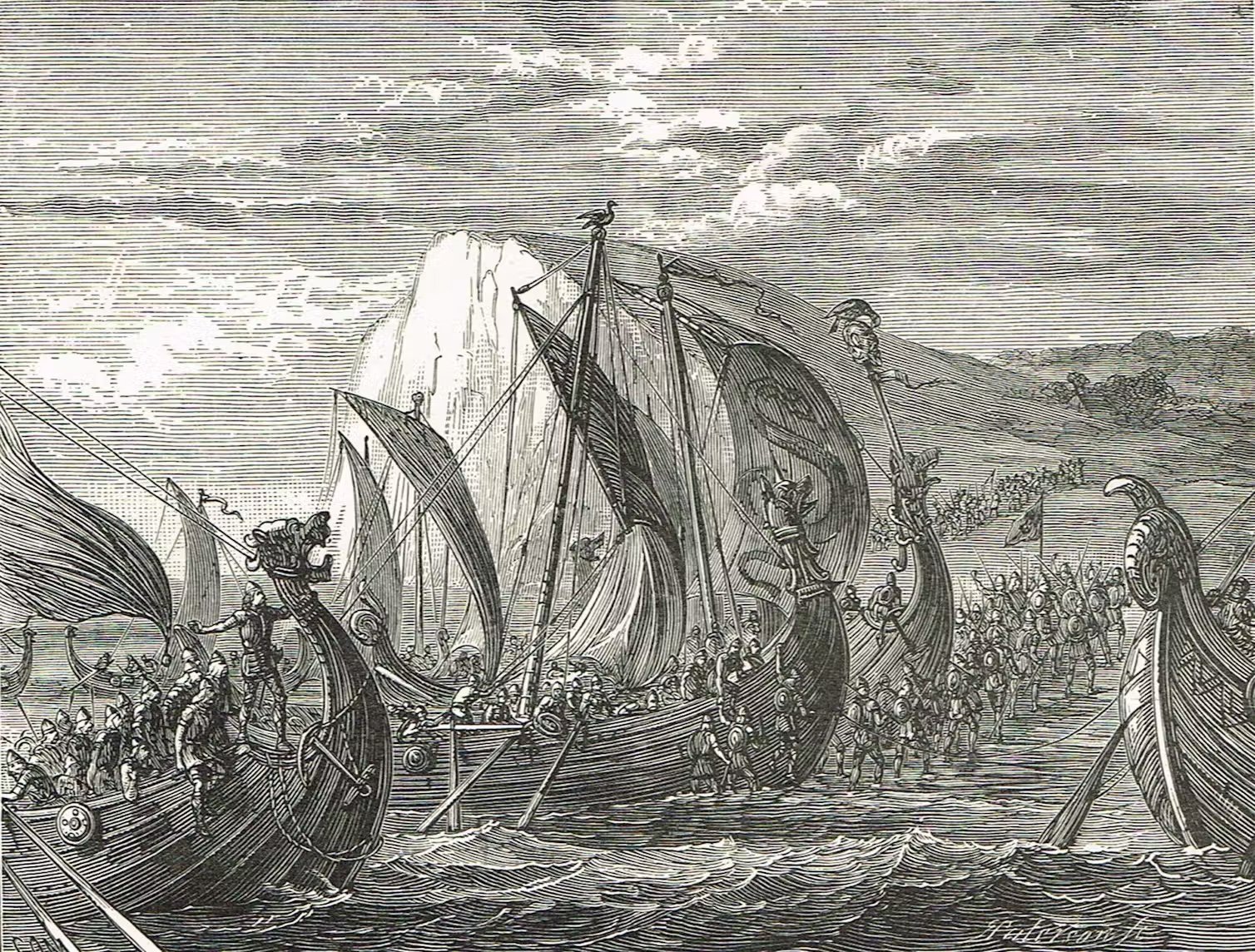
In 789, the first recorded landing of Vikings in England occurred in Dorset on the south coast.
In the archaeology galleries of the Yorkshire Museum, an incredible Viking silver neck-ring takes centre stage. The ring is made of four ropes of twisted rods hammer-welded together at each end, its terminals tapering into scrolled S-shaped hooks for fastening behind the neck. Weighing over half a kilo, it makes a less-than-subtle statement about the wealth and status of its Viking owner some 1,100 years ago.
The neck-ring was part of a large silver and gold hoard found in 2012 by metal detectorists Stuart Campbell and Steve Caswell near Bedale in North Yorkshire. As the first precious object out of the ground, it was initially mistaken by Campbell for a discarded power cable.
Large silver neck-ring found in the Bedale hoard. York Museums Trust

Six years later, I got the chance to analyse the Bedale hoard, as it is now known, for its isotopes and trace elements. Alongside the neck-ring and a gold Anglo-Saxon sword pommel (probably acquired in England by these Viking raiders), the hoard contained a spectrum of cast-silver artefacts spanning the Viking age: Irish-Scandinavian artefacts from Dublin, rings from southern Scandinavia, and many cigar-shaped bars or ingots that could have been cast anywhere.
As an archaeologist investigating the historical secrets held by jewellery such as this, picking up these heavy objects and turning them over in my hands was a visceral experience. I felt connected with the desires, ambition and sheer force of these invaders from the north who had wreaked havoc on communities in northern England around AD900.
Indeed, the entire Viking age (circa 750-1050) is often described as an “age of silver”. This form of wealth was so desired that its acquisition was a primary driver of the expansion out of Scandinavia that the Vikings are most famed for. To acquire it, they were prepared to risk their own lives – and take those of many others.