
Boats in Church
The best way to understand the layout of Marseille is to climb up a hill on the south side of the old port, to the Basilica of Notre-Dame de la Garde. It’s a twenty minute ascent through the beautiful canyons made by the mostly 19th century apartments leaning over the streets.
The view from the top is spectacular. The Basilica is a Catholic Church.. and churches frustrate me… the cost… the privilege… the deception…. But there was one redeeming feature. Hanging from the ceiling were strings of boats… like vast children’s mobiles, rotating slowly in the breathless atmosphere.
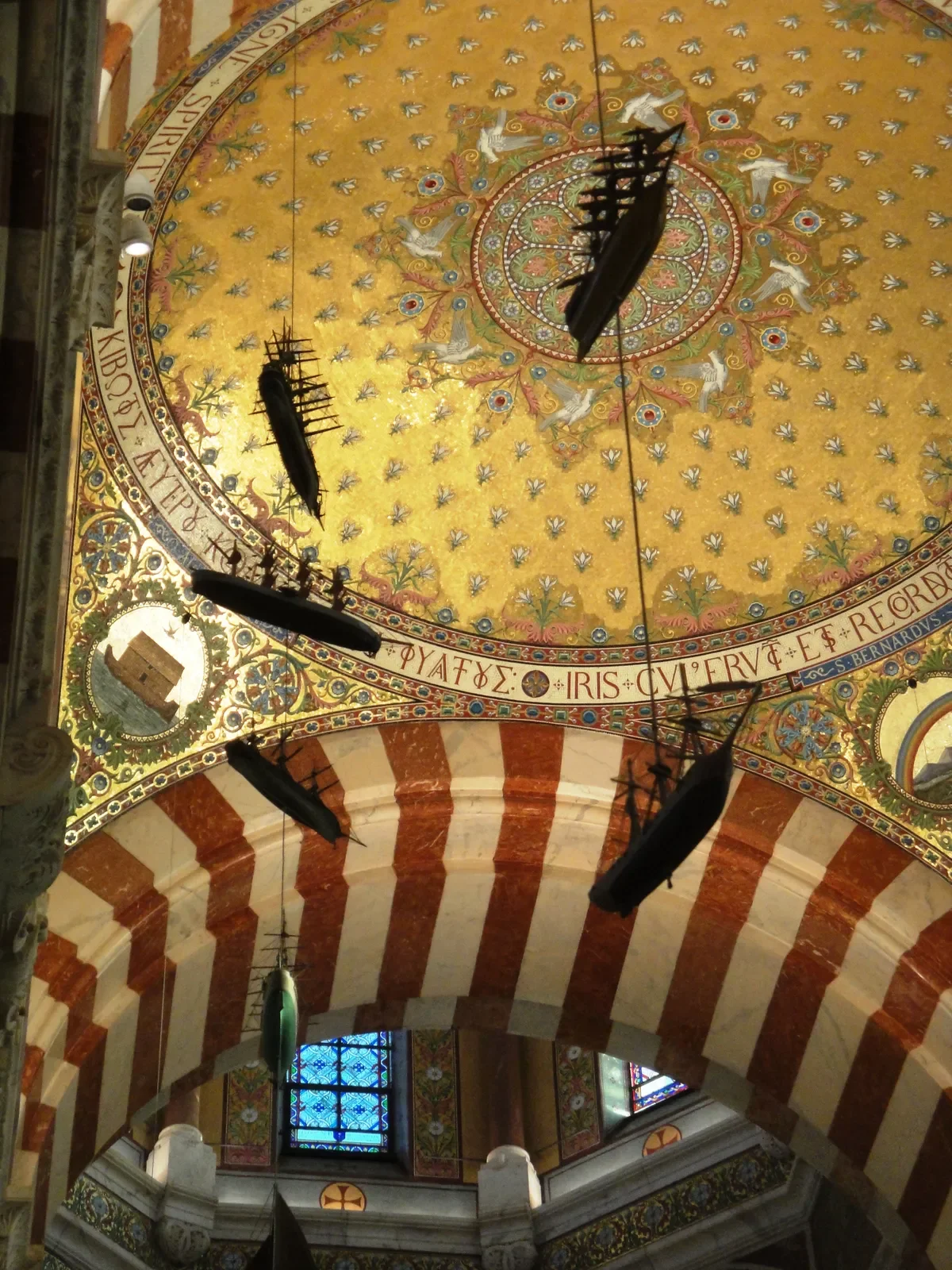
They’re votive offerings — some more than 200 years old — that residents of this Mediterranean port city continue to bring in gratitude to the Virgin Mary for everything from avoiding shipwrecks to successful rescues of migrants trying to make it to Europe on unseaworthy boats.
It’s estimated that the basilica’s collection of ex-votos, as the offerings are called, number around two and a half thousand, many of which are in storage. And that’s after those pre-dating the French Revolution were destroyed in the anticlerical violence that followed it.
The word ex-votos comes from the Latin ex voto suscepto, meaning “from the vow made.” It goes back to a pre christian, pagan world, when sailors would dedicate objects to the gods after surviving storms or voyages. Christianity inherited this custom, and in the Mediterranean, it became especially tied to the Virgin Mary, who was revered as the protectress of those at sea.
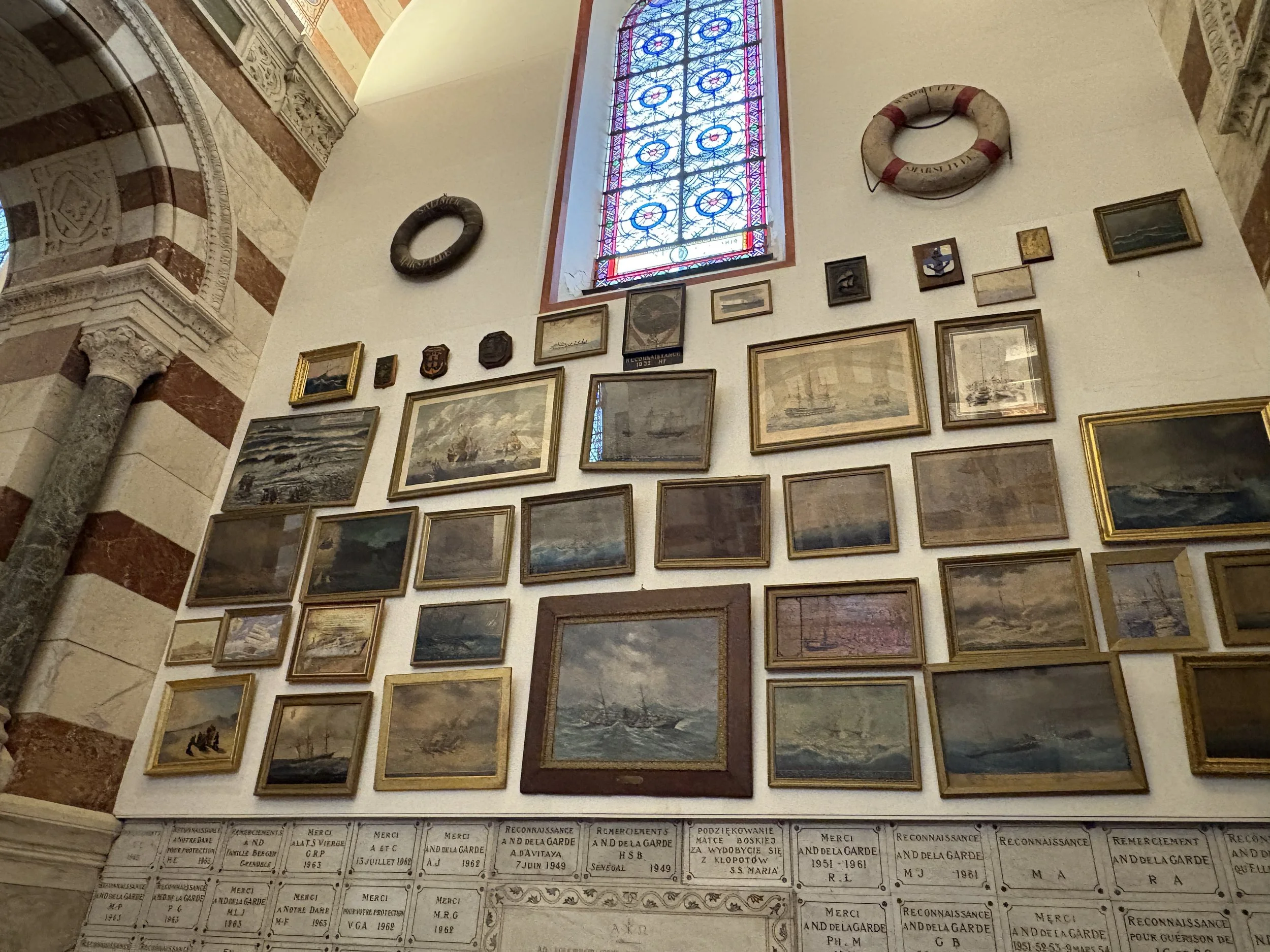
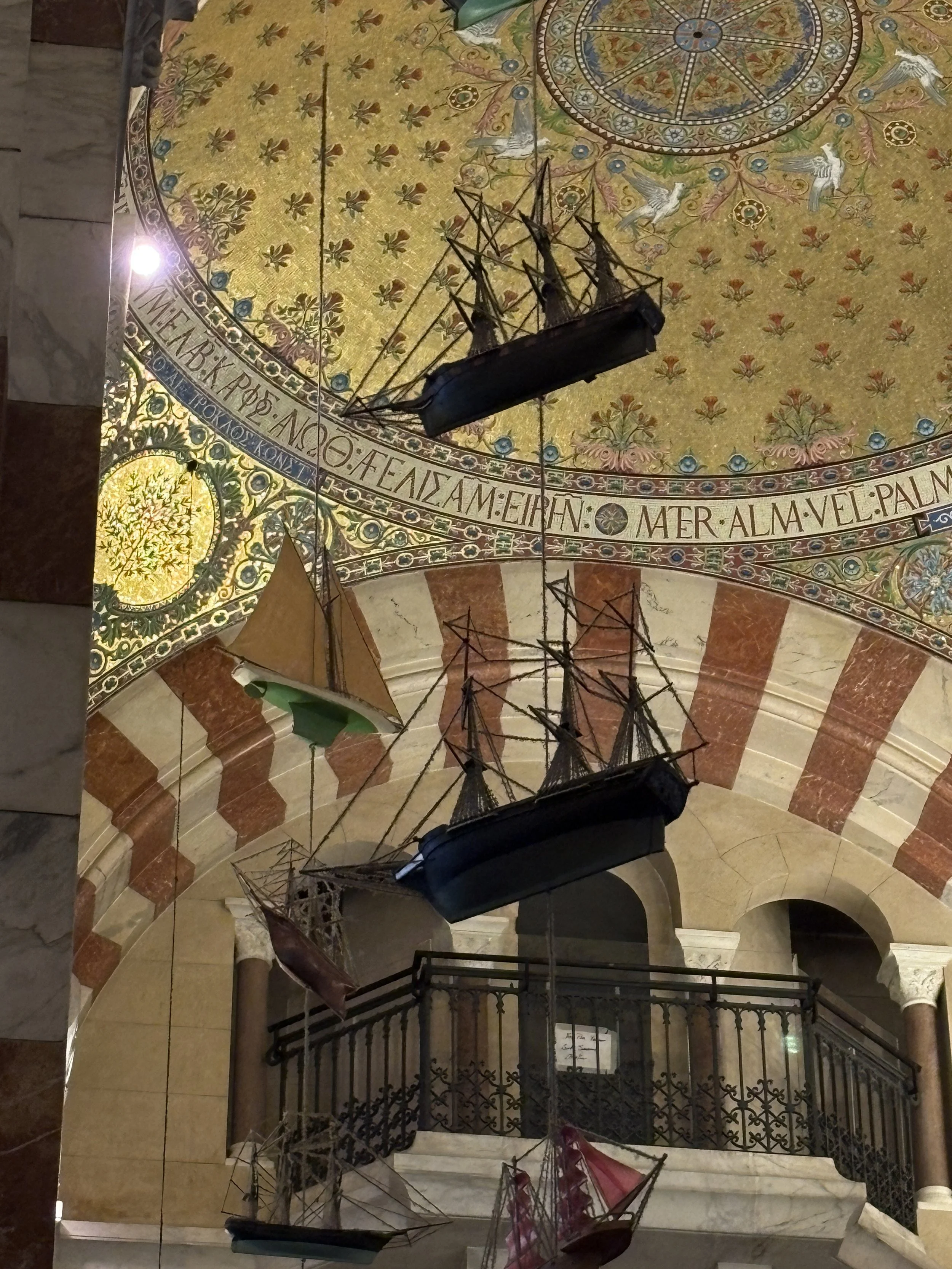

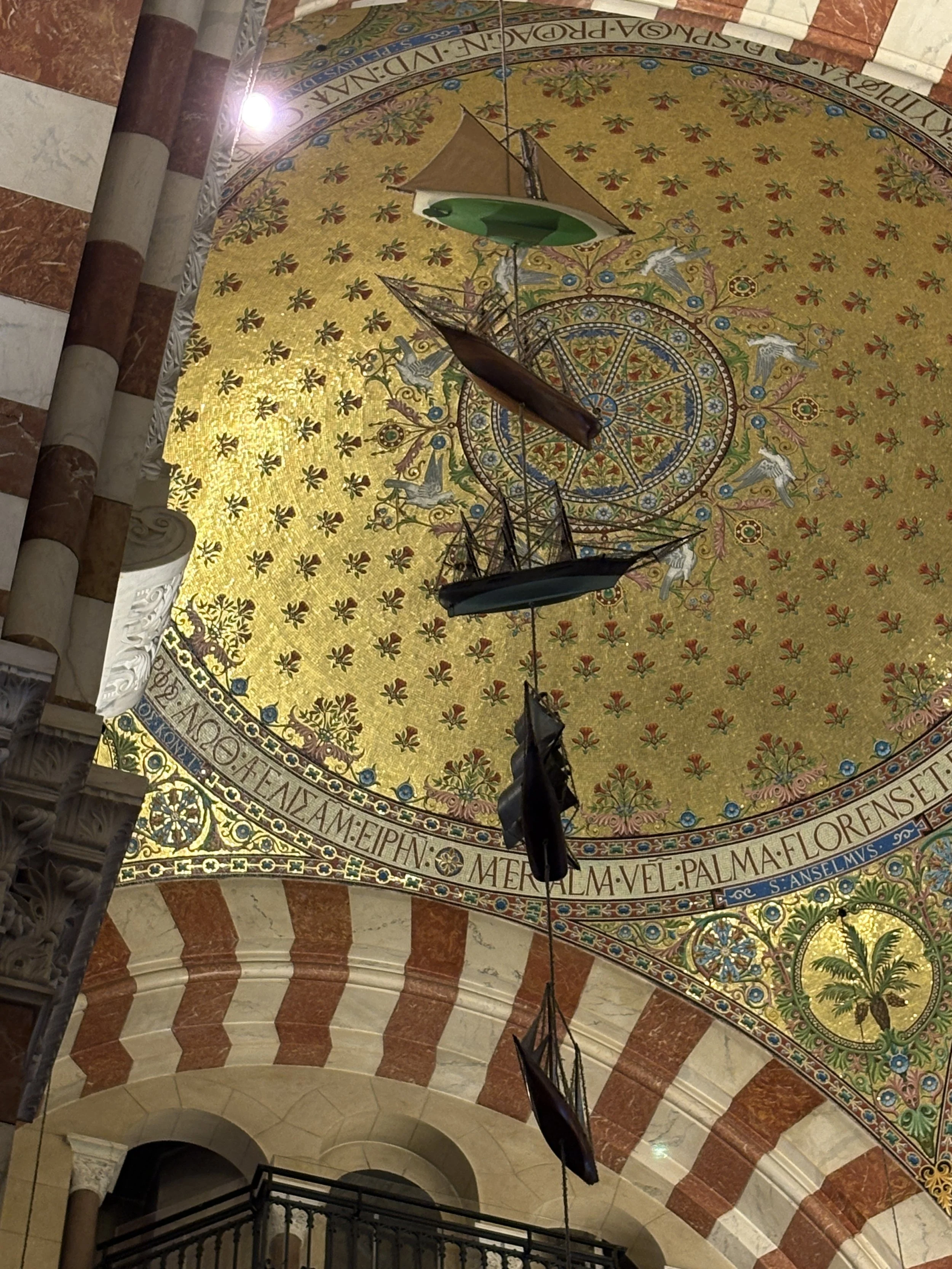
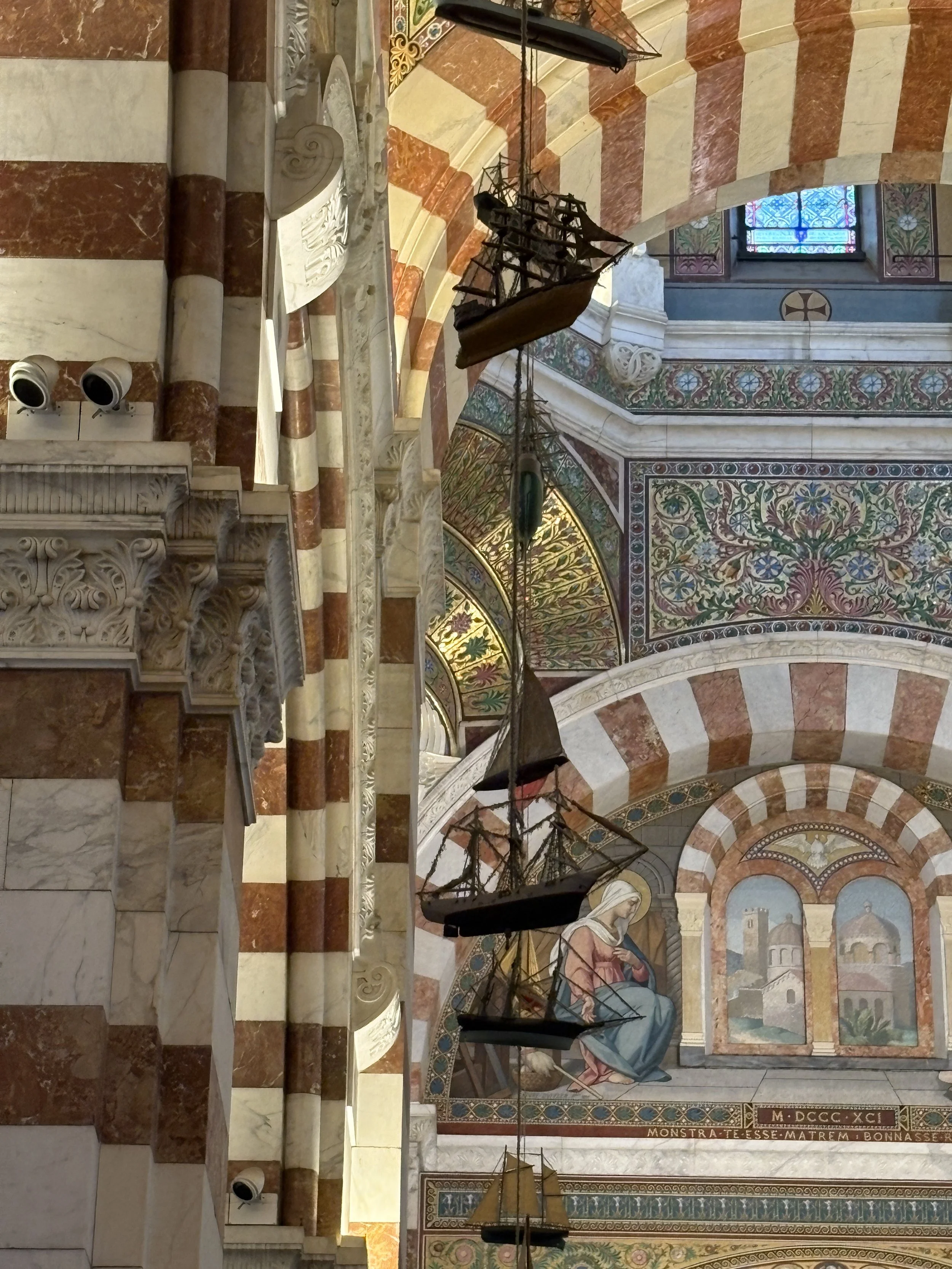
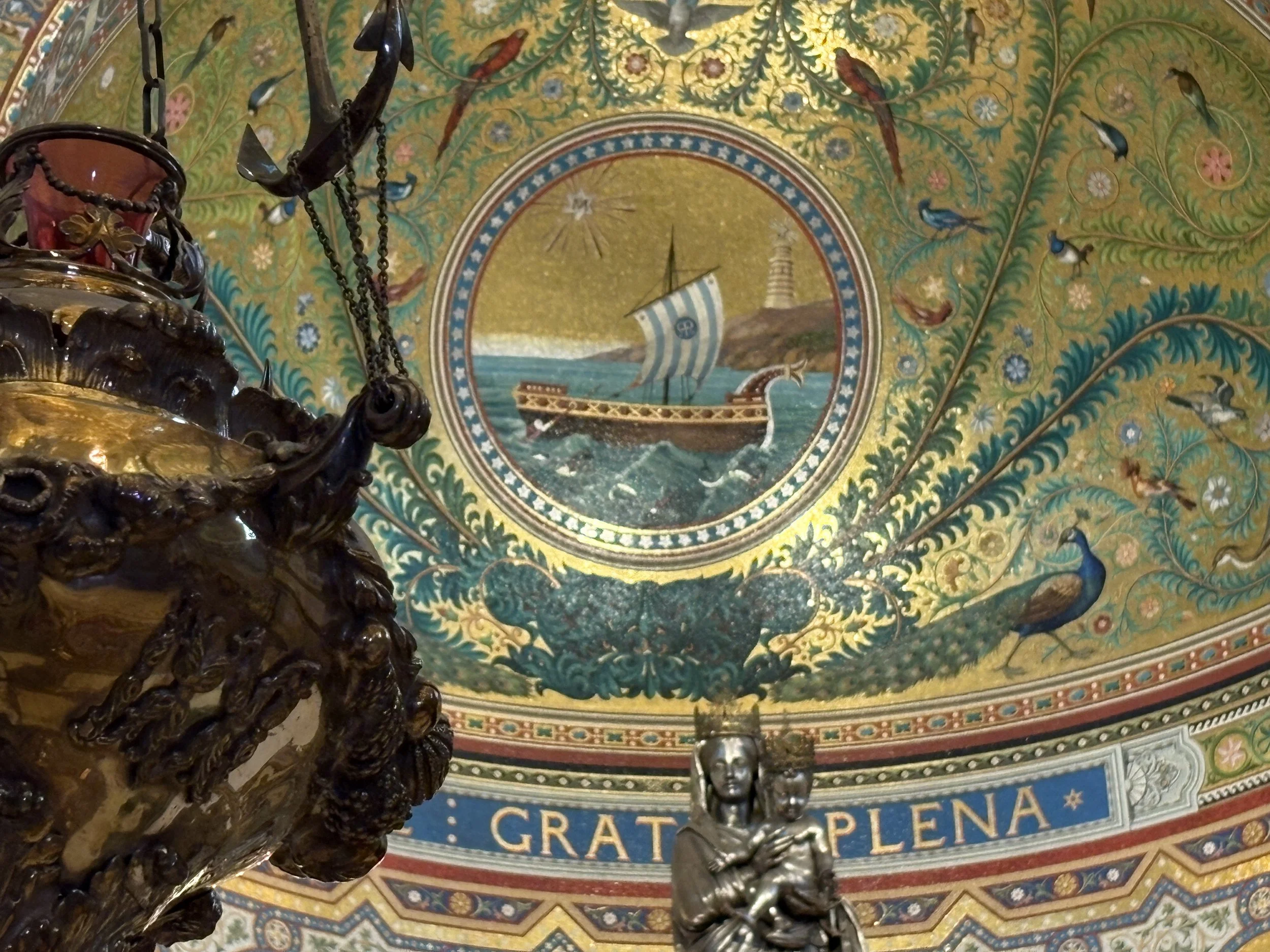
In seafaring communities, ship models became the most distinctive form of ex-voto. A sailor who had survived a storm, a shipwreck, or a dangerous journey might commission a scale replica of his vessel and offer it to a church. Some models are finely crafted, almost museum-quality replicas, while others are rougher, sometimes built by the sailors themselves during long voyages. Alongside models, it was also common to offer oars, anchors, ropes, or plaques inscribed with words of thanks. Each object was a physical testimony of survival and faith.
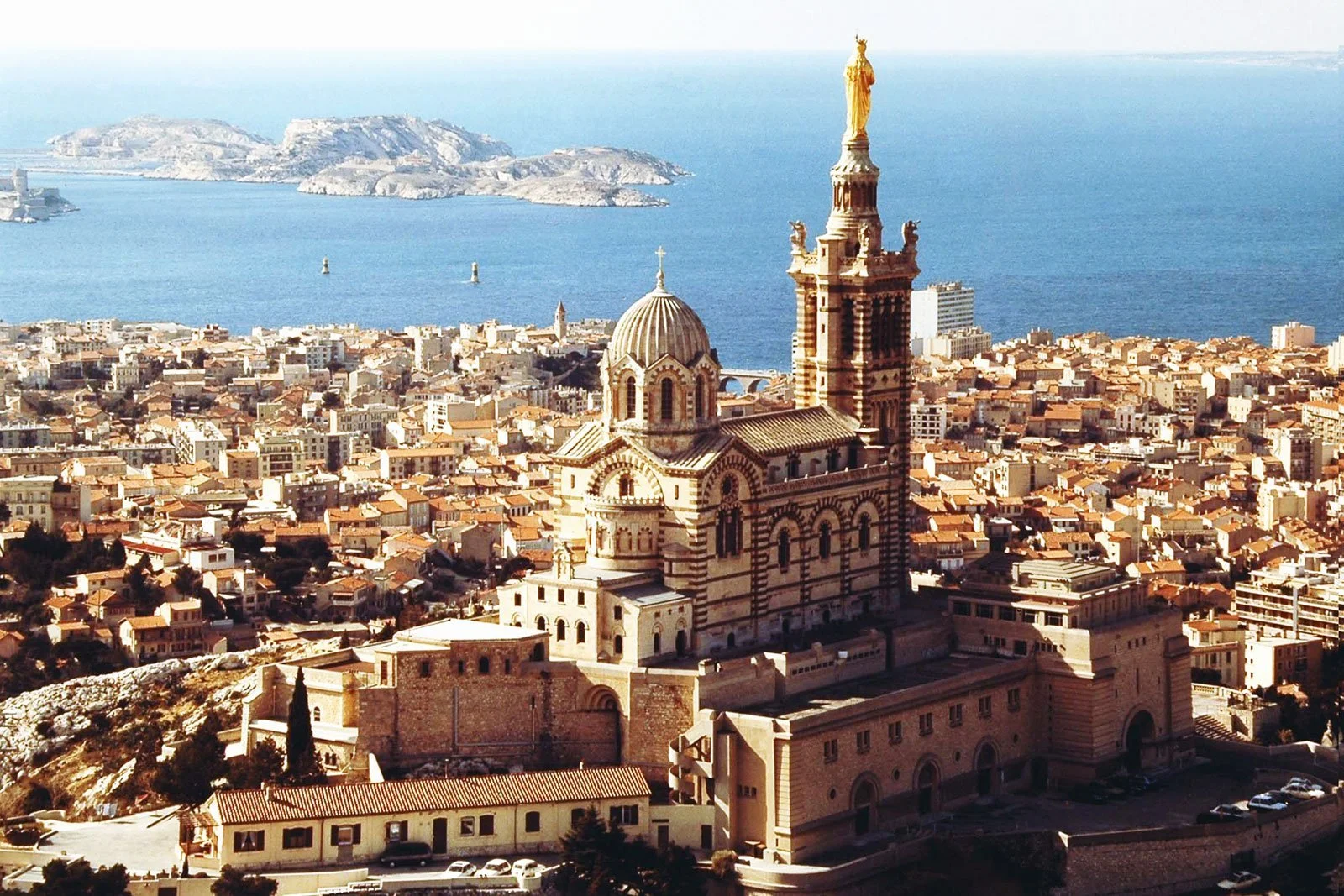
Marseille, a port city founded by Greek sailors more than 2,600 years ago, has always lived in close relationship with the sea. Danger was constant for fishermen and mariners, so devotion to the Virgin Mary as guardian of sailors grew especially strong. Notre-Dame de la Garde, standing high above the city, became the natural focus of this devotion. From the sea, sailors could see the golden statue of the Virgin crowning the basilica and pray to her for protection. When they returned safely, many fulfilled their vows by bringing offerings to her shrine.