
The Playwright & the Bishop
It somehow slipped under my radar, but apparently last weekend was the “International Lighthouse Weekend”
If you are wondering what that’s all about have a look at the Lighthouses of Australia website. Here at SWS we would like to celebrate the event by showing you one of the most evocative little documentaries I have watch in a while. “Life on the Last Lighthouse” has recently been made available from the BBC archive. Narrated by playwrite Tony Parker, it was originally broadcast on BBC One, on 18th December, 1973. A review in the Daily Mail at the time gives an overview
“Unexpected delight: The Last Lighthouse (BBC 1) which as a speck on the Radio Times chart, seemed certain to make eyelids heavy and yawns frequent.”
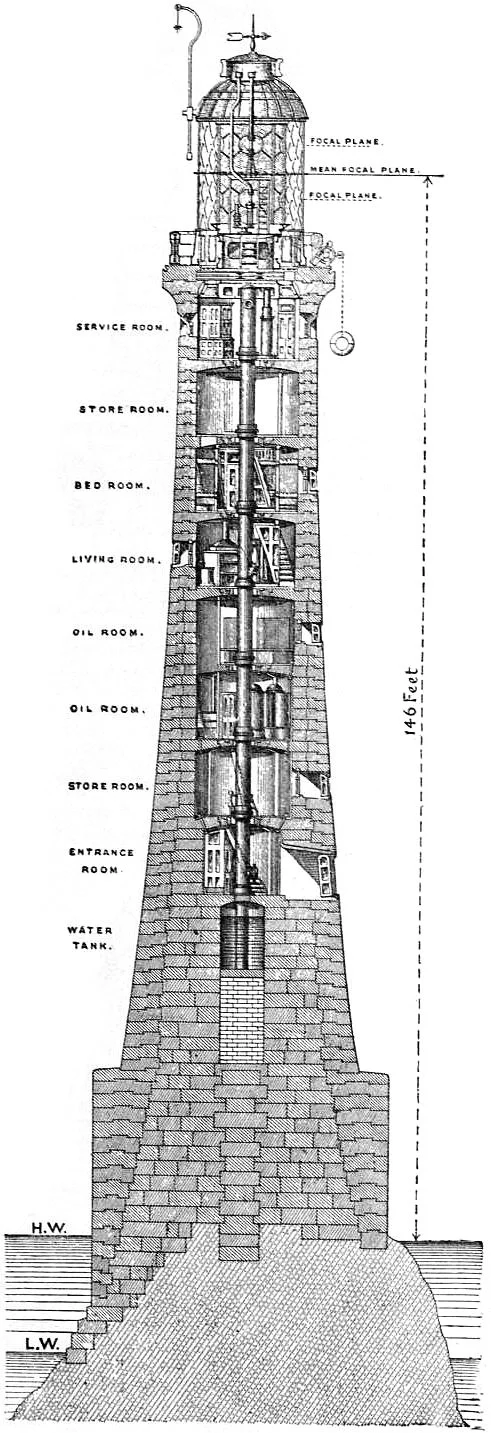
A lighthouse, I find, is not boring if seen as a Victorian working man’s cottage, 30 miles out to sea. That was how playwright Tony Parker viewed the one on the Bishop Rock, off the Scillies, mounting a strong argument for more outsiders to make documentaries.
Parker watched the thing on his holiday horizon for years on end, becoming increasingly curious over what life was like out there in the tower. The best possible motive for any programme, far more compelling than topicality.
What its servants call, with fitting reverence. ‘The Bishop’, turns out to be a magic place. For it is the last, great, non-robot lighthouse, the conservationist’s dream; an antique which works beautifully and usefully.
Inside, it’s a feast for the eye. Henry Farrar’s camera kept discovering quaint details, recording machine-tending rituals all the more satisfying for being totally beneficial. Lighting-up time involves more than throwing a switch. First meths is decanted into a shining copper pot, to heat the paraffin. Twenty minutes later – none of that instant nonsense about Victorian technology – paraffin vapour is curling out of a giant gasmantle, ready for lighting. A cosy popping noise as the match is applied, and then the beam sends a warning for 18 miles.
Add logical yet unexpected aspects of living in a granite ship forever at anchor (taps aren’t for hot and cold but for fresh and rainwater all waste is thrown out of the nearest window) and it was evident that Parker was on a winner.
Just as interesting were the men, studied at leisure, compelling admiring wonder at the monastic trade of their choice. Principal Keeper George Williams, filling out his log with an old-fashioned dip-pen and inkwell, listening to ‘pop’ in bed. Assistant Keeper Roger Simmons, a romantic, still thrilled at tending a light seen by generations of mariners, and listening to changing voices in the sea. I’m sure they will forgive the thought, being manifestly happily married men – in spite or because of spending two thirds of every year away from their families – but the lighthouse hermits struck me as charmingly oldmaidish in their ways.
Obviously sharing a sealed space for months on end, with a parlour which can be crossed in three paces, calls for more sensitivity than many men can command, let alone maintain for a working lifetime. Strain, while not admitted, was implied.
Men were heavily hooked on the demon cigarette, at least one showing scars of savage nail-biting.
Technically, producer Paul Bonner, his cameraman, and sound-recordist Derek Medus captured seascapes and interiors with an unobtrusiveness which belied what must have been awkward conditions. Virtue is its own reward – and ours. They gave us a memorably enjoyable piece of television. And something for the archives if, as Parker suggested at the end of his programme, The Bishop is heading for remote control…”
You can watch this little masterpiece in full here.