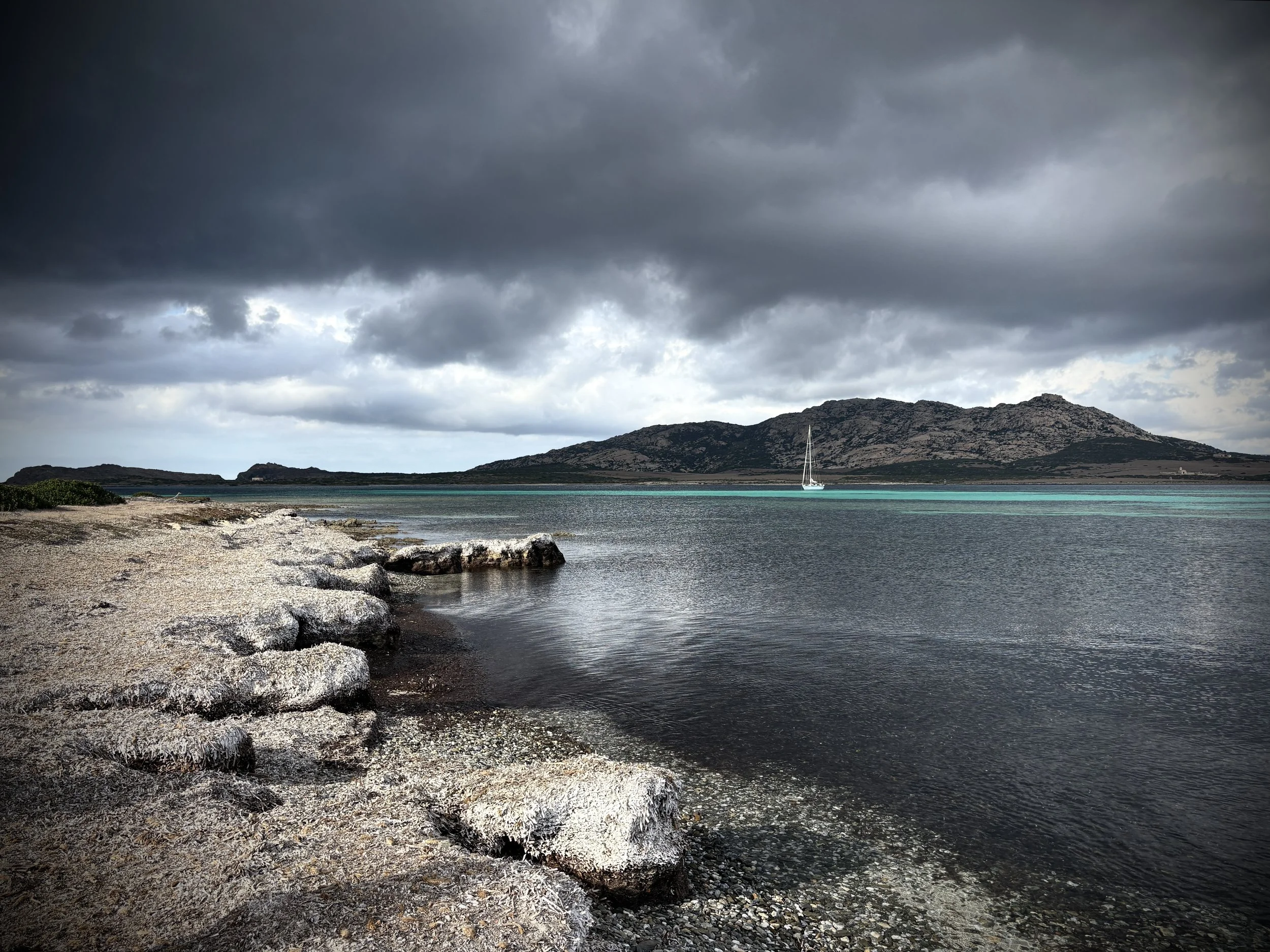
Donkeys and Dons-Asanara
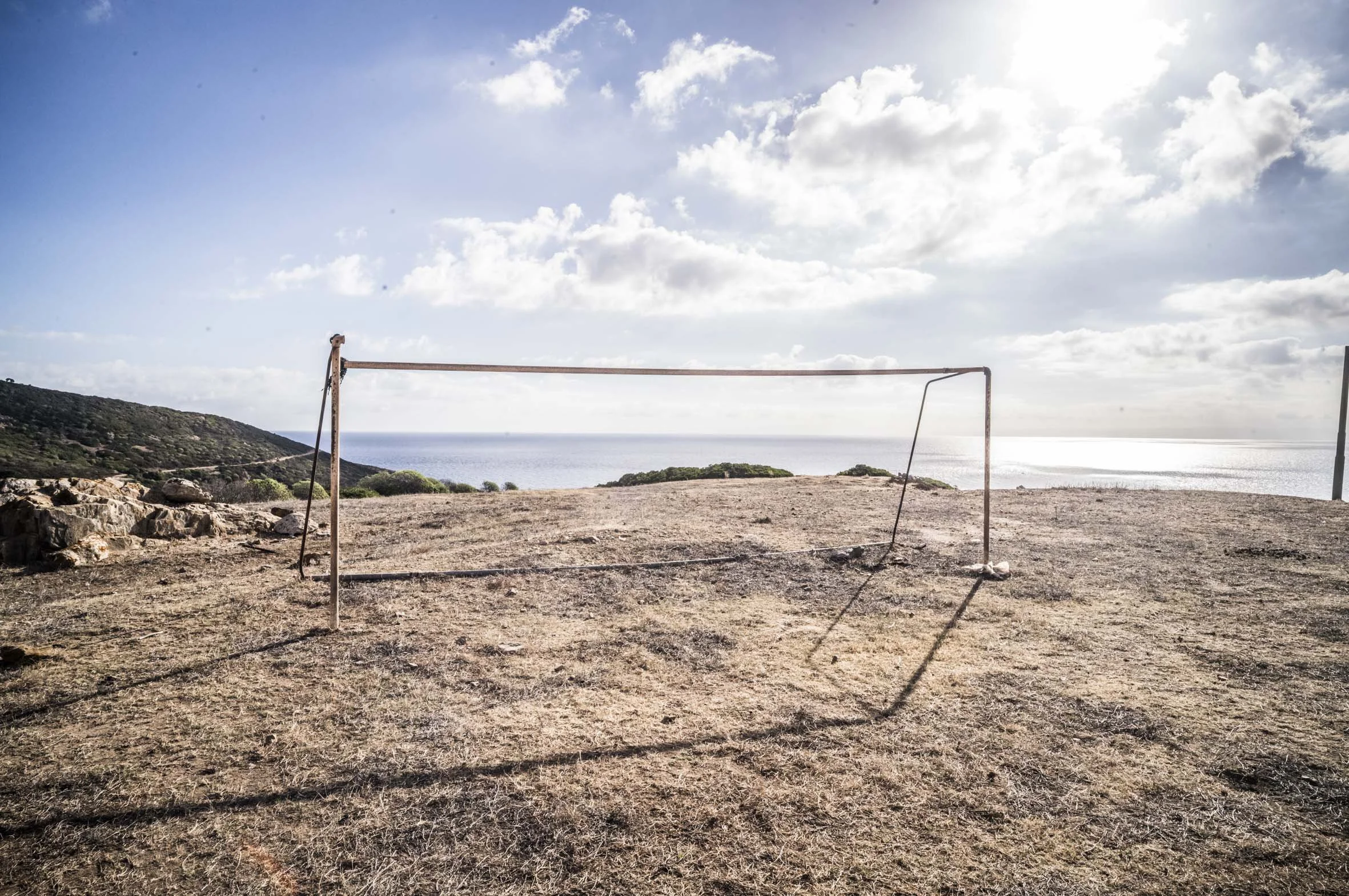
When most sailors think of the northern coast of Sardinia, the image that springs to mind is of maxi yachts racing in the dark blue waters outside the uber-elite marina at Porto Cervo, or perhaps the rocky crystal clear coves of the Maddalena Islands, slightly defiled by flocks of RIBs blaring loud music.
(I’m open to a better collective noun for RIBs)
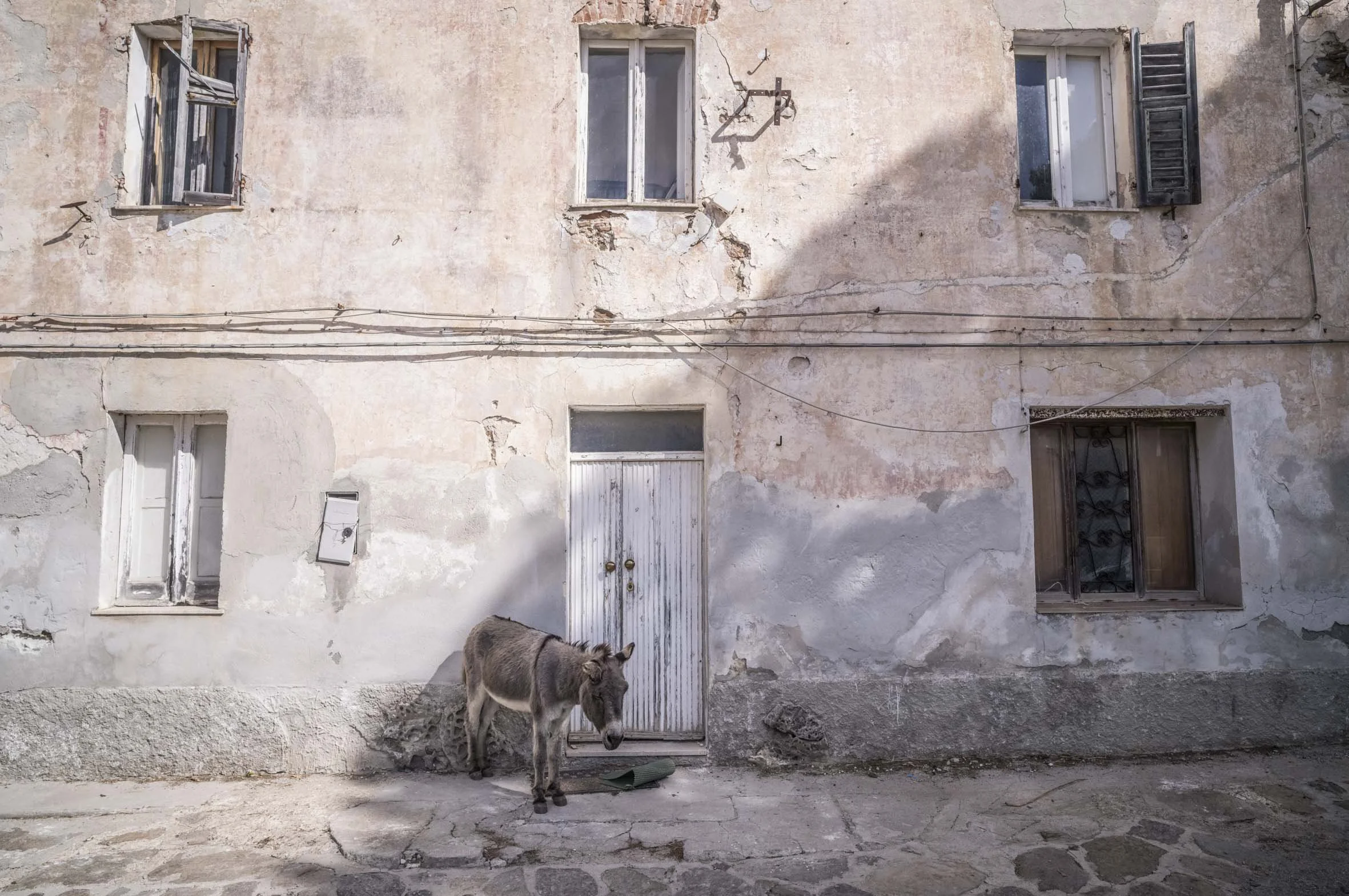
But there’s another island on the North West corner of Sardinia which few outsiders have heard of. It’s called Isola Asanara, which translates directly as “Donkey Island”. The name comes from the pale, blue-eyed donkeys that still wander its scrubby hills — remnants of a time when people and animals shared a hard, self-contained life.
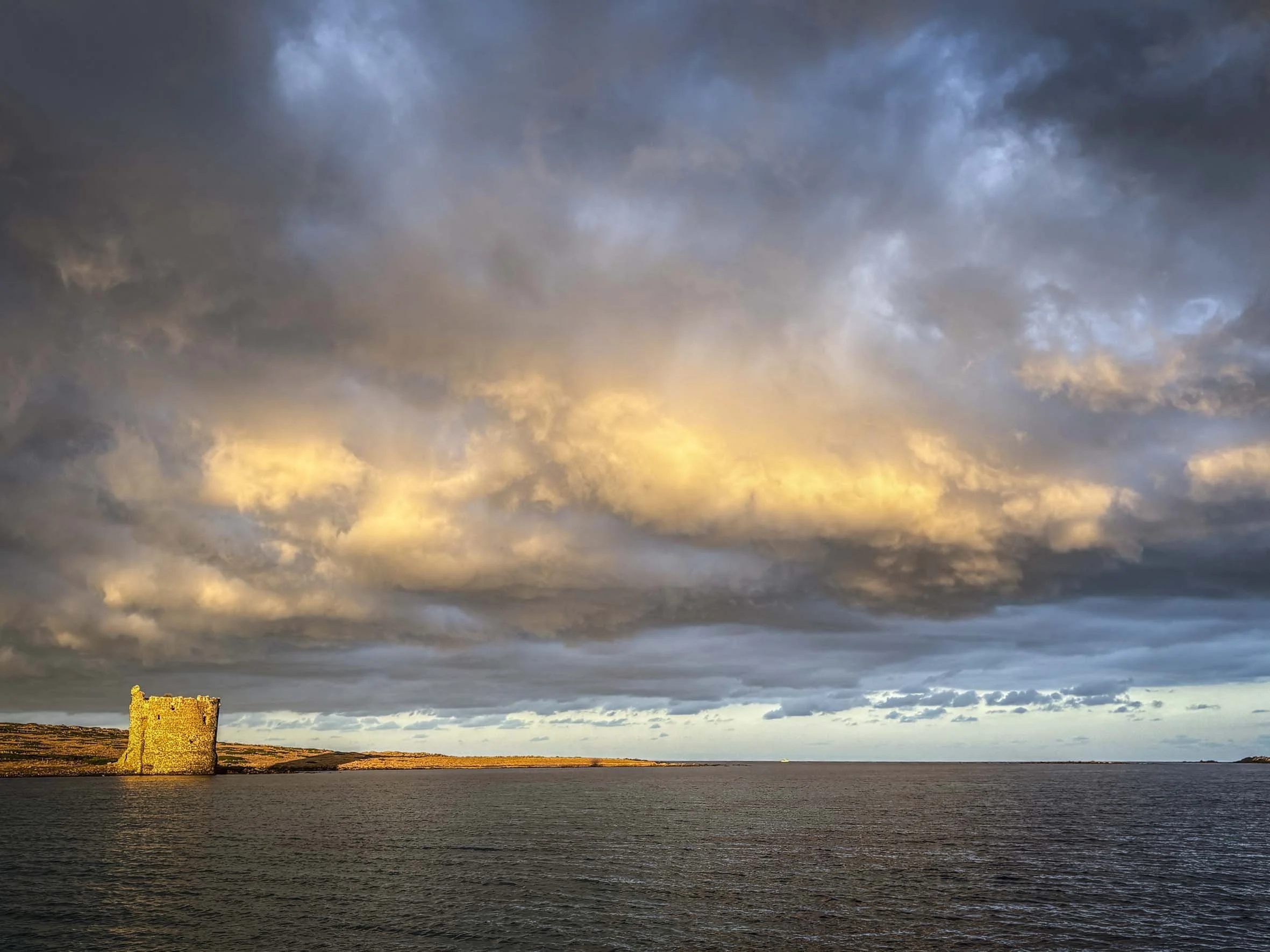
The Torre della Finanza built between 1525 and 1531 - www.markchew.com.au
For centuries, Asinara was both refuge and exile. Phoenicians and Romans used it for shelter and later as a place of banishment. In the Middle Ages, the Genoese fortified the island against pirates. protecting the small fishing and shepherding communities. But in 1885, when the Italian government cleared the island to establish a quarantine station and penal colony things changed for the worse.
www.markchew.com.au
We arrived in a bay called Cala Oliva, on the east of the island late one afternoon. We had made the passage from the spectacular harbour of Bonifacio in Corsica, effectively crossing from France into Italy. As the engine was killed, and dusk descended, the abandoned village around us, hinted at its dark history.
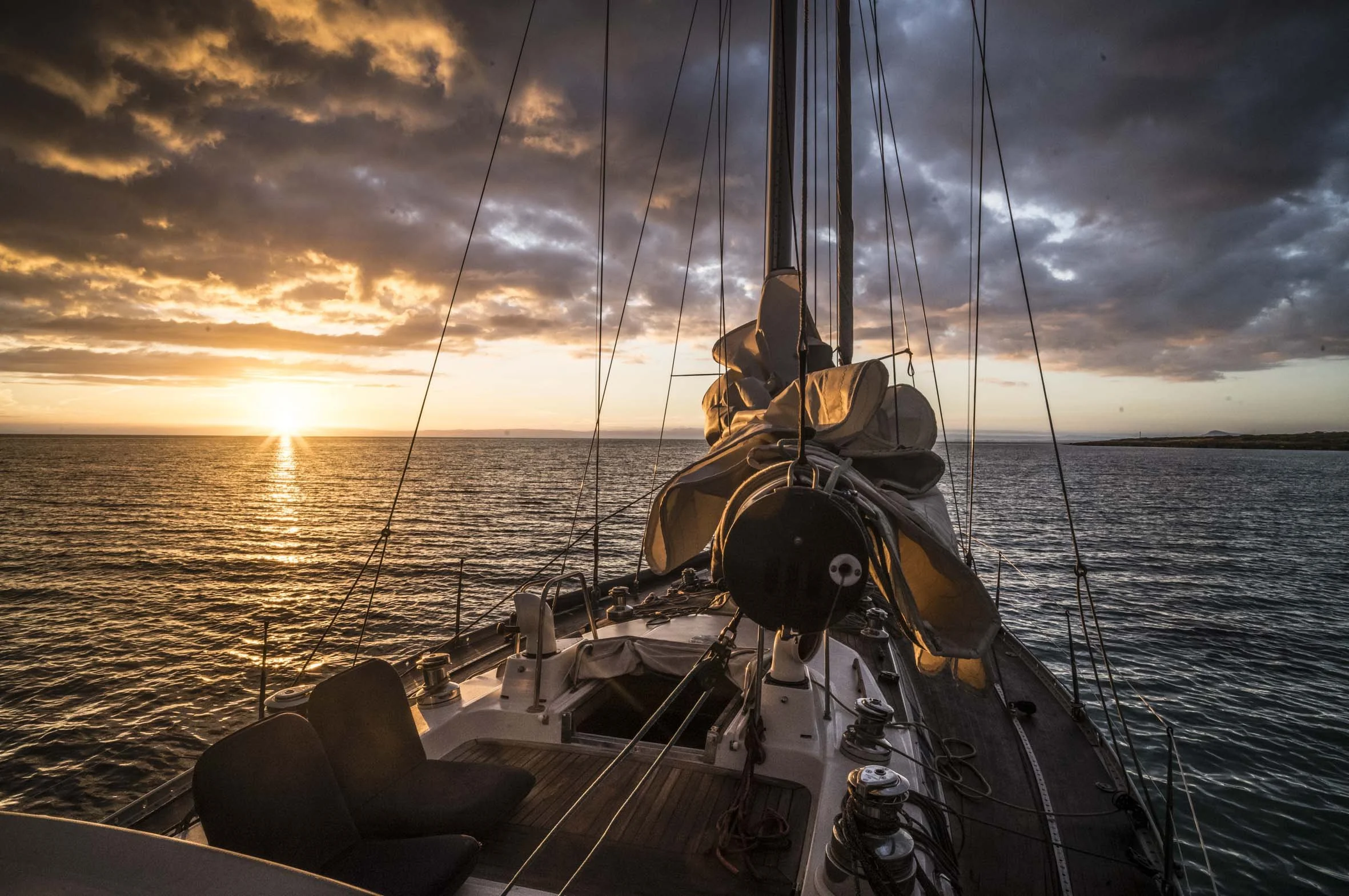
www.markchew.com.au
During the First World War, the island became a massive prison camp for Austro-Hungarian soldiers; thousands died of disease and deprivation. Following the war it remained a place of confinement, housing political prisoners under Fascism and, later, Mafia bosses and terrorists in high-security isolation. Perhaps its most famous inmate was Salvatore Riina or “Totò” a mobster and chief of the Sicilian Mafia, known for a ruthless murder campaign that reached a peak in the early 1990s with the assassinations of Anti-mafia Commission prosecutors Giovanni Falcone and Paolo Borsellino, These killings resulted in widespread public outcry, and a major crackdown by the authorities. Riina spent a decade on Asinara cut off from the world.
The following morning we pumped up the dinghy and went ashore to explore. It’s a strange vibe. In one sense it’s a charming, mostly deserted village with a couple of National Park employees and researchers standing around, doing not much. At its height, there were two hundred and fifty non-interned residents, a cinema, a school, a bakery and a butcher. It’s easy to see how the functioning little community would have worked. But further up the hill we came to the buildings relating to the core business of the island… locking people up.
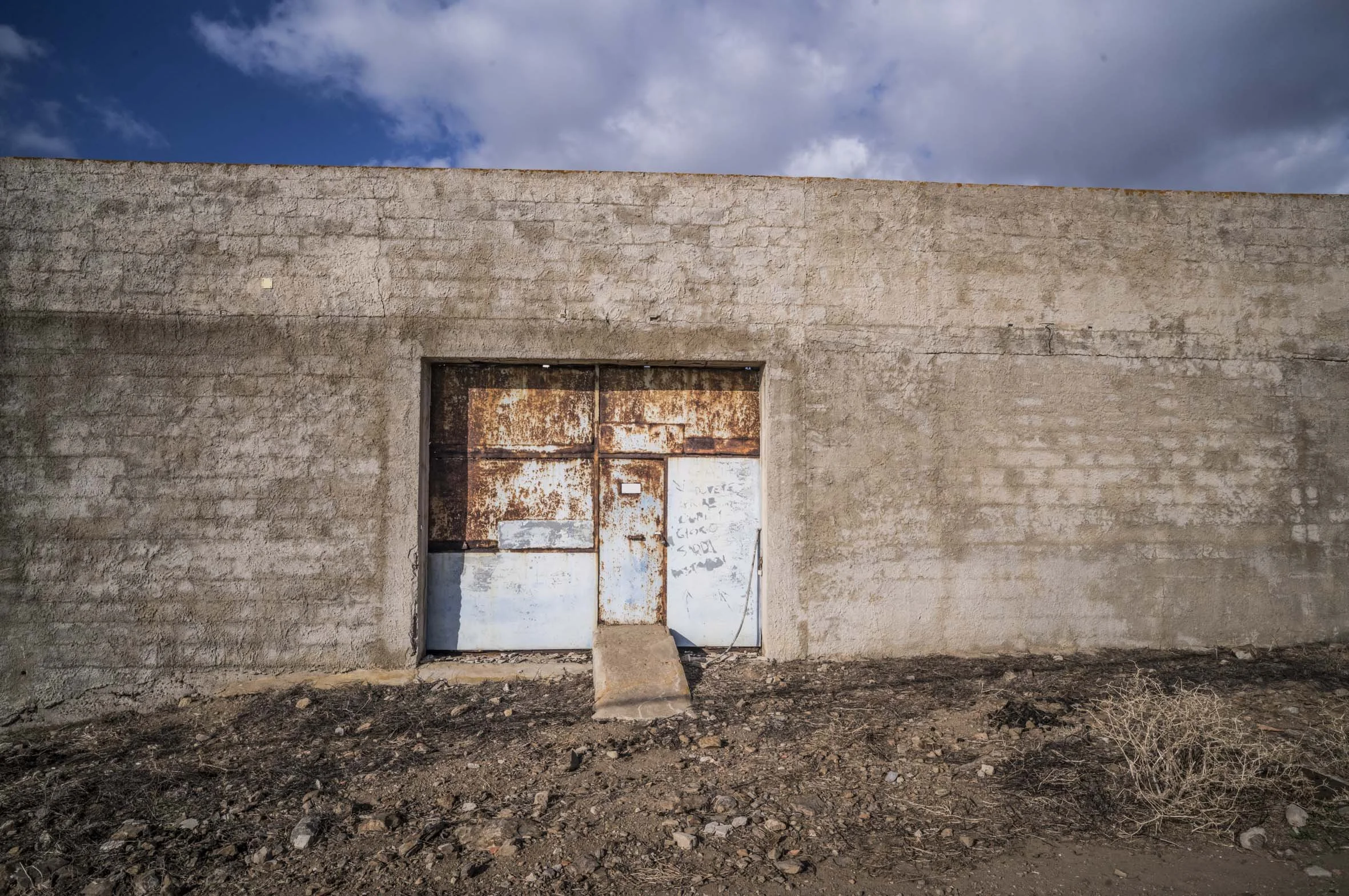
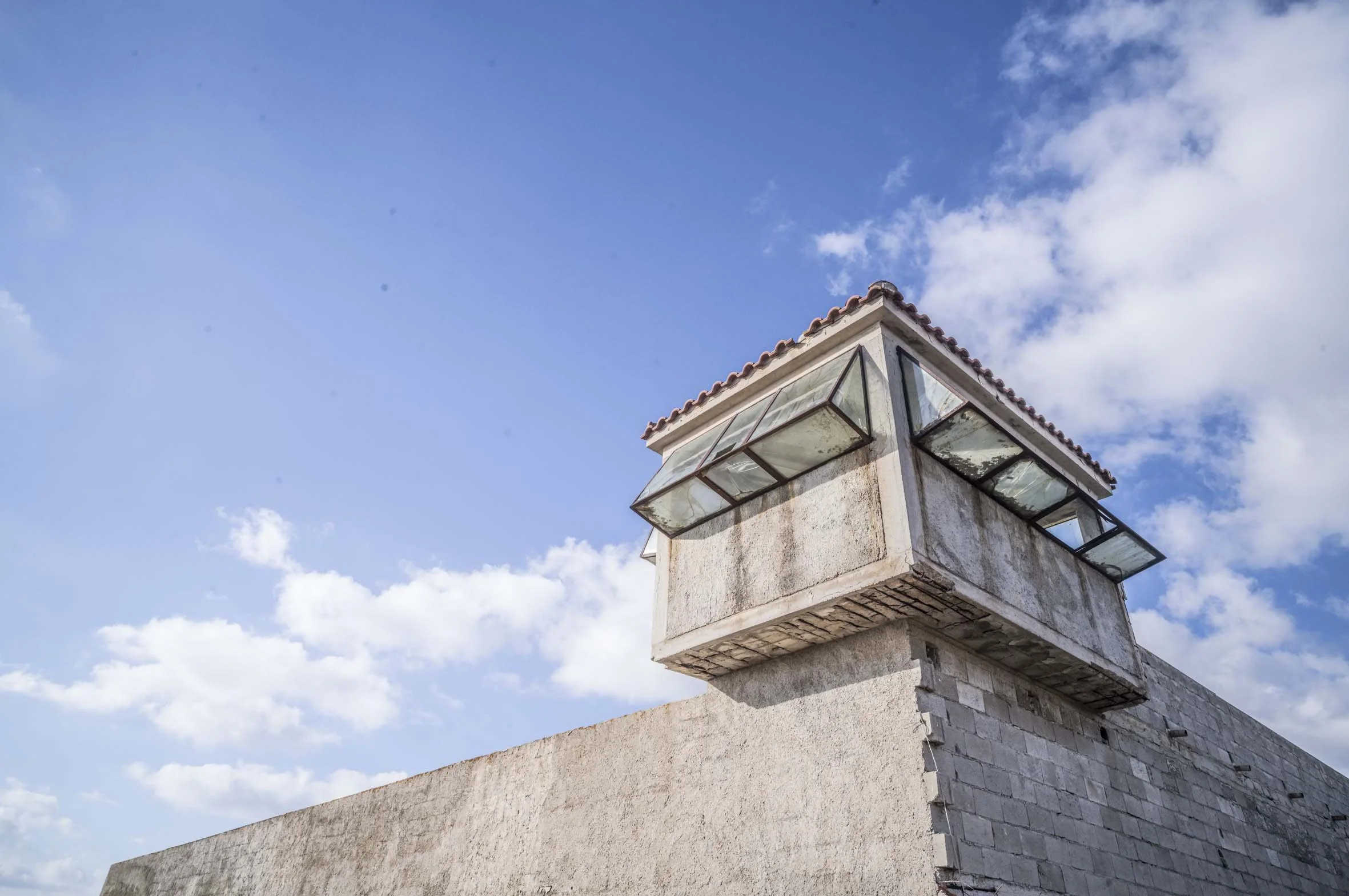


Isolating the worst members of our society from the rest of the population, is a function we take for granted. Few would argue that the worst offenders haven’t abrogated their right to live amongst us. But its confronting to see to realise that for some their world had shrunk to these four concrete walls built on this barren hillside and the vivid Mediterranean sky above.
It’s a feeling well expressed by Oscar Wilde, who was imprisoned in Reading Gaol for about two years, from 1895 for “gross indecency”, in his poem “The Ballad of Reading Gaol”
When the prison finally closed in 1998, Asinara was transformed into a National Park. The old village and prison blocks were left standing. Nature is trying hard to reclaimed the place: wild donkeys, turtles, and seabirds now move through the ruins where soldiers once stood watch.
As we were returning to the boat we passed along the promenade infront of the small bay and met a sixty year old man, Enrico, with a small ponytail carefully carving a juniper root into a swimmer swirling through the air surrounded by dolphins, part realist, part surreal. We were the only visitors to the village and he and his wife are the only residents, having moved there from the central Sardinian mountains forty five years previously, to complete his national service. He never left. Despite it only being 1030 in the morning, Enrico offered us a chilled vermentino from a jug, and some delicious sweet biscuits. Who were we to say no? Enrico is an accomplished sculptor with works on display throughout Italy, often in religious settings. He was quietly spoken, calm and considered. A life of isolation had given him a gentle enthusiasm for his art, rather than a shrill or desperate advocacy. It was easy to enjoy his company.

So what’s the point I’m making here? Perhaps Asinara Island isn’t as aesthetically beautiful as its rich cousins to the east. But stepping off the well worn path has its own rewards. Go to somewhere that looks good “on the map” rather than in the guide book. Forge your own path. Accept a few failures… Some wasted time.. But the world is still big enough to discover something new… as long as you take a risk.