Saving Goering’s Motor Yacht
By Malcolm Lambe
I wrote about this vessel - Goring's motor yacht CARIN II - in 2017 after coming across a For Sale sign in an obscure War Memorabilia site and it was eventually noticed by a German businessman who bought and restored her. It's a hell of a story.
I copped a lot of flak over it - especially from British yacht forum types who flat out refused to believe that in 1945 CARIN II became part of the Royal Navy - renamed the ROYAL ALBERT - and was the flagship of the British fleet of the Rhine.
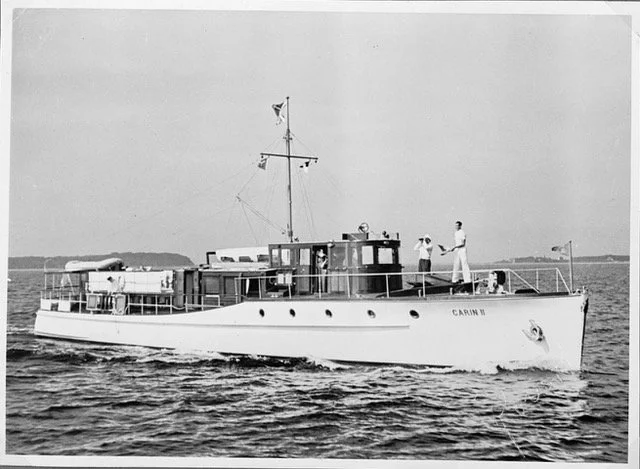
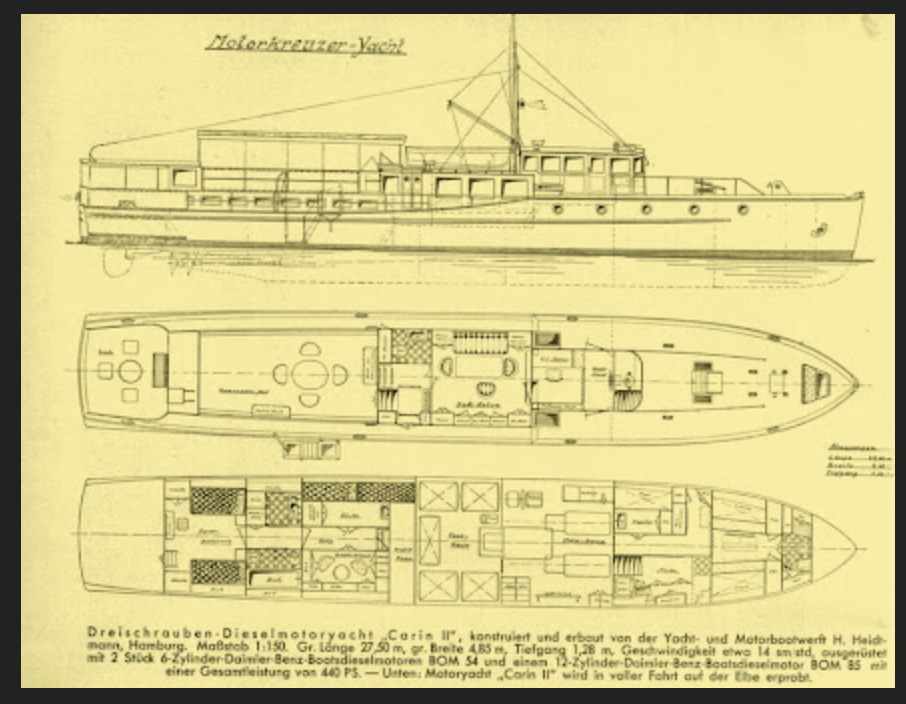
The CARIN II, built in 1937, was a gift from the German motor industry to commemorate Hermann Göering's 1935 marriage to Emmy and weirdly was named after his first wife.
It was built by the H. Heidtmann Yacht and Motorboat Works in Hamburg.
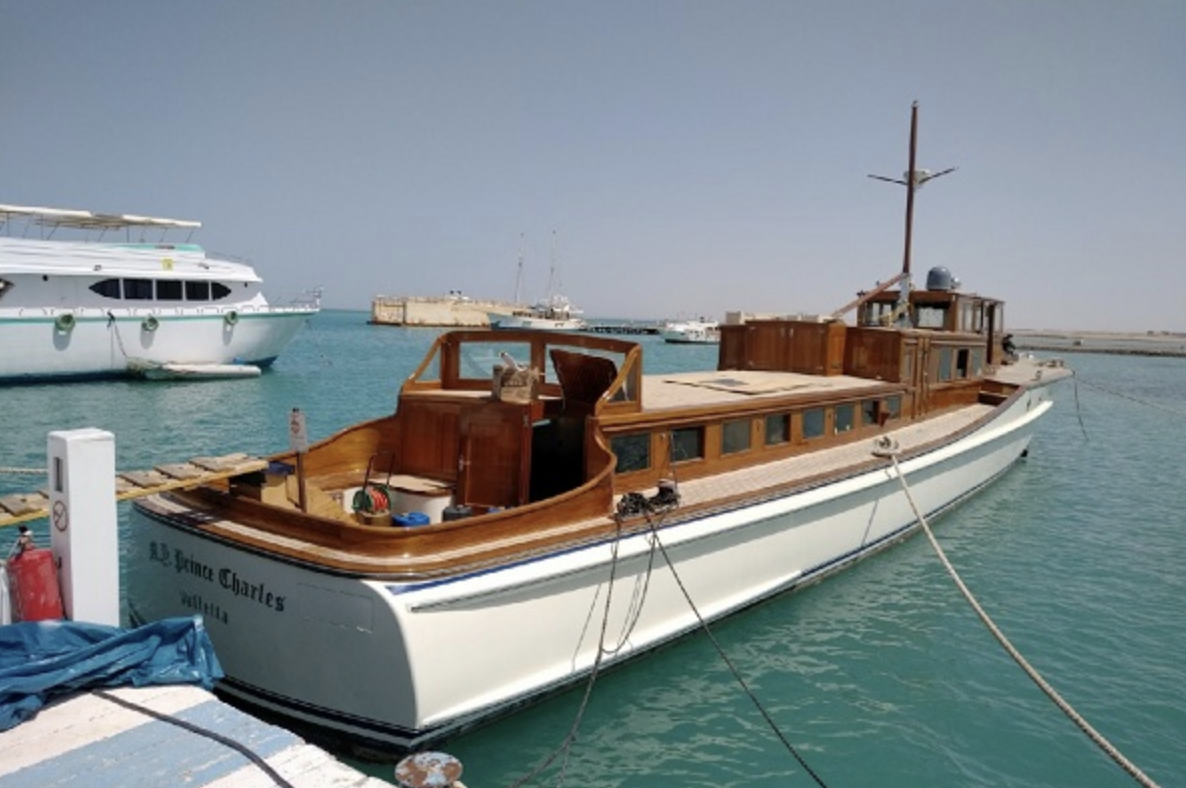
She's out of double-diagonal teak – sheathed in fibreglass in the early Eighties. 90 feet long and 16 feet wide. Weighed 70 tons and was powered by one 12-cylinder and two six-cylinder Daimler-Benz diesel motors (repowered with twin Mercedes-Benz in 1983). The interior featured a richly appointed salon panelled in burled walnut.
The CARIN II survived the collapse of the Third Reich virtually unscathed and was found, moored off Hamburg, by Field Marshal Montgomery who requisitioned it as Nazi treasure for George VI and his family as a spoil of war.
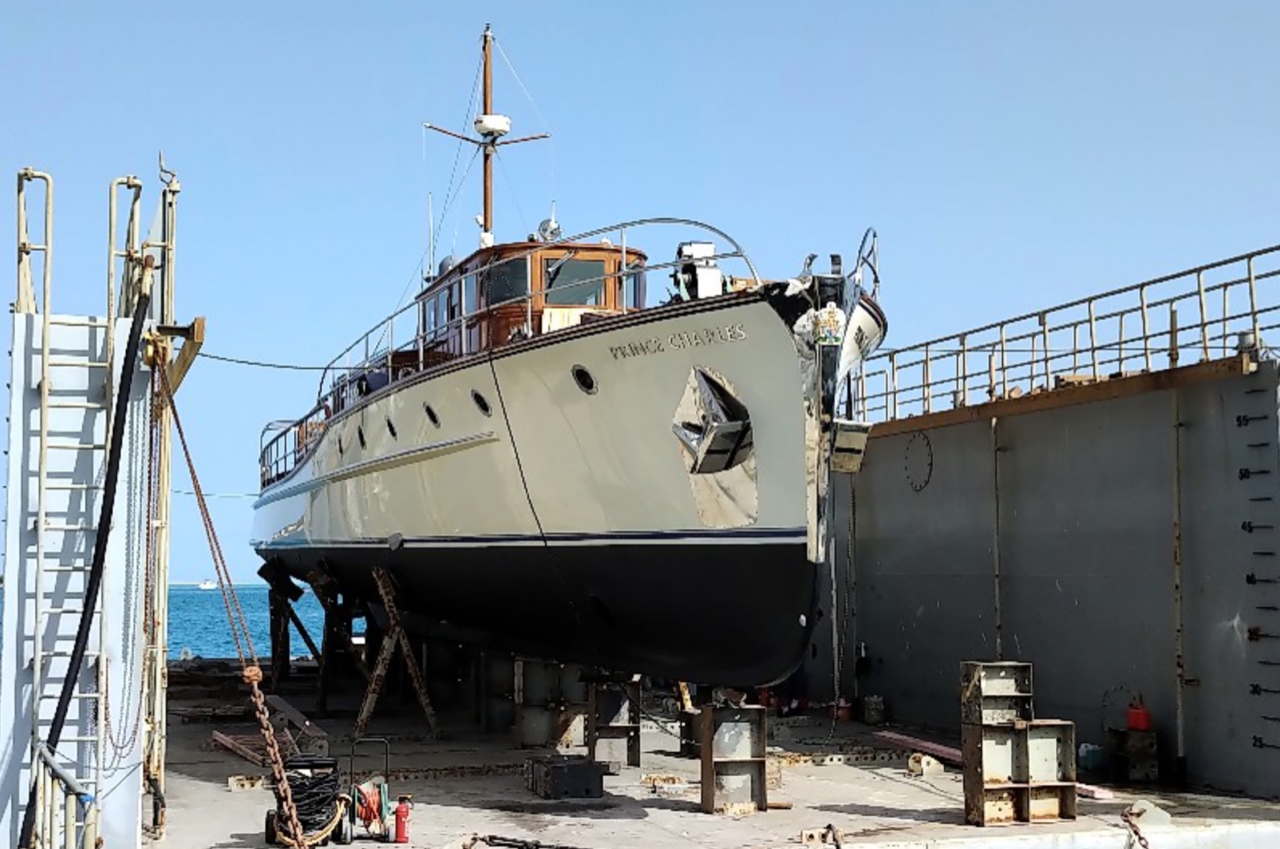
In 1952 the boat was renamed PRINCE CHARLES. She steamed from Krefeld for the state visit to Switzerland in 1955 and was even command ship of the British at the first joint NATO manoeuvres "Cordon Bleu". German Chancellor Adenauer was given an evening reception on the yacht.
During that time she was used regularly by the British Royal Family. The former chef recalls that the Royals used to fly to Frankfurt and then drive by Rolls-Royce to Wiesbaden-Schierstein where they could go by boat up the Rhine to Heidelberg or down to Holland. Prince Charles, as a boy, was kept busy peeling potatoes in the galley.
Gerd Heidemann - who claimed to have discovered Hitler's Diaries - owned the boat at one stage.
The 90ft-long (27.5 Metres) 70 ton CARIN II was described by one contemporary newspaper as "a symbol of German shipbuilding supremacy, a floating embassy for the state". The construction and presentation attracted great public interest as it was the first vessel of its type and size to be built. For a private vessel it had an astronomical price tag - 1.3 Million Reichsmarks.
Hitler was a frequent visitor, as was Nazi propaganda minister Josef Goebbels, SS chief Heinrich Himmler, and his security police leader, Reinhard Heydrich.
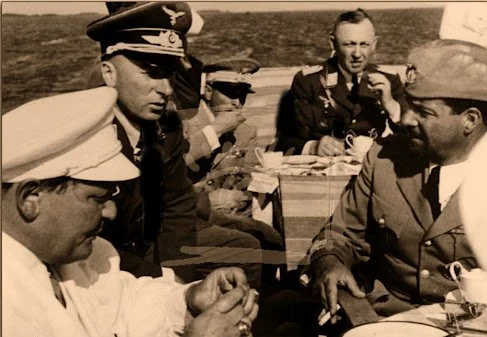
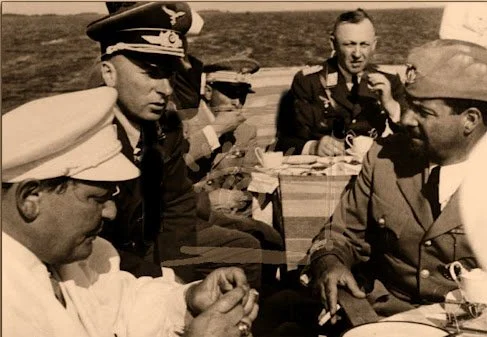
Goering stored the finest wines and cognac aboard, hosted lavish dinners and shot ducks from a specially constructed platform on the bow.
During the summer of 1940 Goering would sit on the green leather sofa in the boat’s splendid wood panelled salon and study Battle of Britain operational maps on the burr walnut table.

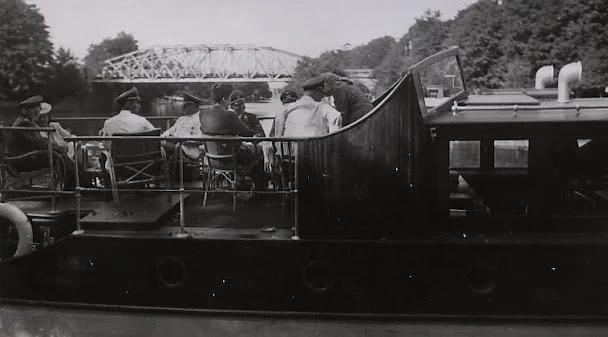
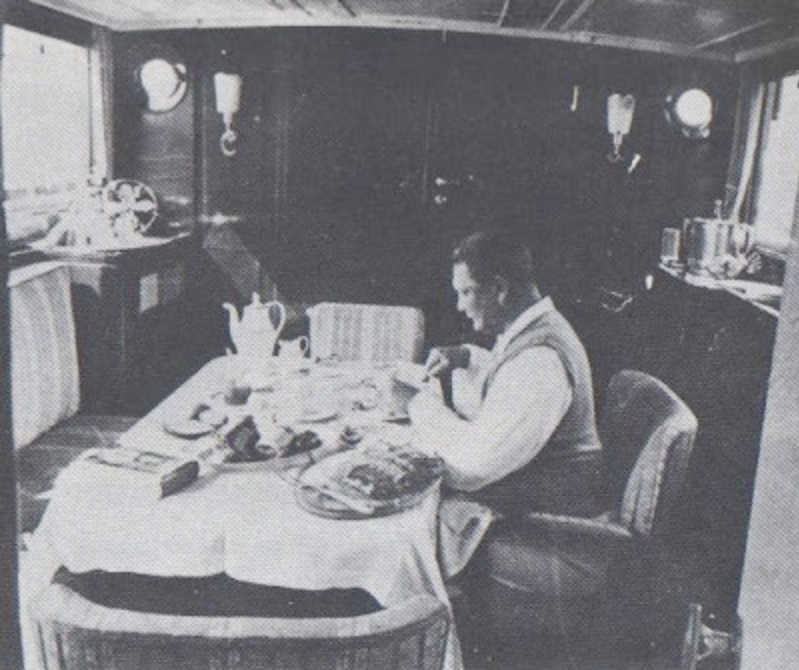
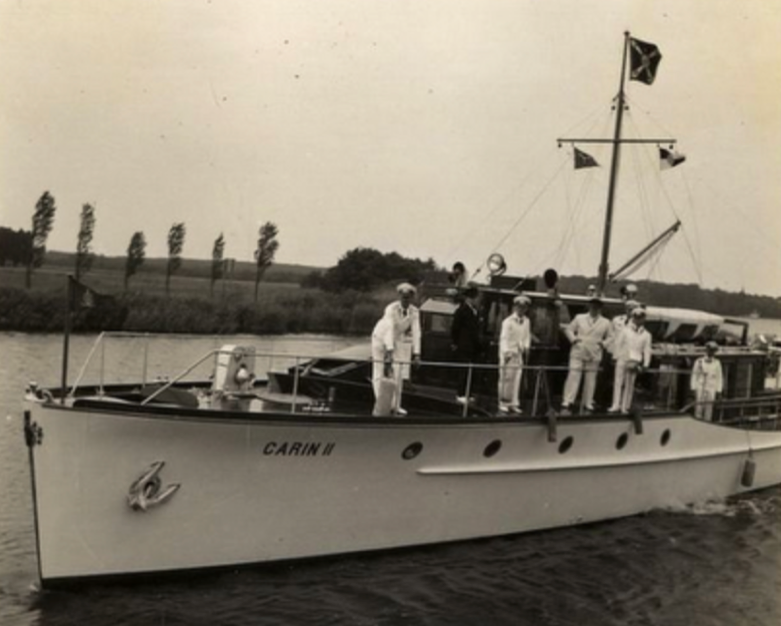
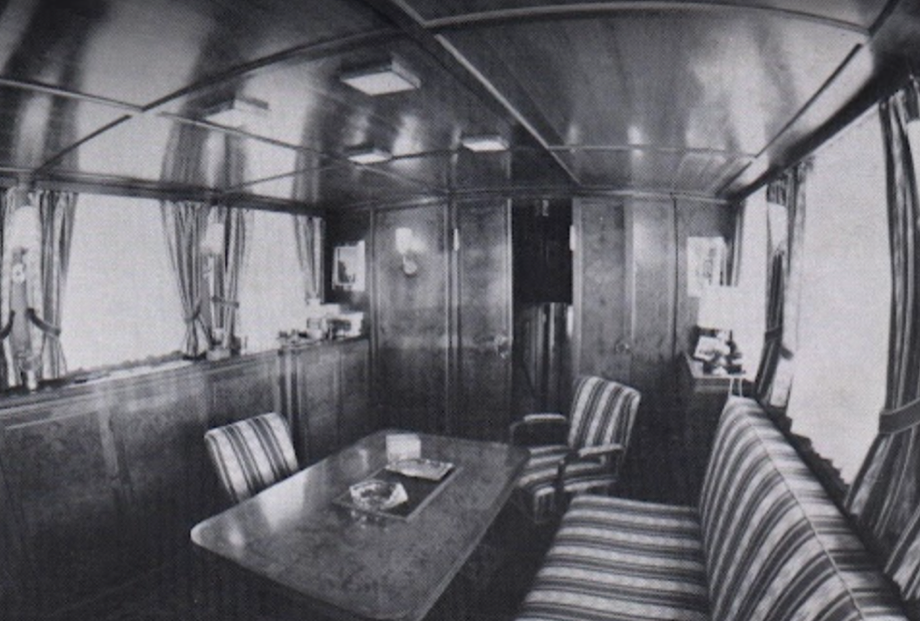
The CARIN II survived the collapse of the Third Reich virtually unscathed and was found, moored off Hamburg, by Field Marshal Montgomery who requisitioned it as Nazi treasure for George VI and his family as a spoil of war.
The boat was first renamed the ROYAL ALBERT and then PRINCE CHARLES and for 15 years it provided a holiday home for the Royal Family.

But eventually the Royals decided it wasn't a good look to be cavorting on Goering's old luxury yacht in a period of post-war austerity and it was handed over to the Goering family in 1960.
The family sold the yacht to a Bonn printer, who renamed it THERESIA and kept the boat for twelve years before selling it to Gerd Heidemann - a journalist with the weekly magazine STERN.
Heidemann restored the name CARIN II but as the yacht became increasingly expensive to maintain, Heidmann needed to sell it. In 1980 he visited the Stuttgart home of Fritz Steifel, a wealthy collector of Nazi memorabilia, hoping to persuade him to buy the CARIN II. Steifel wasn’t interested, but while Heidemann was there, Steifel showed him an unusual and very rare item he had recently acquired. It was a single, black-bound volume of Hitler’s diary, covering the period from January to June, 1935.
Heidemann persuaded his employers, Stern magazine, to advance him cash to acquire instalments of more than 50 volumes. And then went on spending sprees buying first-class cruises, new cars, apartments, and large amounts of Nazi memorabilia (most of it fake). At one point he even inquired about the possibility of buying Hitler’s childhood home.
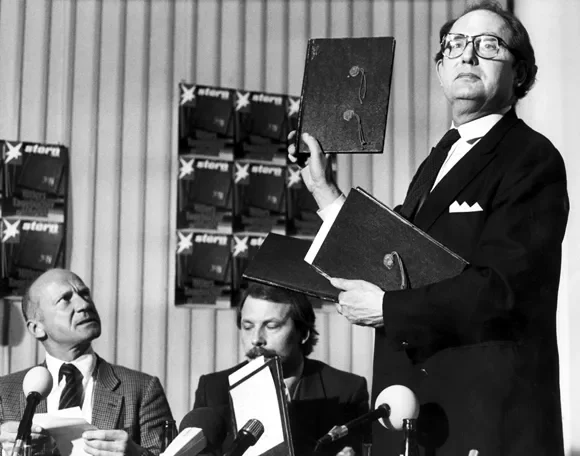
Turned out all the diaries were forgeries, but ones which managed to fool both the Sunday Times and the British historian Hugh Trevor-Roper. The diaries were bound in black, and about 1.5 centimeters thick. Konrad Kujau, the forger, scuffed them up and stained them with tea to give them an old, battered appearance.
He glued initials on to the front cover of each diary. Kujau thought that the initials, which were in a gothic script, were the letters “AH” for “Adolf Hitler.” In fact, they were “FH”. No one noticed this mistake.
Eventually, chemical analysis indicated the diaries were fake.
All three volumes contained traces of polyamid 6, a synthetic textile invented in 1938 but not manufactured in bulk until 1943. The whitener and fibers in the paper were found to be of postwar manufacture. The labels, supposedly spanning thirteen years, had all been typed on the same machine. Tests showed that the supposed wartime diaries were less than two years old. The ink came from an ordinary artist’s shop. And at least one set of the initials glued on the front of the diaries was made of plastic.
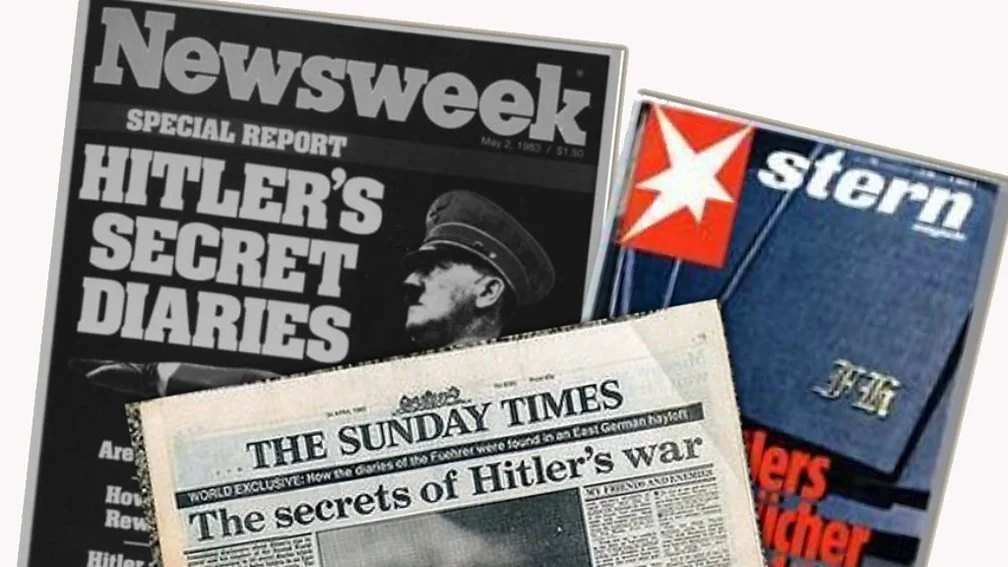
The content of the journals had also been sexed up. The entries contained historical inaccuracies and many of them had been plagiarized from Domarus’s Hitler’s Speeches and Proclamations and showed the same typos and grammatical mistakes.
The announcement that the Hitler Diaries were fake made front-page news around the world. Heidemann spilled the beans but insisted he had believed the diaries were real. Kujau fled to Austria. But when he learned that Stern had paid nine million marks for the diaries but Heidemann had paid him only two million he spat the dummy and gave himself up - just to spite Heidemann. To prove his guilt, he wrote out part of his confession in Hitler’s handwriting. He also claimed that Heidemann had known all along that the diaries were fake.
In August 1984 Heidemann and Kujau were put on trial. Heidemann was accused of stealing 1.7 million marks from Stern, and Kujau of receiving 1.5 million for the diaries. This left over five million marks unaccounted for. Both men were convicted of fraud and sentenced to over four years in prison each.
After being released from prison in 1988, Kujau opened a gallery in Stuttgart where he sold “authentic fakes". Authentic fakes - don't you love it? These included not only forgeries of Hitler’s paintings, but also reproductions of Dalis, Monets, Rembrandts, and Van Goghs. He signed each painting with both his own name and that of the original artist. Many of these “authentic fakes” sold for tens of thousands of marks. In fact, his work became so popular that other forgers began to create forged copies of Kujau’s forgeries.
It gets better. When Kujau died in 2000, his great-niece, Petra Kujau, was subsequently charged with selling hundreds of fakes of his fakes. She would buy oil paintings from Asia for as little as 10 euros apiece, write Kujau’s signature on them, and flog them off for up to 3,500 euros!
Goerings old yacht CARIN II was put up for auction, eventually being sold to Egyptian-born Mostafa Karim and his wife, Sandra Simpson attracting more controversy when it was once impounded by Libya's Colonel Gaddafi.
Sandra Simpson, an American citizen, and her husband, Dr. Mostafa Karim, a permanent American citizen of Egyptian birth, were on board the CARIN II, a private yacht, sailing in the Mediterranean in February 1987. A sudden storm forced the ship off its course. Libyan harbor authorities responded to the CARIN IIs distress signal and permitted it to dock in Benghazi. After the CARIN II docked, Libyan officials boarded the yacht, made the passengers disembark, and threatened to shoot them if they tried to leave. After holding them for three months, the Libyan authorities permitted Ms. Simpson to flee to Zurich. They continued holding Dr. Karim in solitary confinement and unsanitary conditions without proper food or medical equipment until November 1987.
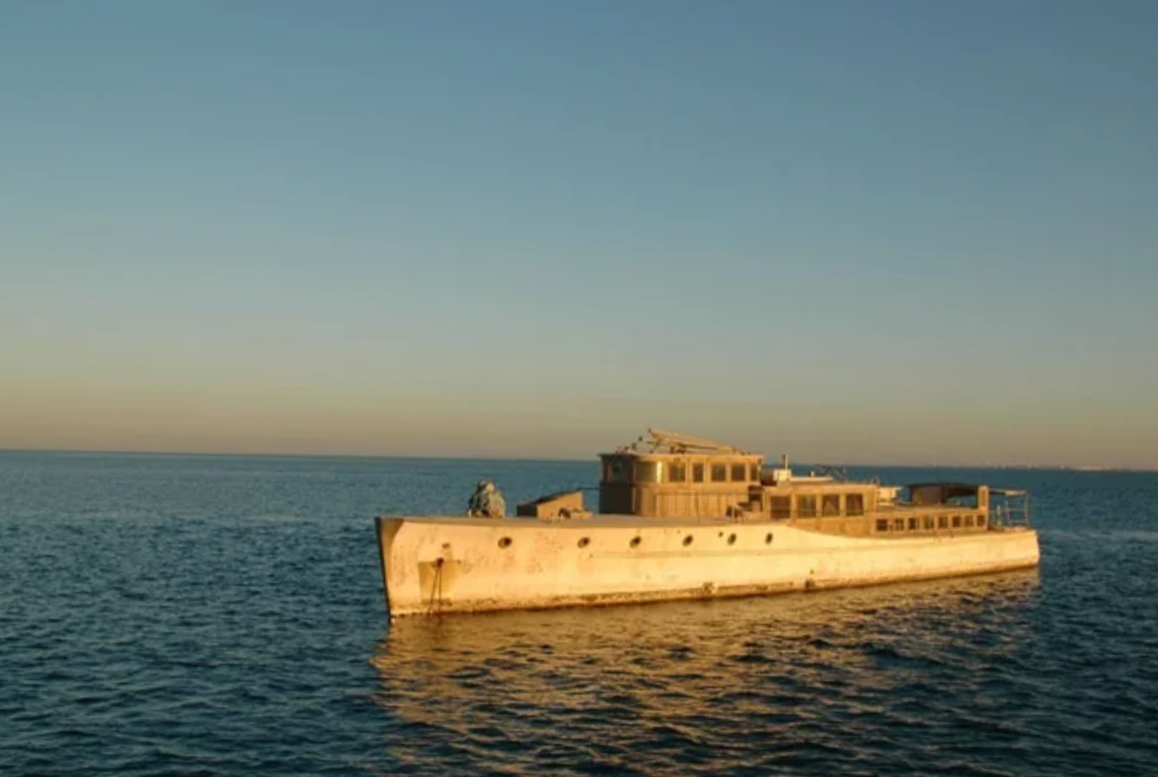
The boat was near derelict when i started writing about it. My stories attracted a German businessman who I put in touch with the American woman and he bought the boat and restored it. She's now back to PRINCE CHARLES and lying in the Red Sea.