
Talking Towers
This is the first of three articles discussing small elements from the evolution of maritime communication over the last 500 years. Next week we’ll have a look at the origins of Semaphore.
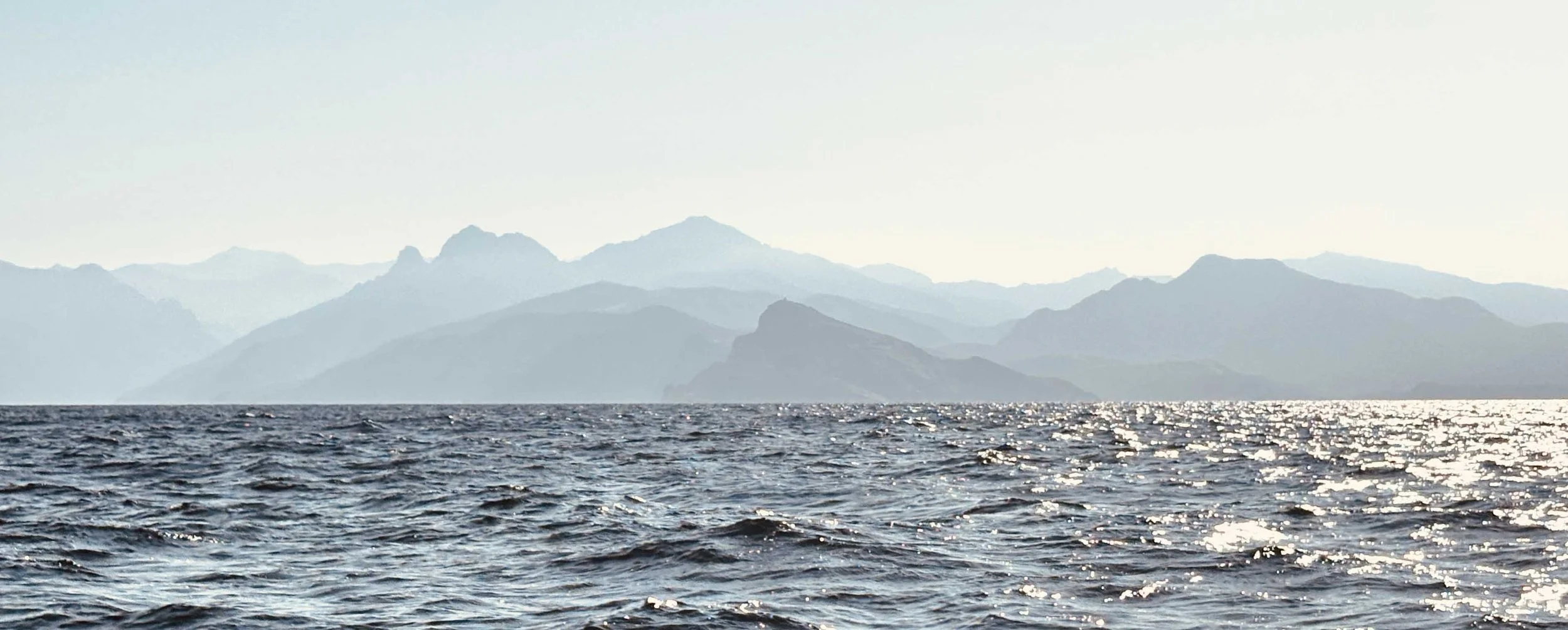
Looking out from the port side of MATILDA to the West Coast of Corsica, the VHF radio occasionally crackling in French, the unmissable architectural feature in this awesomely rugged landscape is an ancient tower on every headland. It struck me that this 16th century Genoese tower network— the famous “tours génoises”, are in fact a close equivalent to the hand held 15cm long device ruining the peace and quiet beside me.
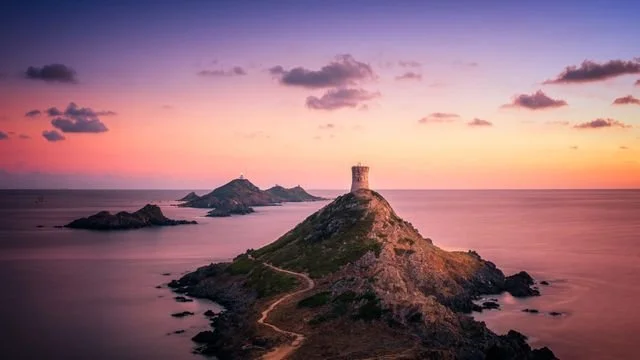
The Tour Génoise de la Parata just outside Ajaccio. MATILDA anchored in the lee of the furthest islet.
We take communication for granted. With a Starlink dish attached to the pushpit, a mobile phone in my pocket, AIS pinging on the plotter, a PLB around my neck (when offshore) and the ubiquitous VHF constantly hissing, the idea that we are achieving some sort of solitude or disconnection by going sailing is illusionary.
But if nowadays we crave isolation, for thousands of years previously communities were searching for means of connection with other settlements, a long way away. The first people to try and address the problem were the Greeks who devised coded torch systems to send specific letters or messages over long distances. But it wasn’t until the middle ages that watchtowers across Europe and the Mediterranean, like the Genoese towers in Corsica, using fire and smoke for warnings They could only convey very simple information such as “enemy sighted”.
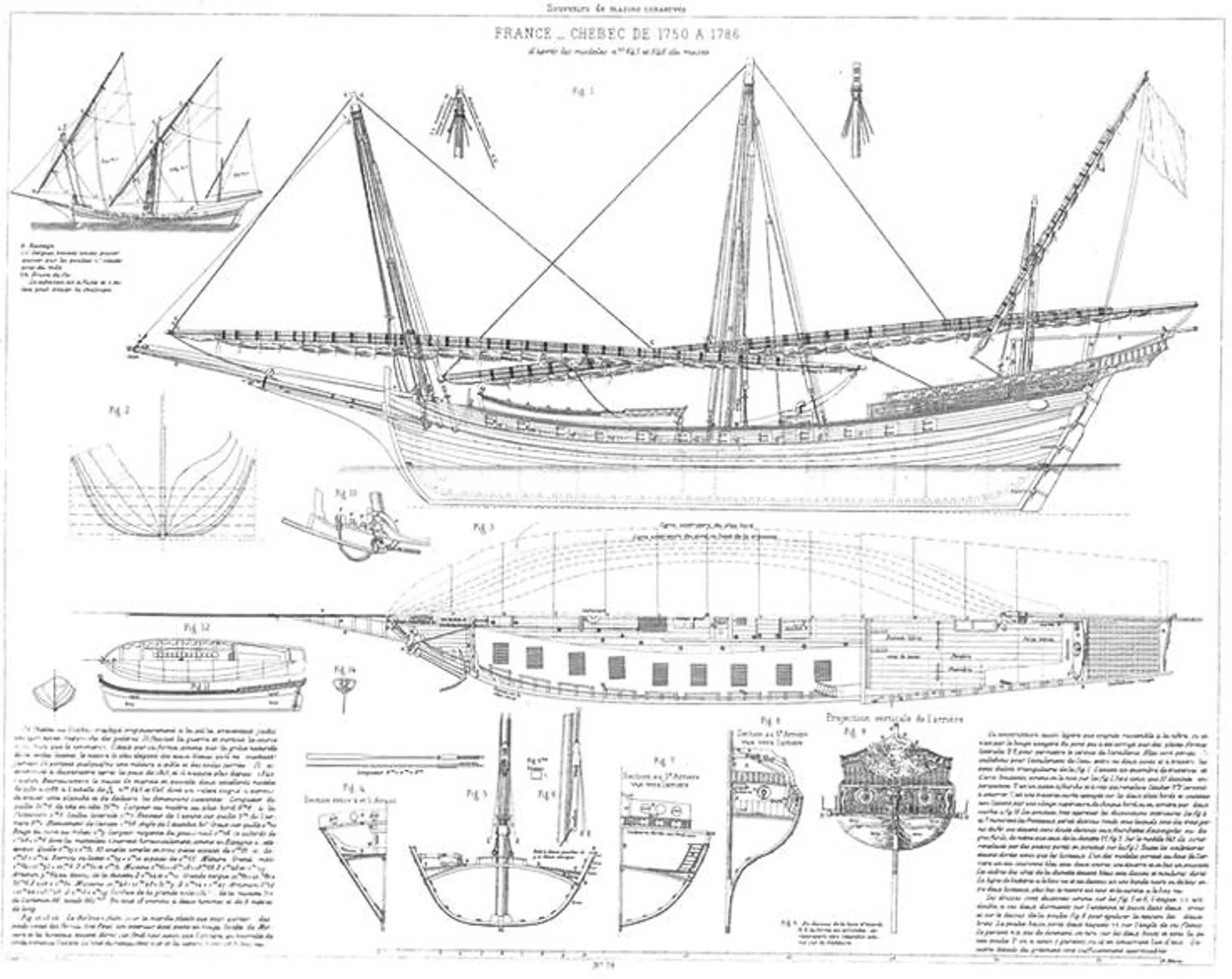
And in Corsica, you might ask ”who was the enemy?” The answer is Barbary Pirates, a cohort of seaborne raiders based along the North African coast — primarily in the ports of Algiers, Tunis, Tripoli, and Salé — from the 16th through the early 19th century. They operated under the loose authority of the Ottoman Empire. While they were often called “pirates” in Europe, many functioned more as state-sponsored privateers, licensed to attack the shipping of Christian nations with which their rulers were at war. The Barbary corsair boats were built in North African ports with Ottoman backing, often using local timber and Mediterranean shipbuilding traditions, but their fleets were constantly refreshed with captured European ships, which were either adapted or copied.
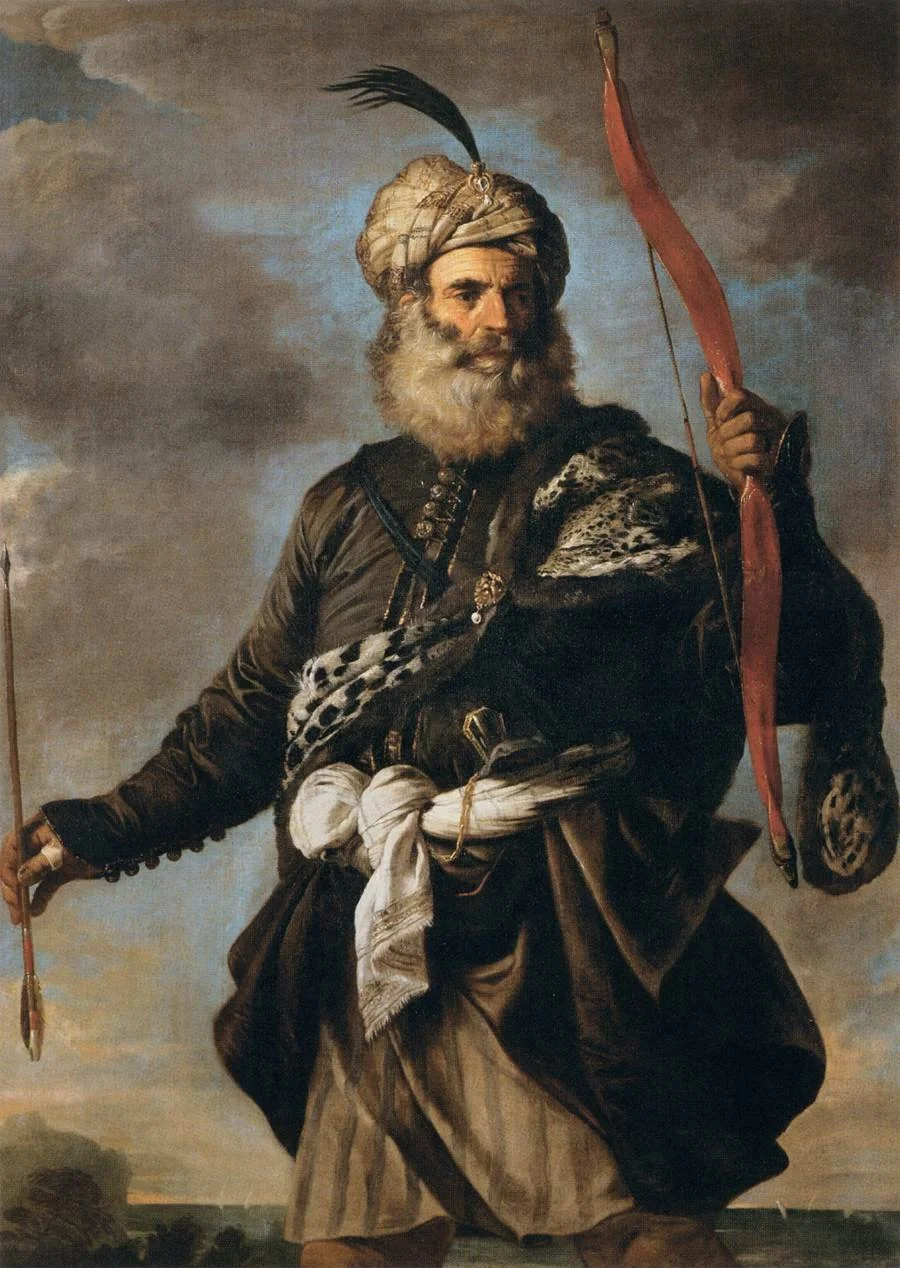
A Barbary pirate, by Pier Francesco Mola, 1650
The Genoese tower network in Corsica was a coastal warning system against these pirate raids. The towers were placed within line-of-sight of one another, usually 5–10 km apart, so that they could pass messages quickly along the coast.
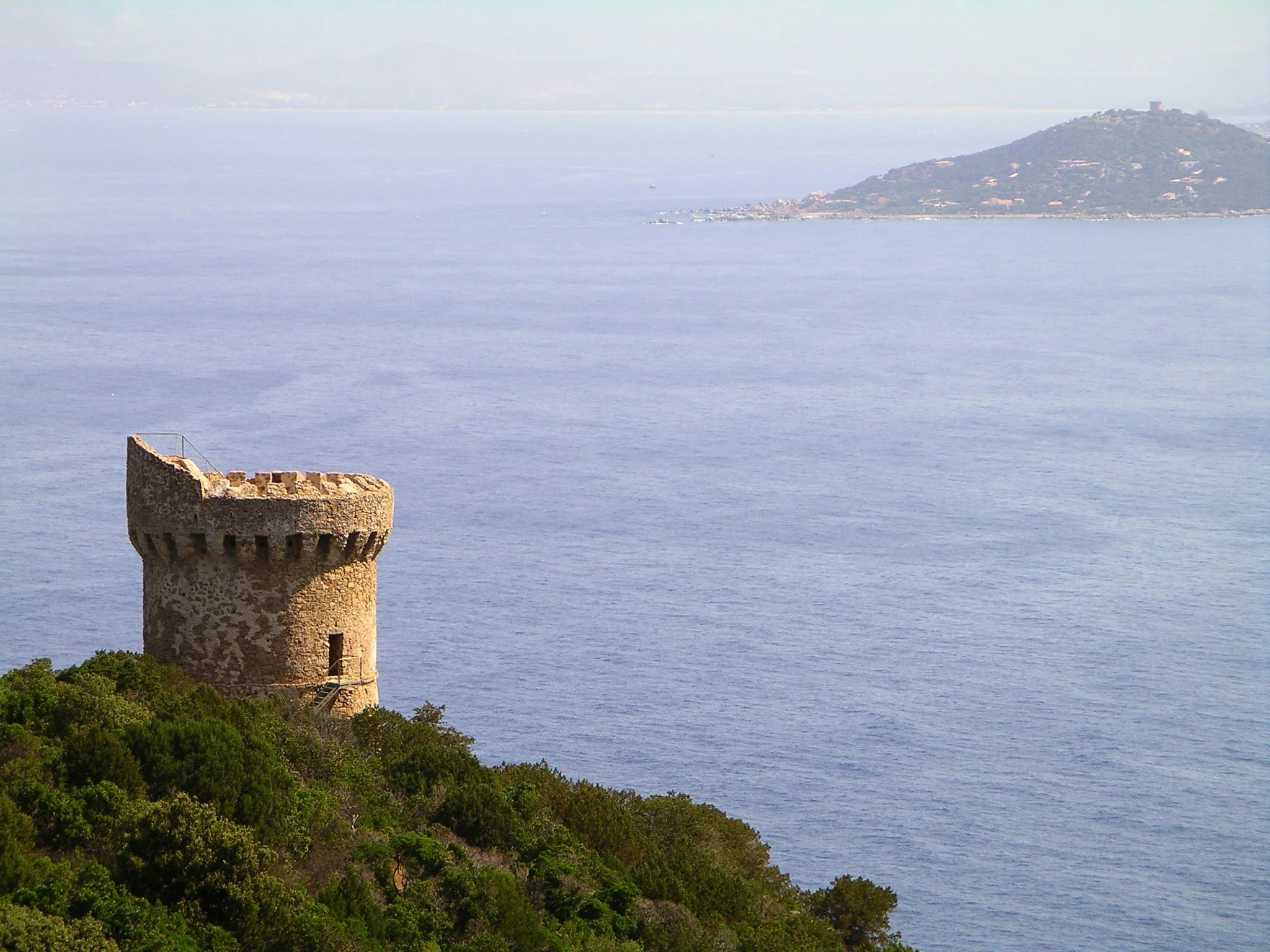
The signalling methods were simple but effective for the time. As soon as a suspicious sail was seen, they lit a fire in a brazier at the top of the tower. If it was daytime, they added green brushwood to make thick smoke. At night, the flame itself was visible. The system worked like a relay: once an enemy sail was spotted offshore, the nearest tower would light its signal, and the warning would leapfrog rapidly along the coast. Inland villages, often linked by smaller signal posts, could then prepare to defend or retreat. The towers were deliberately positioned so that each could see the next, creating a chain around most of the coast. A sighting near Bonifacio or Cap Corse could be relayed in less than an hour to Bastia or Ajaccio, a distance of around 80nm, alerting the main Genoese garrisons.
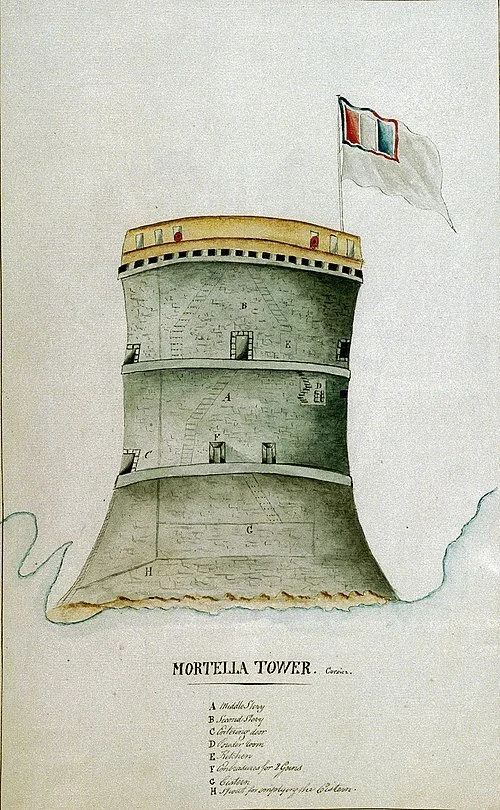
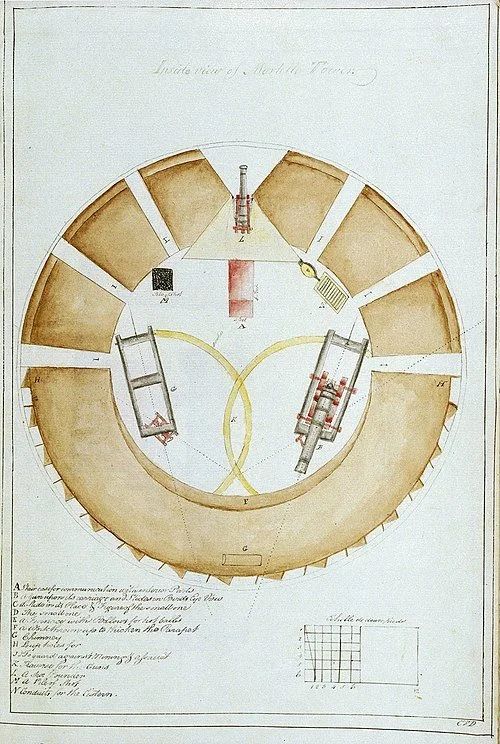
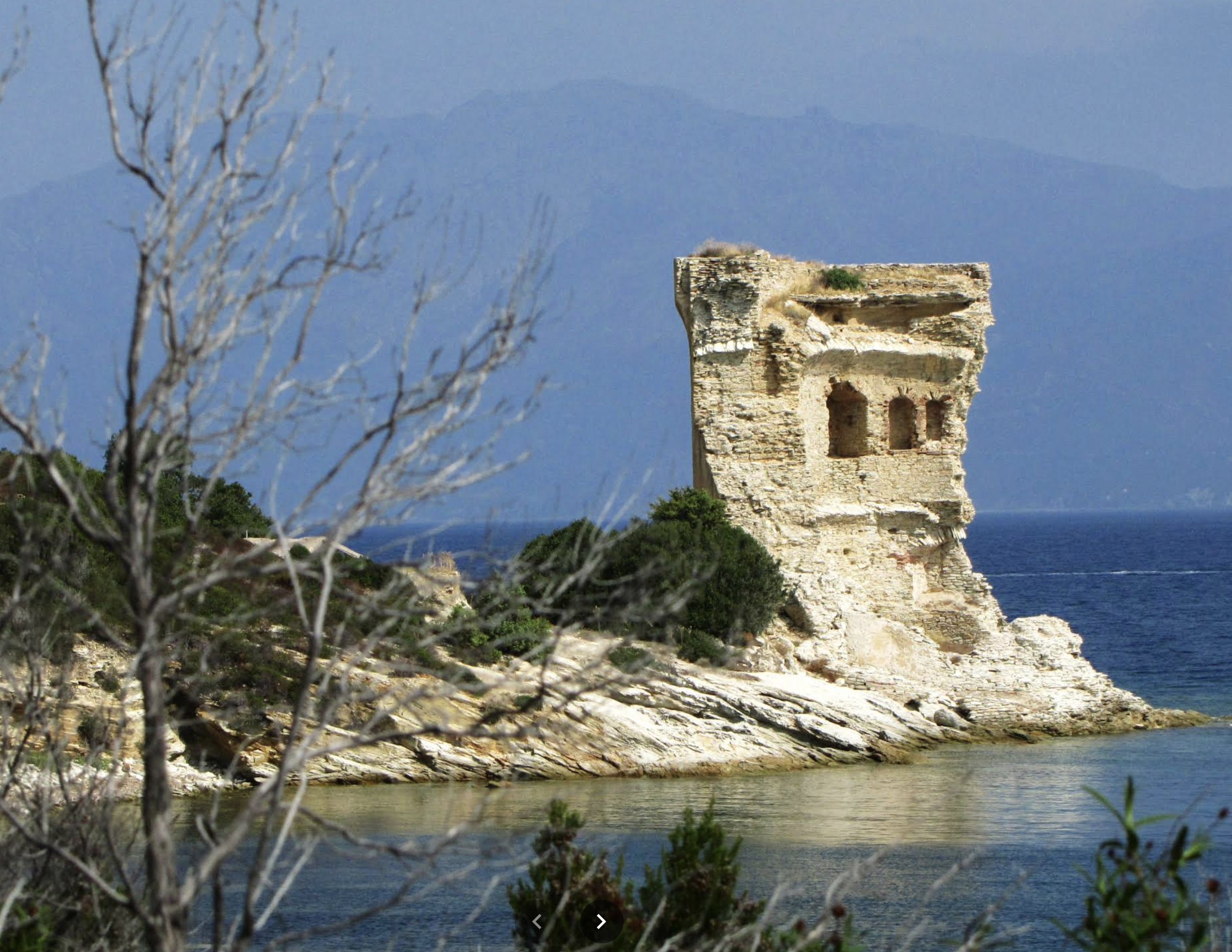

An elevation and a plan of the Torra di Mortella in the North of Corsica, and what she looks like today
The towers were manned (and yes, we can use that gender specific noun) by permanent watchmen called Torregiani, who usually local Corsicans hired by the Genoese administration. A typical tower had a crew of between two and six occupants depending on its size and strategic importance. They lived in the tower itself, which had a cistern for water, a storeroom for food, and loopholes to fire out of for defence.
At least one man was always meant to be on the roof platform, scanning the horizon. Towers were also armed with small cannon or arquebuses in the hope that the crew could hold off raiders until help came from nearby villages.
For those of us whose first instinct is to be anti-bureaucracy, we should remember that the system was created only because Republic of Genoa decreed in that all Corsican communities had to contribute to building and maintaining towers. The rules were made in the interest of the local population and of course also the Genoise Republic. Funding came partly from local taxes and partly from Genoa’s treasury. The guards were under the authority of the local Genoese governor, but often Corsican notables made sure the posts were properly manned.
In practice, this meant that the Genoese towers weren’t just prominent stone forts, but the backbone of a proto-telegraphy system. They observed, they passed the message on, and the authorities reacted accordingly.
Not that different to my VHF!
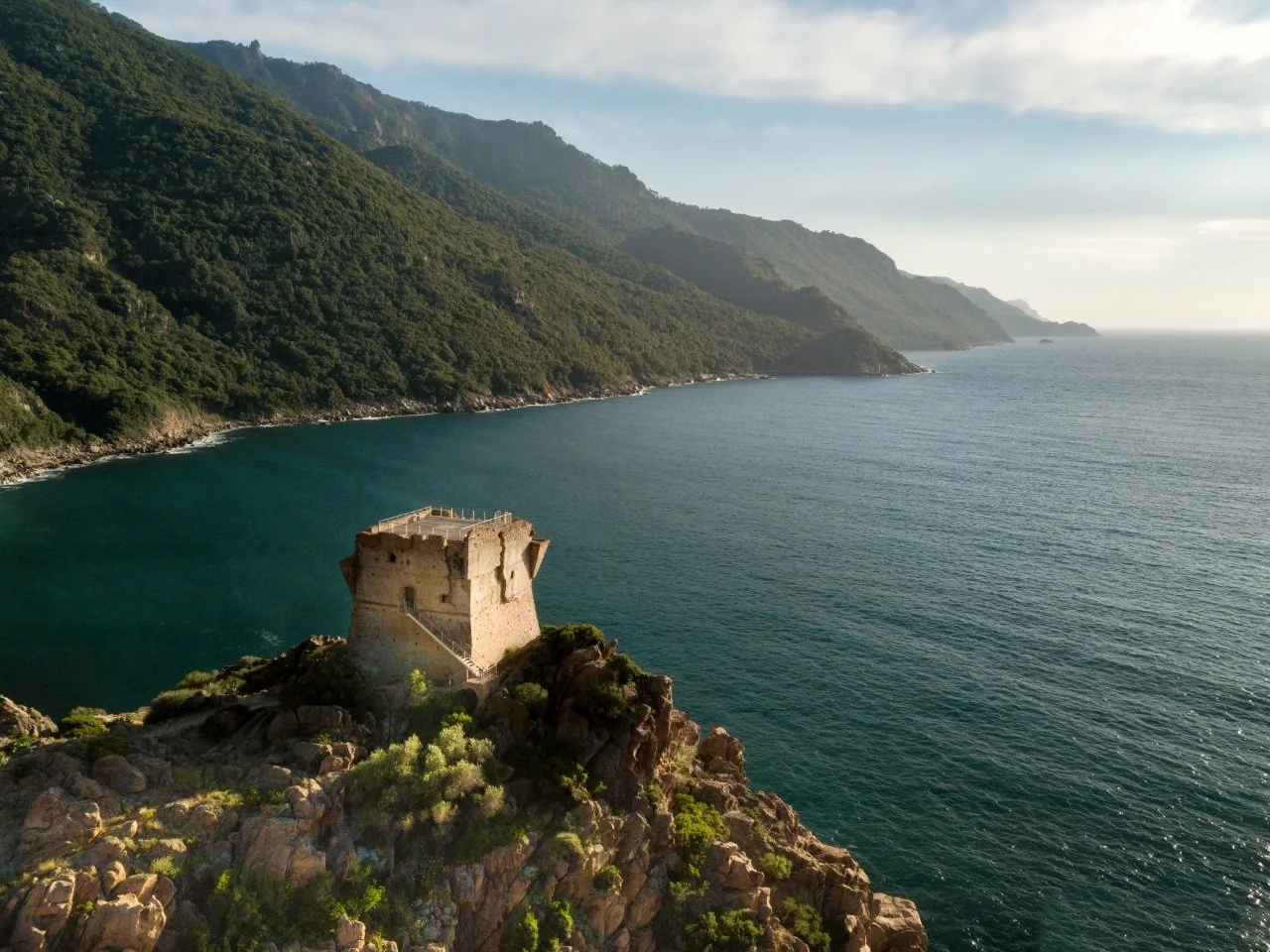
A square version of the Tower at Porto on the West Coast