
A Safety Chain-(of Correspondence)
It started with and few paragraphs in Sailing Scuttlebutt. You might have read about it and SWS’s response HERE
This kicked off some interesting commentary on either side of the pacific which I feel is worth republishing below. Any sort of airing of opinions in this area has to be a good thing.
Curtis Jazwiecki, while sailing his J/46 from Rongelap to Majuro in the Marshall Islands, offered this observation: Via the Scuttlebutt Newsletter

It is a breath of fresh air to read your article regarding safety regulations and over regulation causing harm to the sport. For some reason, espousing these views is met with scorn from the establishment. Why?
I agree 100% that safety at sea is paramount, that training is good, and that requirements for safety gear establishes baseline standards which improve safety. However, it is when we firmly set a path of firm rules in a book and fail to utilize common sense that we harm participation in the sport.
My first keelboat was the Melges 24 which does not have a bow pulpit or lifelines that met local regulations. As a result, I was banned from the weekend races which rounded buoys a few miles from the club on an inland lake. As a new boat owner and young sailor entering the sport, I was banned in the name of safety.
I fought the rule, bringing the issue to the board rooms of yacht clubs and to the top of US Sailing. I managed to be allowed to race (and quite successfully) in a few Great Lakes “offshore” races, before being swiftly banned again.
As my penchant for offshore sailing grew, in spite of the regulations, I sold the Melges 24 and took off to sail doublehanded around the world. I’ve now crossed the Atlantic twice, rounded Cape Horn, and crossed the Pacific, exploring some of the most remote places on earth.
Do I need lifelines and pulpits? Absolutely not. Are they nice to have? Sure. Do I consider them a primary safety item? No. In fact, I teach people to imagine they don’t exist!
Mountain climbing without ropes teaches a different way of thinking, as does sailing without lifelines or pulpits, and even life vests, jack lines, and safety tethers. All of those are good things, but sailors should be taught to sail without them. They are backups to your own abilities.
Too many sailors are reliant only on training regulation set forth by authorities. They are educated that if they tick a bunch of boxes, they are safe. They think because a boat has an EPIRB, they are wearing their PLB in their lifejacket, and have ponied up cash for the best gear, that they are safe. Hardly!
While it is good to have backups, redundancy, and a safety net, let’s not teach sailors to be reliant solely on regulations and checklists for their safety.
Let’s teach people to take responsibility for themselves, to think forwardly about outcomes, to problem solve in the moment in difficult conditions. Let’s teach them to build up time on the water and time in their boat in varying conditions.
That is what makes great sailors. Not a class. Not a piece of paper. Not a boat certification.
Most of all, let’s use some common sense and get more people out sailing and learning about our amazing sport!
In the same edition of the Scuttlebutt Newsletter, Melbourne’s Andy Warner commented.
My father did his first Sydney to Hobart Race in 1954. I have seen the 16mm film in which the boat had no hand rails, the crew wore the 'Mae West' type lifejackets (white canvas filled with kapok), and there were no safety harnesses - if you were frightened you tied a rope around your middle.
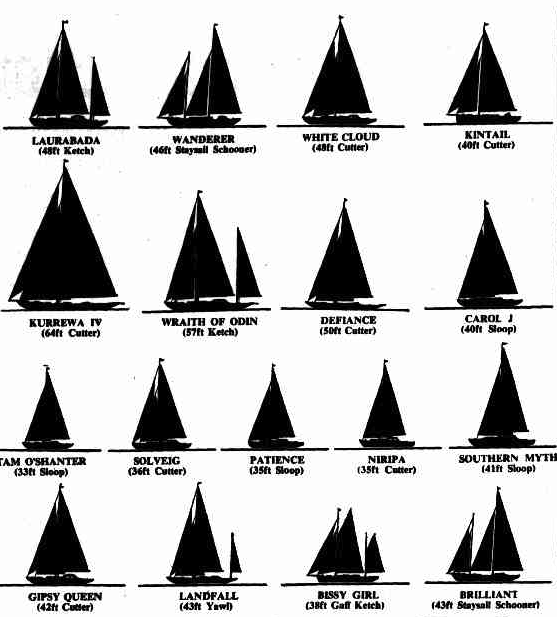
There were no fatalities in that race. It was put to me that the reason was that in those days, crews were very good at-risk assessment. Your article points out that race organizers are taking on more liability by mandating more. I put it to you that the safety courses are demonstrating how to use the equipment that is mandated but are failing to emphasize risk assessment.
- Andy Warner, Past Commodore, Ocean Racing Club of Victoria
Edward Broderick commented (very astutely)
Maybe just improve the regulations and fix how the intention is either being managed or mismanaged by various race officials or directors, or rewrite old regs to adapt to modern race boats? Blaming “over” regulation does not fix or mitigate “poor” regulations or “poor” regulators. Maybe new or more regs, better designed regs, agile regs, or better and ethical (per your example) race officials is the answer.
- Edward Broderick
Craig Leweck Editor of Sailing Scuttlebutt clarified…..
This event permitted boats without lifelines, but if they did have them, then the standard for lifelines would apply. Since that standard was "improved" such that spacing of stanchions was narrowed, the rule writers effectively banned boats that were built prior to this change. This was a pretty good example of how we try to make things better but have consequences. The only solution would be grandfathering boats prior to the rule change, but apparently nobody thought of that. Maybe they will now.
And then Vis the SWS website Ann adds…
My impression is that recreational sailing in NZ has fewer safety regulations - reported incidents highlight sailor's actions that would be considered highly unsafe by Australian sailing but how is seamanship gained - by experiential learning and not in a classroom.
And finally the author of the PETREL article in this weeks edition Malcolm Lambe weighs in
Usually it's not one thing that goes wrong but a series of things. Like in this tragedy - https://www.youtube.com/watch?v=NJibyLfN0u0
peter fynn made some very insightful (if not bloody obvious) comments on that video -
Sorry, but this was not the knot that killed these two sailors:
The holes in the swiss cheese started to line up before they ever left the dock: --
* four seasoned sailors - each one assuming that another would know how to .. rig a preventer .. switch on an epirb ..etc.
* no briefing before the trip - PBED - Prepare, Brief, Execute, Debrief.
if one of them had been a new sailor, perhaps the Skipper would have covered the safety features on the boat.
* no check on liquids - engine oil, fuel, hydraulic oil
* no man overboard drill - it is done EVERY time with a dummy person and a real (see wet) recovery whenever a Clipper Racer (Clipper Round the World) leaves on their next leg.
* Not even discussion of the MOB possibilty -- were they wearing their life jackets - in the picture those life preservers had no crotch strap.
* no emergency tiller - was there even one on board? How to rig it in the event of failure?
* no understanding of how to rig a preventer - that angle from the boom did NOTHING except to overload the line and fittings.
Sailing downwind is DANGEROUS.
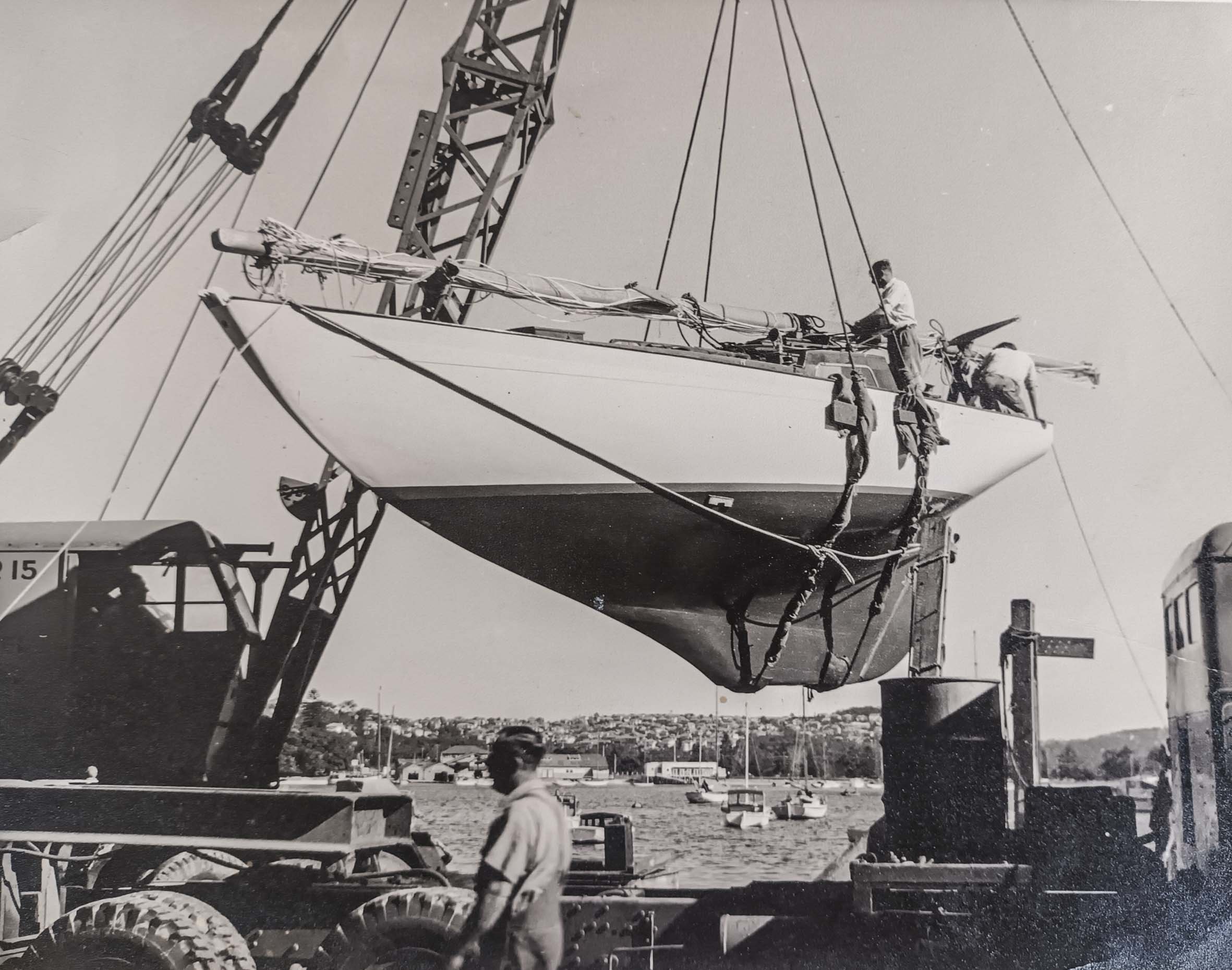
Malcolm’s Giles designed EOS at her launch