
Flotsam & Jetsam 21.11.25
Some sailing (and non-sailing) stories from around the world
The “Adrift” Podcast
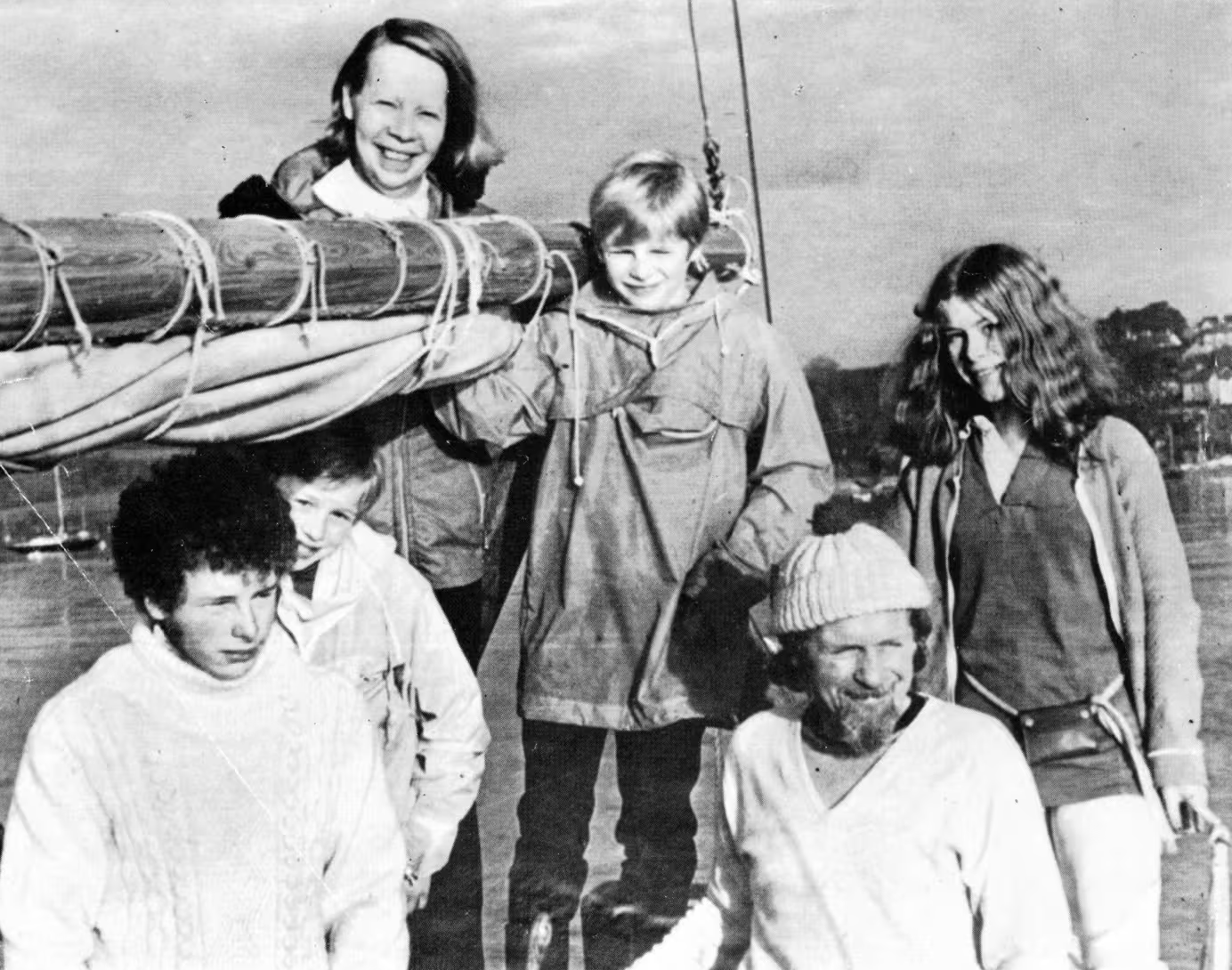
The Robertson family on board the Lucette in Falmouth before their departure in 1971
My flimsy research tells me that you are either a podcast sort of person or you’re not.— I’m not.
However I’ve enjoyed listening to the start of the apple series entitled “Adrift”
This review from the FT
In the early 1970s, a working-class family from Staffordshire sold their farm and went on a voyage around the world. After buying a 50-year-old schooner named Lucette, Dougal and Lyn Robertson took their four children — Douglas, Anne and 11-year-old twins Neil and Sandy — and left their life behind. The family travelled for 17 months, during which they stopped off at different ports; in Panama they picked up a new passenger, a British student named Robin, who was hitchhiking round the globe. But in June 1972, 200 miles west of the Galápagos islands, a family of orcas crashed into the Lucette, splitting it below the waterline. As the boat began to sink, the Robertsons and Robin grabbed what supplies they could — a bag of onions, some lemons, a kitchen knife — climbed on to their life raft, a solid-hull dinghy, and watched the Lucette disappear into the inky depths.
You can access the full series HERE
TOROA update
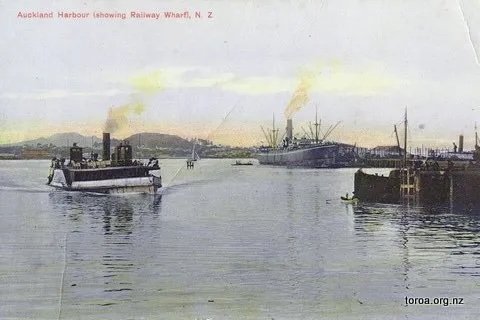
For those who followed our earlier stories on the TOROA restoration (see HERE and HERE) the latest newsletter from Toroa Preservation Society has just been released…
I like this description of the planking. ( &I like words like “peripatetic “!)
“The installation of the starboard sheer strake progresses, interrupted at intervals by rain and by the need to fair [put into alignment] the adjacent stringer plate, which defines the sheer of the gunwale, and the intermediate frames which are unattached to a corresponding deck beam. The unfairness was the result early on of building new steelwork to fit deteriorated material whose geometry was ill-defined and which had probably lost its original form. With the advice of our peripatetic shipwright Tony Lyon, Peter McCurdy, Terry Hay, Peter Stone and Rod Kane are carrying out the work.
With the necessary techniques learnt for the heavy timber and for fairing the adjacent steelwork, subsequent planking will go much faster. With enough volunteers and more scaffolding, we’ll be able to run a planking gang each side of the hull.”
Read the full newsletter HERE
What does a sunk Swedish galleon teach us about the perils of ignoring science?
As scientific institutions and truths come under attack in the US, how well protected is Australia against the assault on science and facts? - We love this article in The Guardian by Elizabeth Finkel
The light afternoon breeze barely ruffled the sails of the Vasa as it glided out of Stockholm harbour for its maiden voyage on 10 August 1628. With its high stern emblazoned by a gilded coat of arms, carvings of mythical figures and an extraordinary second gun deck, the new flagship for King Gustav’s war against Poland dazzled the cheering crowd. Some 1300 metres into the harbour, a brisk wind caught the sails. The Vasa heeled over and sank.
It was the second gun deck that contributed to its downfall. King Gustav had demanded it against the advice of the shipbuilders. The Vasa’s raised centre of gravity could not hold.
Read on HERE
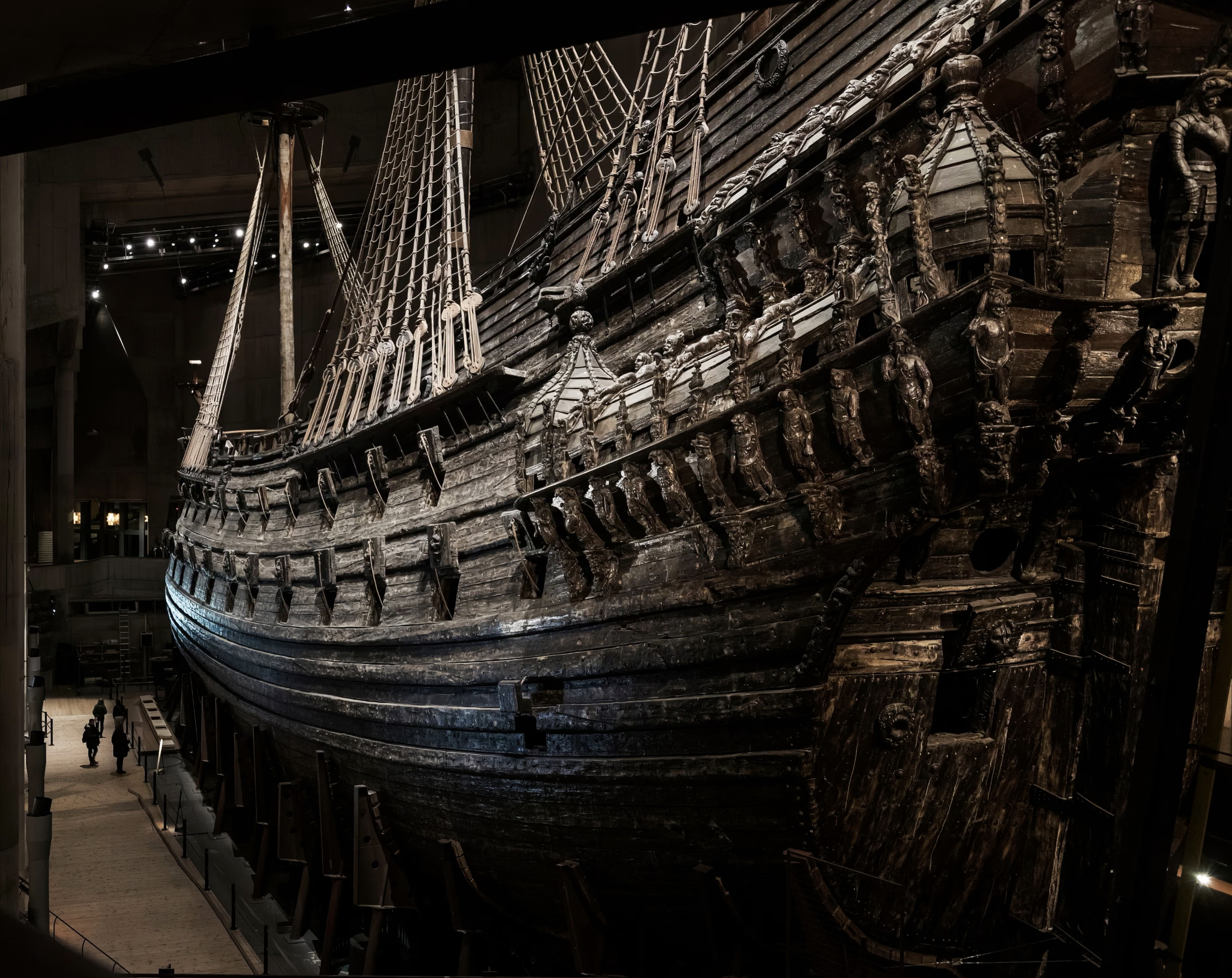
The Swedish warship, Vasa, sank on its maiden voyage after King Gustav insisted on a second gun deck. Now housed in a museum in Stockholm harbour, it serves as a lesson dredged from history: the perils of ignoring science. Photograph: Josefine Stenersen/The Guardian
It's Deck time!
Larry Eastwood releases Episode 8 of his wonderful project to restore the PETREL
More on Saving Goering’s Motor Yacht
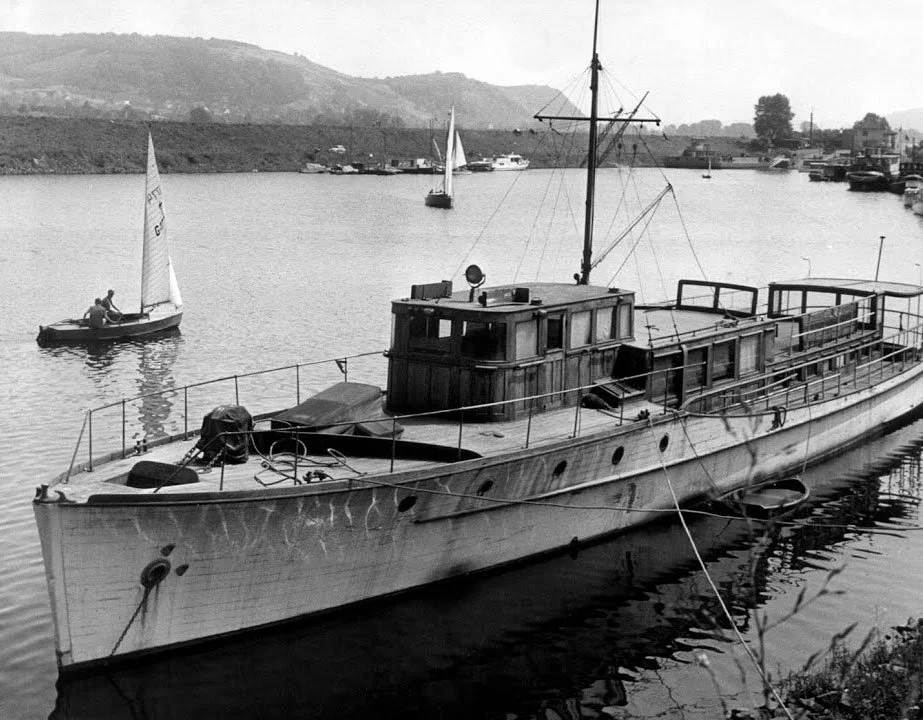
Our article entitled Saving Goering’s Motor Yacht has been one of the most popular this year with over 1000 reads and an average of 5.5 minutes spent on the page. So I guess it’s not surprising that the commentary continues. This week from John Cartwright.
A few thoughts about Carin II in the 1950s.
My father, Captain Hugh Cartwright, was captain of the Royal Naval Rhine Squadron 1955-58, based in Krefeld, Germany. His predecessor was Captain Bill Jewell of WW2 HMS Seraph fame. The squadron was made up of landing craft and motor launches (small gun boats). The staff were mainly Royal Navy and Royal Marines. The principal vessel was Goering's old motor yacht Carin II, renamed Prince Charles. The yacht's bell was still inscribed Carin II (after Goering's first wife).
Unusually, the yacht had a mainly German crew, of about 6 or 7 men, (I think because it was a war reparation or perhaps on temporary loan to the RN). I remember the master, Herr Bans (who I was told had been master of an invasion barge in WW2 for the planned Operation Seelowe), and the chef Herr Brockhaus (who I understand had been Field Marshal Rundstedt's chef in WWII). Please forgive me if I have spelt names incorrectly. Their backgrounds meant little to me at the time . There were also a couple of Royal Navy officers onboard, and two RN signalmen - and my father's Royal Marine Orderly (Marine Merritt) who was tasked with keeping an eye on me.
I was born in 1947 so, when we lived in Germany, would have been 8-11 years old. I spent quite a few weeks with my father onboard Prince Charles during my holidays (I was at boarding school in England). My sisters were rather envious, as girls were not allowed to sleep onboard - but sometimes, when things were not very operational, they and my mother would spend a day or two with us, disembarking in the evenings to stay in local hotels.
Of course, for a boy of my age it was great fun. I used to have goes at steering, peeling spuds, playing scat with the crew and so on. We went on several cruises up the Rhine to Strasburg, and the Necker to Heidelberg, And we went down the Rhine to Holland and Belgium. When not exercising the squadron my father was mainly involved in diplomatic activity, using Prince Charles to host dignitaries etc. When not onboard Prince Charles he lived ashore with us in Krefeld, working ashore at the naval base - HMS Royal Prince.
I know nothing about the Royal. Family's use of Prince Charles for their holidays. It has always seemed to me improbable as they had the Royal Yacht Britannia and plenty of other things to do. And would they have spent their holidays in Germany so soon after the war? But that is for others to research.
When my father left Germany in 1958, the Royal Naval Rhine Squadron ceased to exist.
John Cartwright
New or Old?

Curlew (right) and Alva. Note the yawl rig on Curlew as opposed to cutter rig on Alva. Credit: Nic Compton
Those of you smitten by the Falmouth Quay Punt for sale in this weeks article on working boats, might also be interested in Classic Boat Magazines free article this week. Its entitled “Is an Old Falmouth Quay Punt Better Than a New?” and does a comprehensive review of an old and new vessel.
As the yawl approached us, another boat loomed up behind her: a gaff cutter with reefed main and no topsail. Although she was only slightly bigger, the cutter’s mast reached up high in the sky and her gaff yard was raked at a jaunty angle. She too had the plumb stem and short overhangs that characterise the local working boats. But whereas the yawl was painted plain, unassuming white, the cutter’s bulwarks were a vibrant blue, showing off her sprightly sheer. As a gust came sweeping down from the northwest, the yawl stood up stoically and took it all in her stride, while the cutter heeled, her tall gaff twisted in the breeze, and she cantered past the smaller boat.
Read the full article by Nic Compton HERE
Evolution??
This is not particularly helpful in understanding how ships evolved, but its a bit of fun, and another example of where AI is taking us…
Kerry James Marshall - The Histories
From the New York Times-
The artist’s blockbuster survey across nearly five decades at the Royal Academy of Art in London tackles Black history in all its complexity.
The day before his survey exhibition “The Histories” opened to the public — his largest presentation of work in Europe, with more than 70 works made over four and a half decades — Kerry James Marshall sat in one of the soaring picture galleries of the Royal Academy of Art.
On the walls were his newest paintings, from the series “Africa Revisited,” several of which focus on the considerable role African elites played in capturing and selling other Africans to European slave traders. It is a subject that has been widely written about by historians, but has rarely, if ever, been broached in the visual arts.
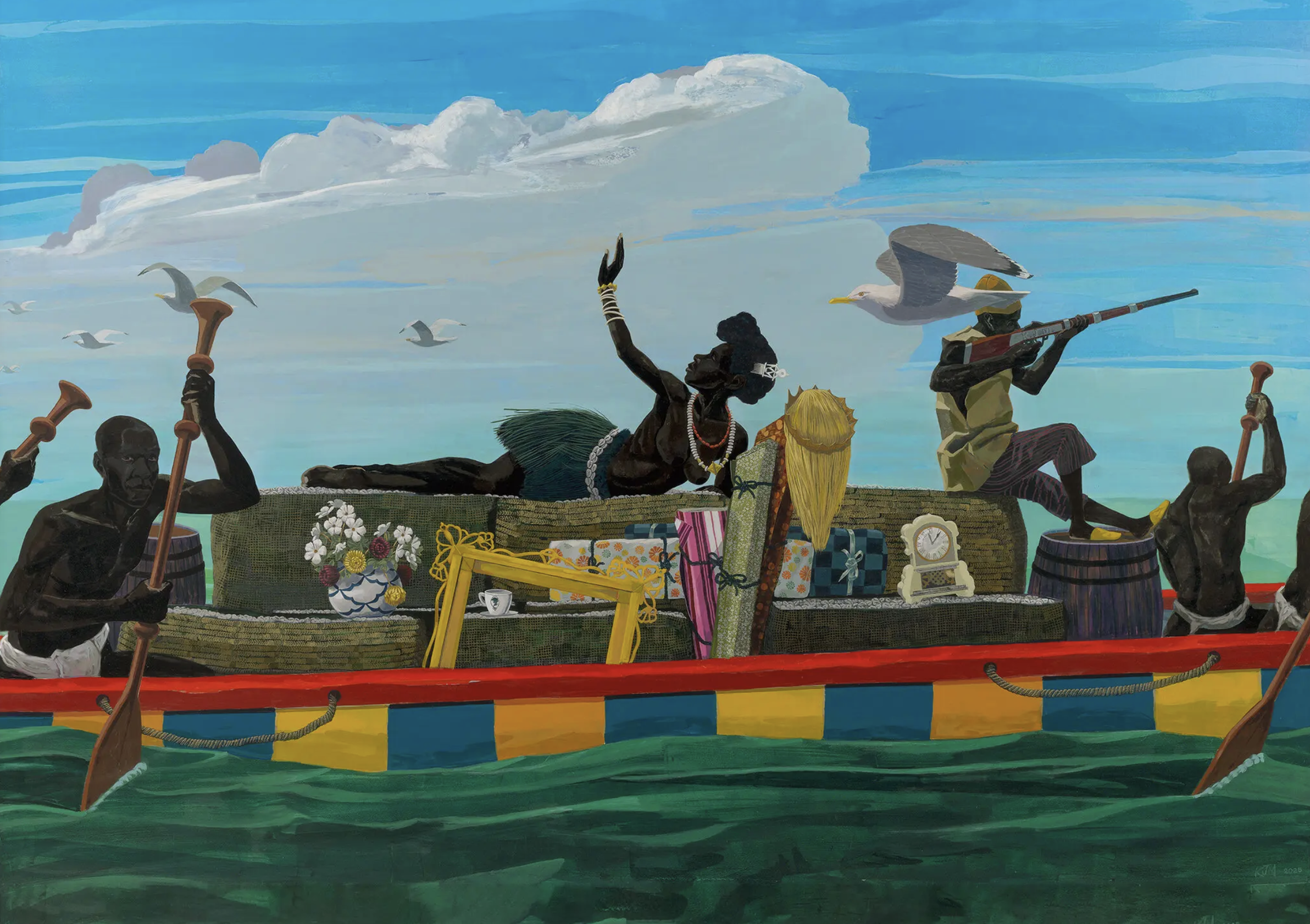
“Haul,” 2025, features an ebony-skinned woman lounging on a bag of cowrie shells, surrounded by a bounty of luxury objects. Credit...via David Zwirner, London; Photo by Kerry McFate