
The Handicap Horrors
Following on from the recent article we published about handicapping Classic Boats, and the stream of comments it spawned, we are publishing an article by David Salter, which despite being a couple of years old is entirely relevant!
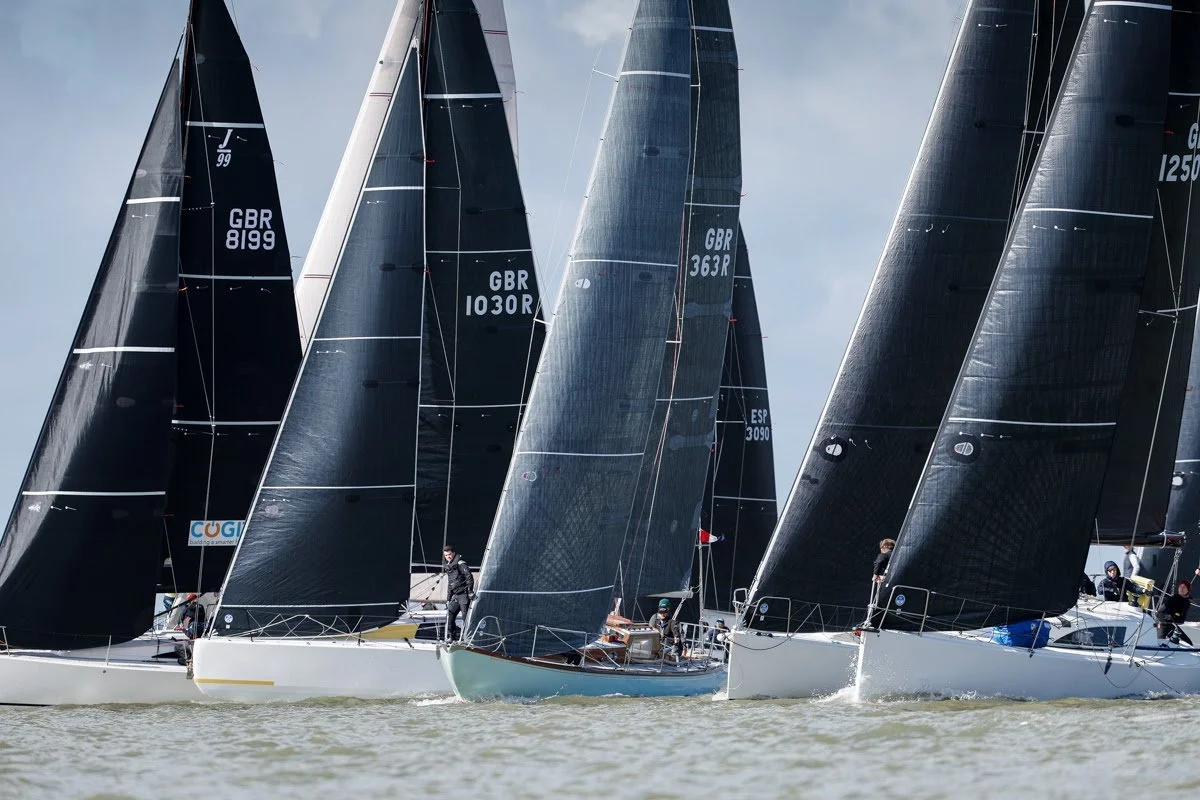
In the centre is the 1939 Laurent Giles 39ft Classic WHOOPER amongst comtempory rivals - photo © Paul Wyeth/RORC
If there’s one thing we all know for absolute sure and certain about handicaps in yacht racing it’s that yours is outrageously generous and mine isn’t fair. It’s the most common complaint of sailors.
Nobody says, “Oh, that’s too generous, better give me another 0.1 on my TCF or put our start time back a couple of minutes”. Nobody. If you Google “yacht handicaps” one of the first entries that comes up is a rant entitled “Our club handicapper is an idiot!”
Everyone thinks they know how to do handicaps better. Most attempts at genuine standardisation have failed. We have international systems, national systems, class systems and club systems. World Sailing, the governing body for all yacht racing, defines the principle thus:
Handicap racing is the generic term used to describe races in which boats of different speeds compete against each other and, through subsequent mathematical calculation, their true positions in the race attributable to the skill of the crew is determined by negating the physical speed effects of the boats.
These determinations of which crew beat which are calculated by correcting the actual time it took each boat to complete the race by a numerical measure of the boat speed – its handicap.
In no other sport has there been such a diversity of approaches to the fundamental requirement that we should compete under conditions that offer everyone a fair chance of winning. Yet in no other sport have these various attempts so convincingly failed to satisfy the participants. Handicapping continues to be the most intractable weakness of yacht racing. Only strict one-design competitions are apparently immune.
Handicaps – however they are derived or applied – are open to misunderstanding, distrust, challenge, corruption, abuse and outright contempt. Whether justified or not, that has been their reputation ever since the initial attempts were made at establishing workable handicap systems for sailing way back in the early 19th Century.
Since then we’ve tried everything. Handicaps based on tonnage. Handicaps based on distance. Handicaps based on time. Handicaps based on overall length. Handicaps based on waterline length. Even handicaps based on how many crew a yacht is allowed for its length. No system has proved entirely satisfactory.
At core, the problem is that the task of setting fair handicaps in mixed-fleet yacht racing must always be an attempt at reconciling two variables: the estimated intrinsic performance capacity of the boat, and the assumed abilities of the crew. But as any mathematician will tell you, equations with two interactive variables soon get complicated.
It would be so much easier if yachts were horses. Thoroughbred racing is governed by the primary assumption that a horse is a horse. The amount of weight it must carry for the next race is apportioned solely on the basis of its recent results against other horses in similar conditions. (There are, admittedly, some races for specific genders, age ranges and on a weight-for-age basis, but yachts aren’t animals – they don’t grow into adulthood and maturity.)
All yachts – except strict one-design classes – are different. They have an infinite variety of characteristics that reflect the individual requirements, tastes and ideas of owners and the theories of the naval architects who designed them.
The obvious response is to identify those dimensions of a yacht and its rig that are thought to contribute to performance, measure them, and then combine that data into a formula that yields a number – its rating, or Time Correction Factor. Then, as each boat finishes, the race management team multiplies that TCF by their elapsed time to yield a Corrected Time. Shortest corrected time wins.
Alternately, in timed start racing, the TCF is applied before the race to an expected elapsed time to establish “offsets” – the starting delays in minutes after ‘0’ for each yacht that would, in theory, see the whole fleet eventually finishing together. (Of course this never happens, but at least in handicap start racing the order in which the boats finish is also their final position in that race. No post-race calculations are required.)
The general principle of time-on-distance handicapping is accepted within the sailing community. But agreement on the fairest way to measure and rate a boat to establish its TCF has been much harder to find.
These disputes have spawned an endless alphabet soup of successive systems – RORC, CCA, IOR, IMS, IRC, ORCi and so on. There has rarely been a moment when the whole international yachting community was happy with the prevailing rating regime. Dissident factions are always busily agitating for a replacement.
The most enduring answer to the challenge of fair handicapping was the establishment of ‘metre rule’ classes more than a century ago. The underlying notion was that rather than attempt individual assessments of each yacht’s performance characteristics and apportion them a handicap, the metre rule would just mandate a set of parameters within which all designers must work.
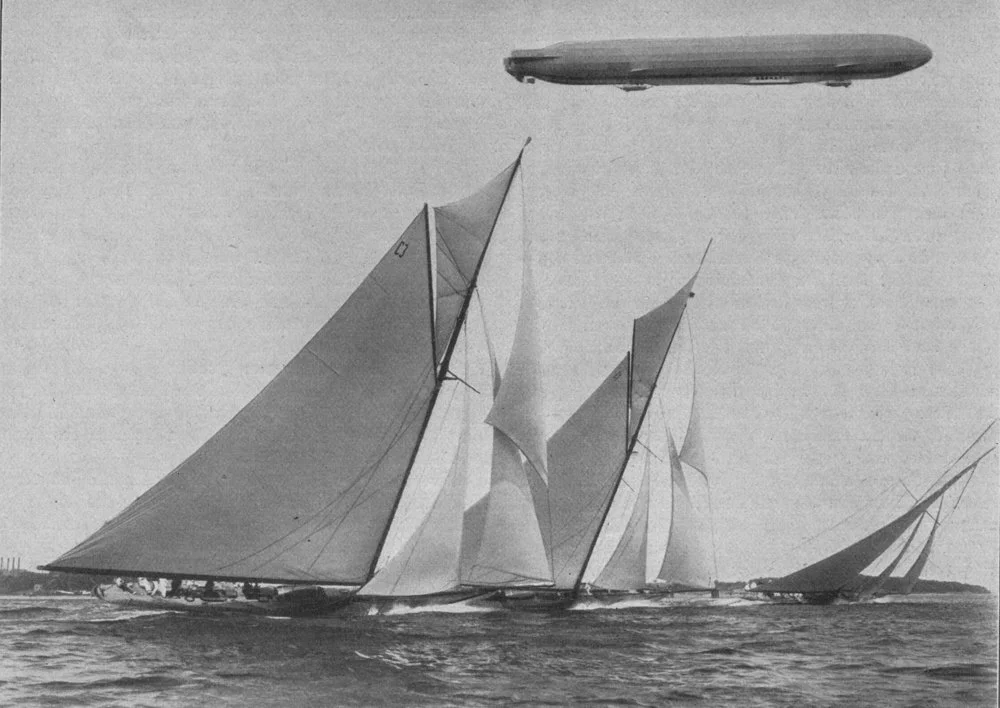
The 19mR Octavia racing with the 15mR class (Kiel Week, 1913)
Displacement, length, the difference between skin girth and chain girth, freeboard and sail area are combined into a simple formula. The product of that formula yields the number that defines the class: 5.5 metre, 6 metre, 8 metre, and so on. Within those divisions no handicaps apply.
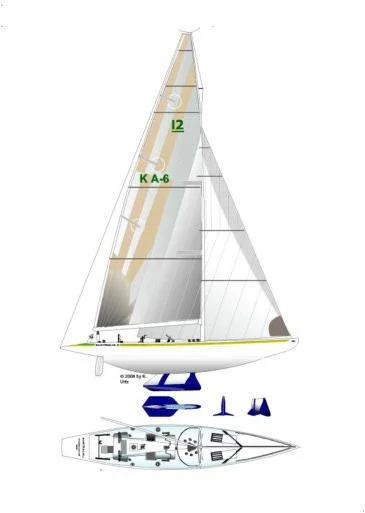
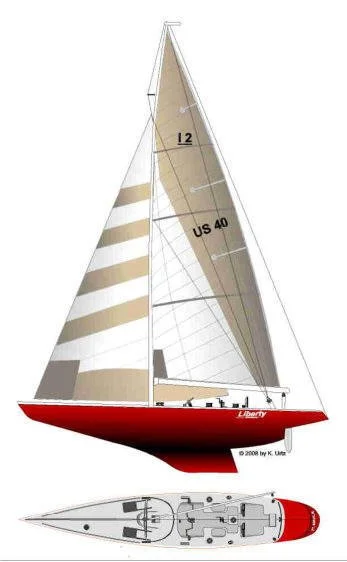
The metre rule continues to allow designers considerable freedom and has helped create a fascinating variety of hull shapes with remarkably close performance. Quite different yachts – such as the America’s Cup 12 metres Australia II and Liberty – achieved boat speeds that were only tiny fractions of a knot apart over the full range of racing conditions. The issue of handicaps simply does not arise. But metre boats are predominantly day boats – flat-water racers – and their rule does not suit offshore yachts or general-purpose cruiser/racer craft. (click to enlarge)
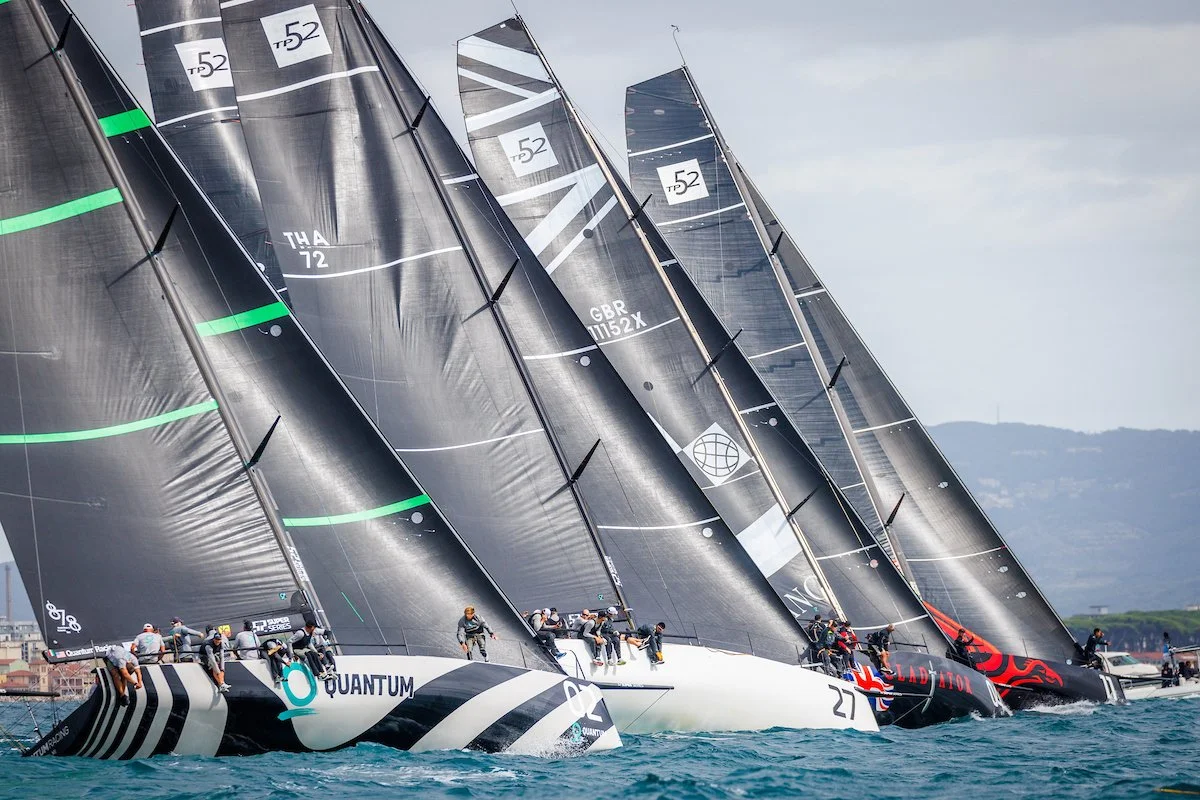
The ‘box rule’, where the design and rig details of a yacht are largely unmeasured but must fit within an imaginary cube, sphere or rectangular prism, is a more modern version of the principle underlying the metre-style development classes. Yet even in a supposedly even ‘box rule’ class such as the current TP52s, many of which are sufficiently robust to contest major offshore events, no two boats are really the same. They must therefore each be measured for individual handicap ratings when racing within mixed fleets. Back to Square One.
At the opposite end of the handicap conundrum is the approach best known to ordinary club racers: the systems based on performance (PHS). This is essentially a statistical measure that takes the racing history of the yacht as base data and then adjusts its time correction factor (TCF) to reflect recent performance. Beyond an initial rough estimate of its potential performance, the dimensions of a yacht don’t really matter. How well – or badly – it is sailed in relation to the rest of the fleet is what counts.
Those, then, are the two dominant approaches to the handicapping conundrum: physical ratings and performance. Why do they continue to attract so much criticism?
First, the assumption that a calculation that takes in all the relevant dimensions of a yacht and its rig can yield a single, reliable, time correction factor that puts it on an equal footing with every other yacht measured in the same way is an obvious nonsense. Those numbers must be an approximation because boat-to-boat variations are infinite. Worse, when that calculation includes “secret” multiplying factors in the governing computer algorithm, nobody has much faith in the final numbers.
Handicap massaging is a game that’s been with us for more than half a century. Under the original RORC system the overlapping portion of a genoa was not measured, so most offshore racing yachts of the early 1960s had short masts but huge headsails whose clews were sheeted beside the helmsman. It took years before that rule was changed and all those acres of “free” sail area were counted.
Around the world there is now a select group of ‘boat whisperers’ who charge a tidy sum for tweaking yachts in subtle ways that have the effect of yielding a better rating than could normally be expected. This is euphemistically called “optimisation”; cynics are more likely to consider it closer to sharp practice, or even cheating. Whatever, it would seem to have only a vague connection with the Corinthian traditions of the sport.
In any case, clever designers quickly make fools of the ratings gurus as each new rule is introduced. This has often resulted in extreme, unsafe and difficult-to-sail boats – which is partly why we’ve had so many changes over the years.
But as long as individual owners keep wanting to compete in yachts of variable design there has to be some form of common, dimension-based handicapping. Yet measurement loopholes are immediately exploited, usually before the governing authorities have realised that their new rules are imperfect.
It’s a continuing problem for which there may be no practical solution. Not surprisingly, ambitious owners now enter their yachts in multiple divisions in the same race, hoping that at least one of the many handicapping formulas might provide them with a trophy.
Laying optimisation and rule-bending aside, let’s assume for the moment that every boat in an IRC fleet can been perfectly rated, i.e. that all the yachts are equally matched by mathematical adjustment. The differences in finishing order should therefore, in theory at least, only reflect the relative skills and tactical abilities of the skippers and their crews during that race. That is, after all, the object of the whole rating exercise.
It never happens. Why? Because the predominant systems, such as IRC and ORC, don’t factor in some crucial elements of performance that have no connection with the physical properties of the yachts.
For example, a 100-foot super-maxi will sail from Sydney to Hobart so quickly that it only has to carry enough food and water to keep the crew functioning for no more than 40 hours. Meanwhile a 32-footer – at less than a third the size – must carry provisions for three or four days, a much higher “dead weight” proportion of the yacht’s all-up displacement.
Similarly, larger yachts sail with a full-time navigator while their smaller competitors need to delegate a crew-member to spend hours away from their principal role in helping to sail the boat just to attend to the navigational and mandatory radio reporting duties.
So are the performance-based handicap systems fairer, or more accurate? It depends.
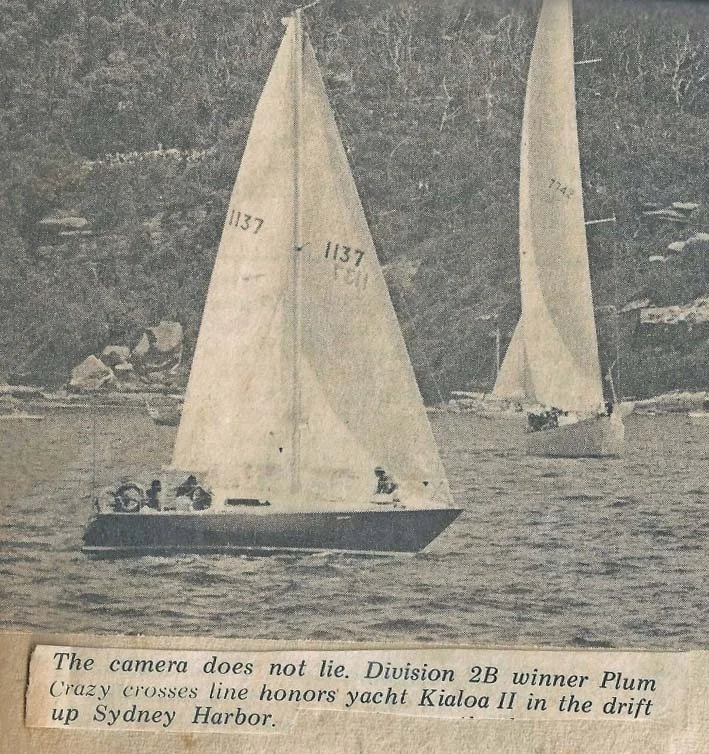
Within a relatively stable community of racing yachts reliance on a comprehensive ‘back story’ of performance data can be remarkably accurate. Handicapping programs such as SailSys have assembled huge collections of race statistics for hundreds of yachts stretching back more than 40 years. The algorithms often yield some impressively close finishes. TCFs can be adjusted to reflect variations in performance from race to race.
Nevertheless, there is also a fundamental weakness in putting all our handicapping eggs in the number-crunching basket: computers are blind.
Even if some ‘outlying’ results are discounted PHS systems still rely on the rather wobbly assumption that every skipper and crew will perform at a steady level of competence. But we all know that luck and misadventure will often trump ability in yacht racing.
If your crew botched a spinnaker drop and went prawning for five minutes at the bottom mark that error should not then be rewarded by a more favourable handicap for the next race. There is also the potential for unsporting skippers to manipulate their PHS handicap by sailing just a little slower than normal – “sandbagging” – to gain a time advantage for the next race.
This is why, to be reliable, computer-generated TCFs should always be reviewed by a human being with first-hand knowledge of what actually happened out on the course. Any manual corrections are, by definition, subjective, but at least they represent genuine attempts to reflect on-water reality.
Performance handicapping also has a leveling effect that can eventually become a disincentive. When Alex Whitworth, the multiple circumnavigator, gave up racing under PHS he explained his reasoning by saying “The better you sail the harder it gets.” He has a point. Should we be penalised for better tactics, better crew-work and better boat preparation just to give the less committed or less capable boats and crews a chance of winning?
The more we struggle for an acceptable response to these problems the more attractive one-design racing becomes. That is, until we realise that there is most probably just as much rule bending, secrecy and outright skullduggery going on in those classes than in the mixed fleets.
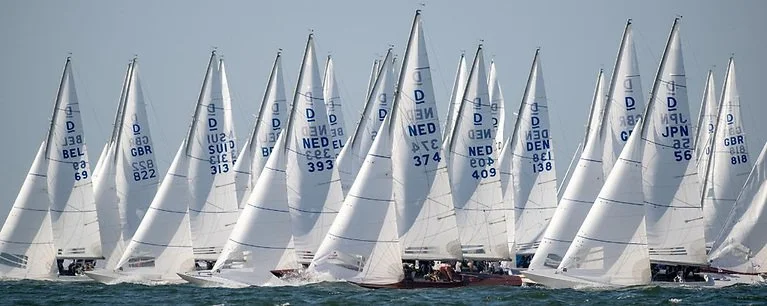
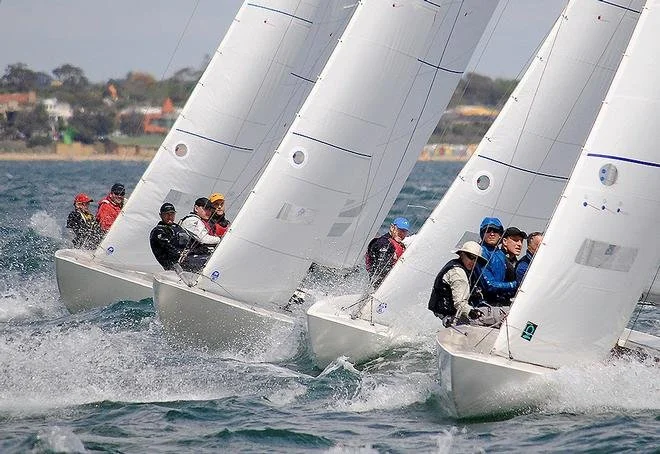
Even in such a purportedly strict international one-design class as the Etchell three-man keelboat, particular new hull-and-rig combinations sometimes emerge as patently faster than the bulk of the other competitors. Humans are incurably competitive beasts, and sailors – regrettably – are often among the worst offenders.
And there is a final, unmeasured factor in modern offshore racing that muddies the waters of dimension-based handicapping even further: professionalism.
A crew comprising full-time, world-class sailors all on at least $1,000-a-day (plus expenses) will be fitter, stronger, more experienced and faster than a collection of mates who only sail together for a few days every year. Yet the IRC and ORC formulas have no way of recognising that huge difference.
In an attempt to acknowledge this issue race organisers have belatedly taken to establishing “Corinthian” divisions in some of their major offshore events. Perhaps it tells us a lot about the current state of our sport that it is these amateurs, not the pros, who have been herded into a token ghetto.
But the overwhelming majority of sailors compete in their local club series held over the Spring and Summer months. Each weekend they race for points awarded in direct relation to their finishing position that day. The season championships are then decided on the cumulative points of each yacht.
Those modest series are, in fact, the true test of any handicapping system. Whichever algorithm is applied, it must, over time, ensure that the slowest boat in the fleet has the same chance of winning as the fastest. Anything else is unfair.