
JUKUNG
One of the more important roles we have at SWS is to record the remnants of traditional sailing cultures and craft that may not be around much longer. We may not be very scientific about it, but a visual record of a vanishing culture is important however informal.
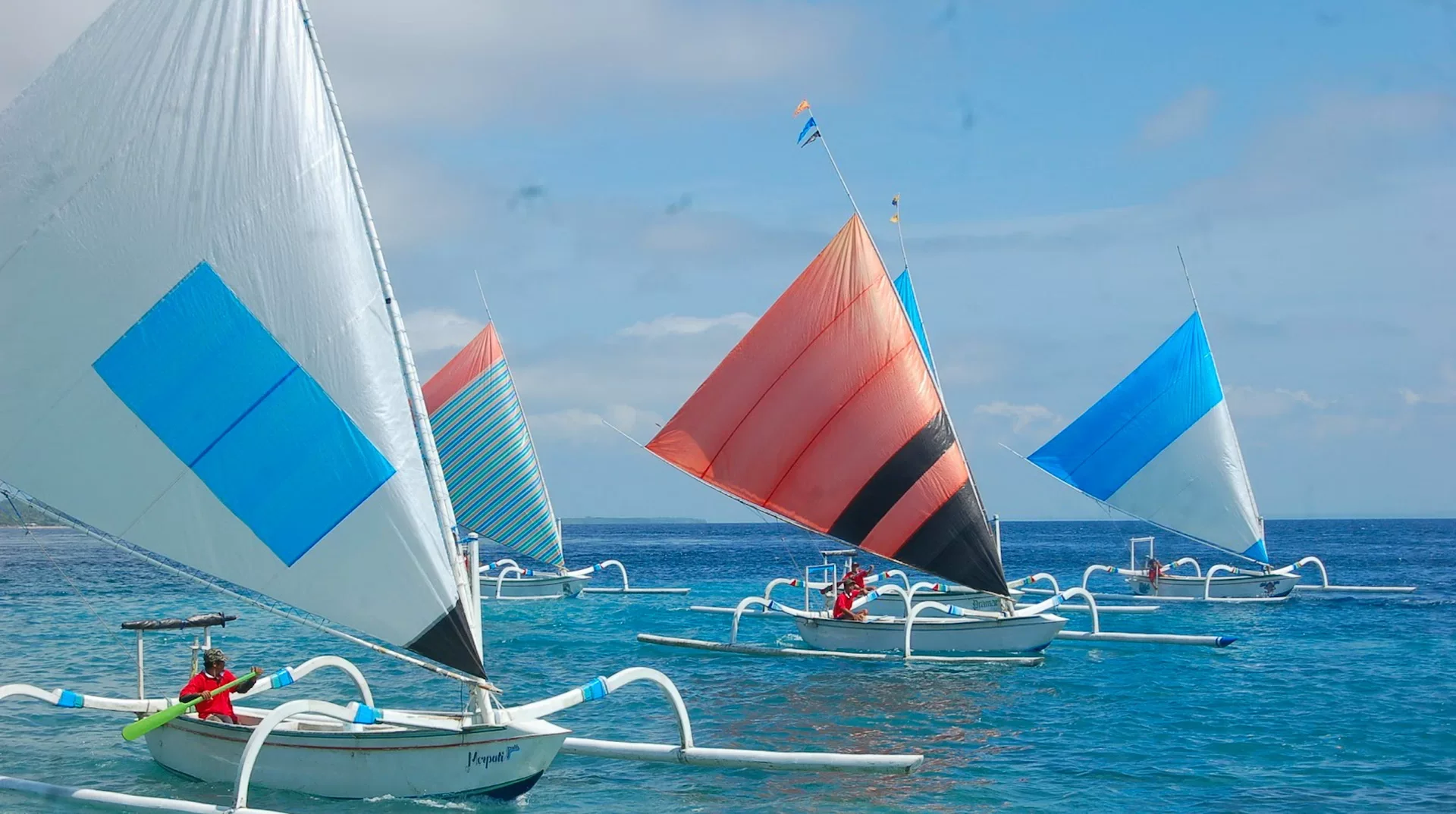
My personal passion is the dhows of East Africa, however this week we were delighted to receive a series of videos from Jim Woods (custorian of MARGARET PEARL and frequent SWS contributor) talking and sailing with one of the custodians of Jukung culture in Bali.
If you don’t know about Jukung here’s a quick overview.
The craft has ancient Austronesian roots, tracing back to the seafaring peoples who spread across the Pacific and Indian Oceans thousands of years ago. The double-outrigger design (a stabilising float on each side) is a hallmark of Austronesian navigation and is still used in the Philippines, Polynesia, and as far away as Madagascar. In Bali, the jukung developed as a fishing vessel, its design being adapted to the island’s coastal waters. Lightweight and highly manoeuvrable (by comparison to other traditional vessels), it could handle surf launches and landings and was relatively stable in rolling seas. Traditionally, jukungs were carved from a single dugout log, usually jackfruit wood, with added planks and bamboo outriggers lashed on with natural fibre ropes. Today, fiberglass versions are increasingly common, but the traditional design shape is still used. The sailing versions are powered by triangular, Polynesian style crab-claw sails and are famously painted in vibrant colours, often with motifs of animals, eyes, or mythological symbols to protect fishermen and bring good fortune. Their main role has always been small-scale artisanal fishing—going out just offshore or sometimes further to catch tuna, mackerel. Nowadays the sailing versions depend on tourism and a role in ceremonies and festivals for their existence.
Sailing with Jim and Gudo and braeking the yard….Twice!
Jim interviews Gudo about his connection to Jukung and the construction of the vessel.
If your favourite corner of the world has a traditional sailing culture that needs to be recorded, pull out your ‘phone and start filming. It doesn’t have to be broadcast quality. Just capture the people and the boats and the vibe of the thing. We’d love to share more of these stories in SWS!