
Flotsam & Jetsam 12.12.25
Meaningful Maritime stories from around the web and the world
Chinese Sailor's Antarctic Voyage Hit by Robbery in Papua New Guinea
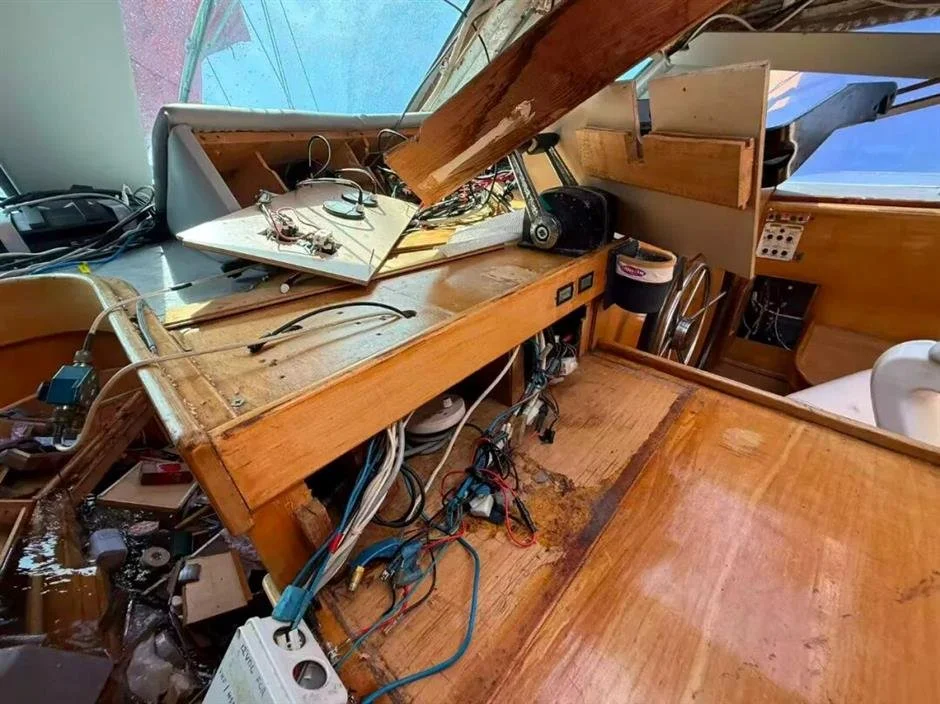
Not sure what to make of last week´s story from the Chinese City News Service …but here it is anyway!
Chinese navigator Zhai Mo and his crew were robbed while sailing through Papua New Guinea, forcing adjustments to their planned human-powered circumnavigation of Antarctica, Jiefang Daily reported on Friday.
The team reached Papua New Guinea waters on December 2. At the request of local authorities, all personnel took a police boat to the capital Port Moresby for entry formalities. Local police and villagers had assured the crew that the yacht would be guarded in their absence.
However, on December 4, the crew returned to find Zhai Mo 1 had been illegally boarded and ransacked. Key equipment, including the engine, generator, rigging, sails, lifeboat, and outboard motor, had been stolen or destroyed.
All onboard belongings, including documents, navigation and communication devices, and filming and live-streaming gear, were also taken or destroyed. Flooding caused by tampered hull valves rendered the vessel unseaworthy.
Read on HERE
Ancient pleasure craft discovered
From https://www.archaeology.wiki
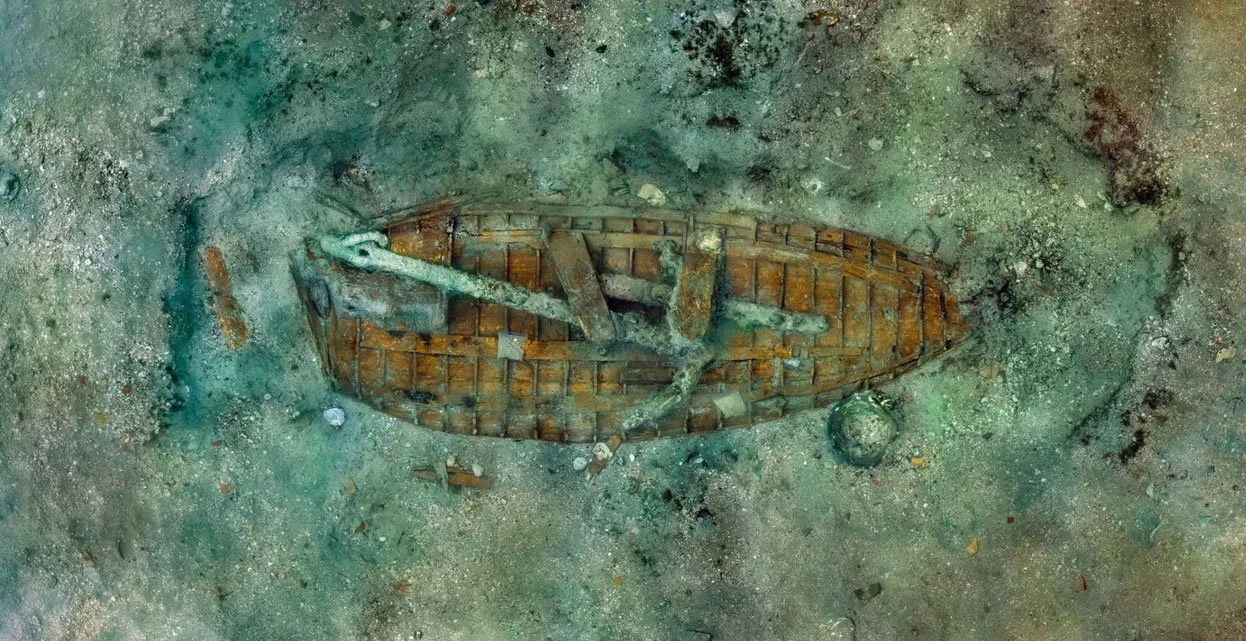
The vessel. Image: Franck Goddio, Ηilti Foundation
An ancient Egyptian recreational boat, matching a description by the Greek historian and geographer Strabo, has been discovered off the coast of Alexandria, causing excitement in the archaeological community.
The vessel, dating from the first half of the 1st century, was 35 meters long and designed to host a central pavilion with a cabin decorated in luxury. It was found near the submerged island of Antirhodos, which was part of Alexandria’s Great Harbor.
Strabo, who visited the Egyptian city around 29–25 BCE, wrote about these boats:
“These vessels are luxuriously fitted out and used by the royal court for excursions; and the crowd of revellers who go down from Alexandria by the canal to the public festivals; for every day and every night is crowded with people on the boats who play the flute and dance without restraint and with extreme licentiousness.”
The excavations were conducted by the European Institute for Underwater Archaeology (IEASM), under the direction of Franck Goddio, professor of maritime archaeology at the University of Oxford.
“This is extremely exciting because it’s the first time such a vessel has been discovered in Egypt. These types of boats are mentioned by several ancient authors, such as Strabo, and are also depicted in literature and artifacts – for example, in the Palestrina mosaic, which shows a much smaller version of such a vessel with nobles hunting hippopotamuses. However, until now, no such boat had ever been found,” he told The Guardian.
Goddio’s most ambitious projects have taken place off the Egyptian coast, in the eastern harbor of Alexandria and in the Bay of Aboukir. In collaboration with Egypt’s Ministry of Antiquities, he has been exploring – and uncovering – a vast area since 1992.
While the Nile mosaic housed in the Archaeological Museum of Palestrina depicts a vessel about 15 meters long, the newly discovered boat is significantly larger, based on its well-preserved wooden structure. It likely required more than 20 rowers.

The Nile Mosaic of Palestrina. Image: Wikimedia
It was found just 7 meters underwater and 1.5 meters beneath the sedimentary seabed.
Goddio initially assumed it was two boats, one on top of the other, “because the construction type was very unusual. The bow is flat… and the stern is rounded… so it could navigate in very shallow waters.”
In 2000, one of the most significant archaeological discoveries in recent years took place in the Bay of Aboukir, where the ancient city of Thonis-Heracleion and parts of the city of Canopus were found. Among the impressive treasures recovered were two colossal statues of a queen and a king from the Ptolemaic dynasty.
With its palaces, temples, and the famous 130-meter Lighthouse – one of the Seven Wonders of the Ancient World – Alexandria was one of the most magnificent cities of antiquity.
After a series of earthquakes and tidal waves, the Portus Magnus and parts of the ancient shoreline sank beneath the surface of the Mediterranean, taking palaces and other buildings with them.
Record fleet to compete in 2025 Club Marine Sydney Hobart Classic Yacht Regatta
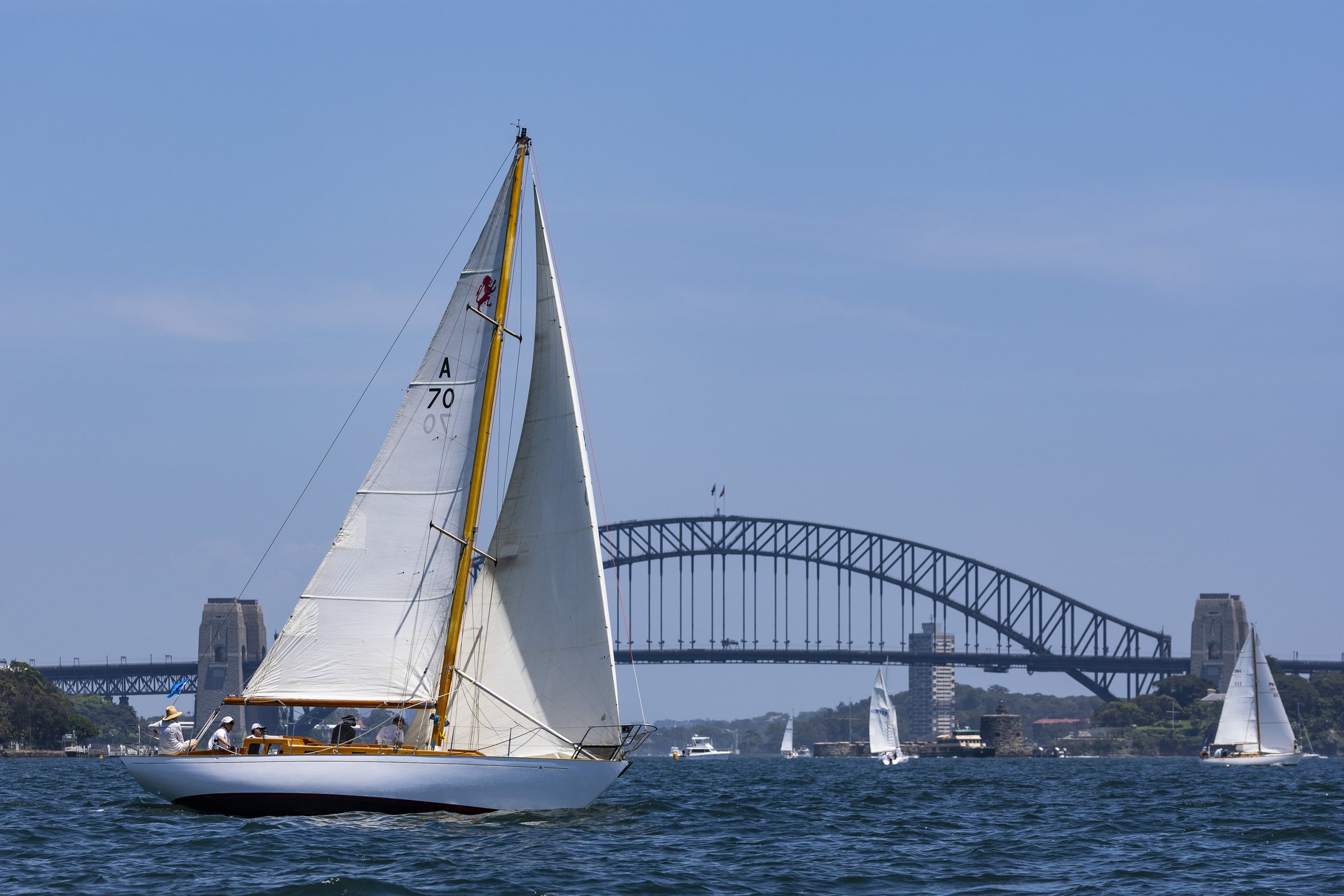
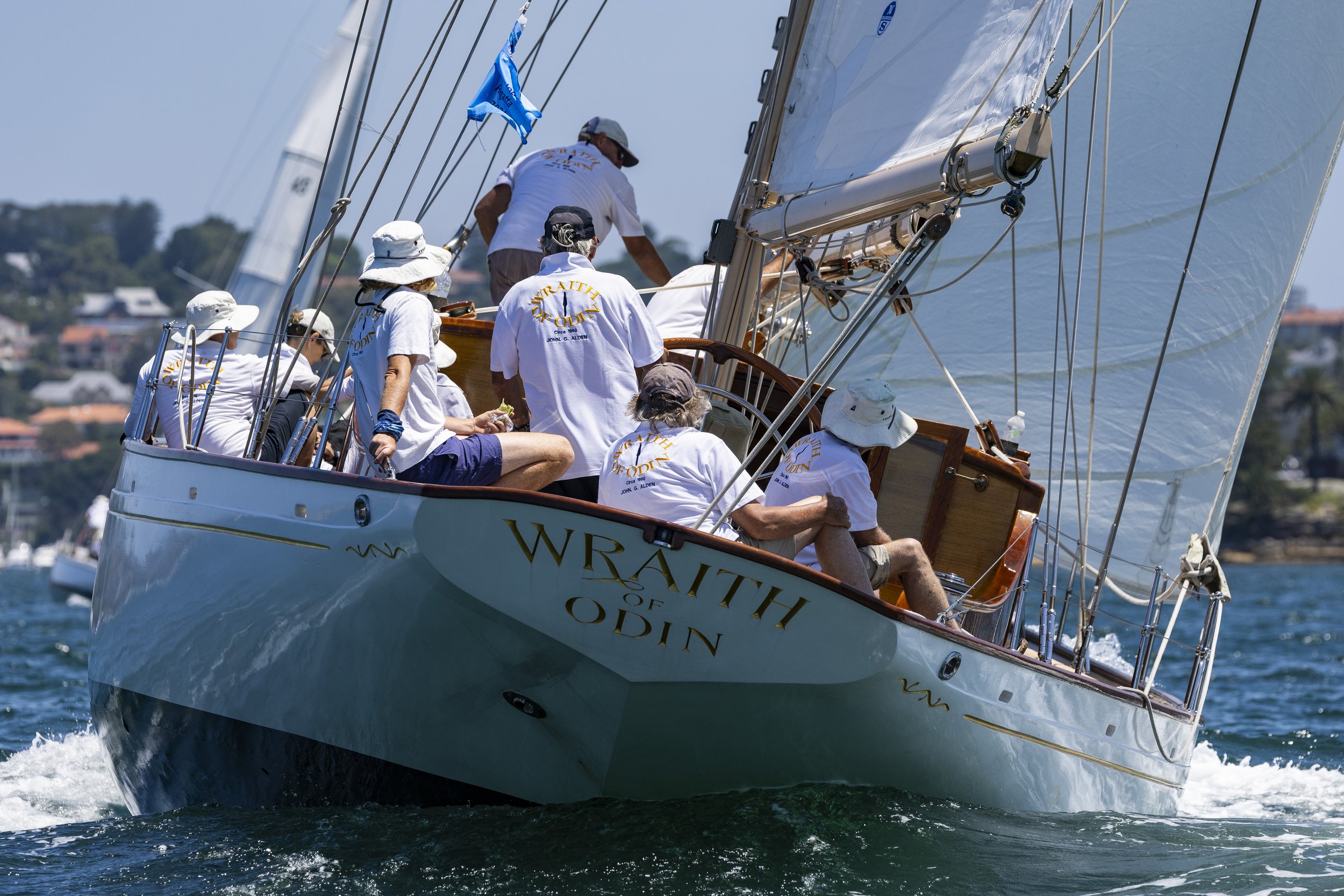
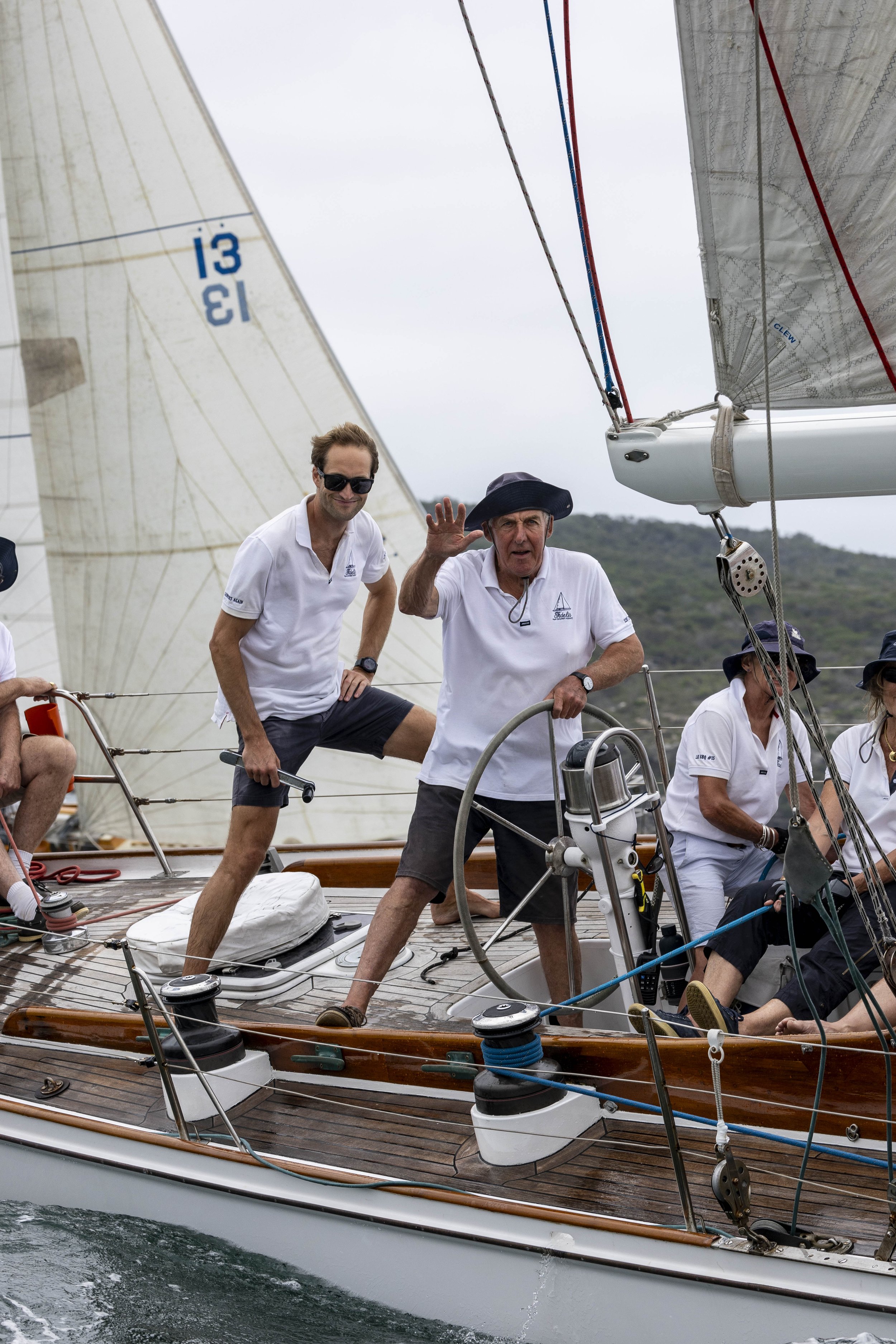
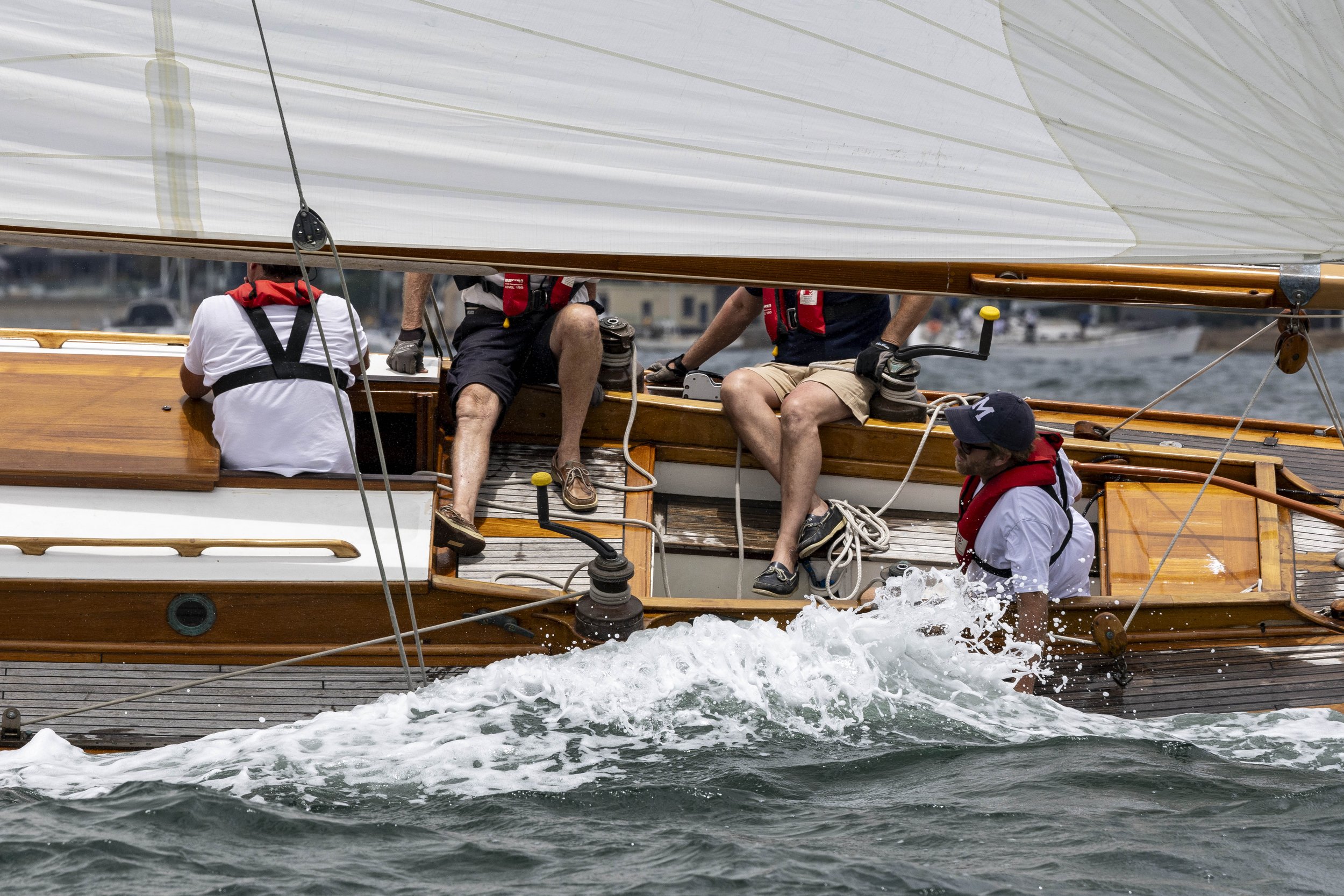
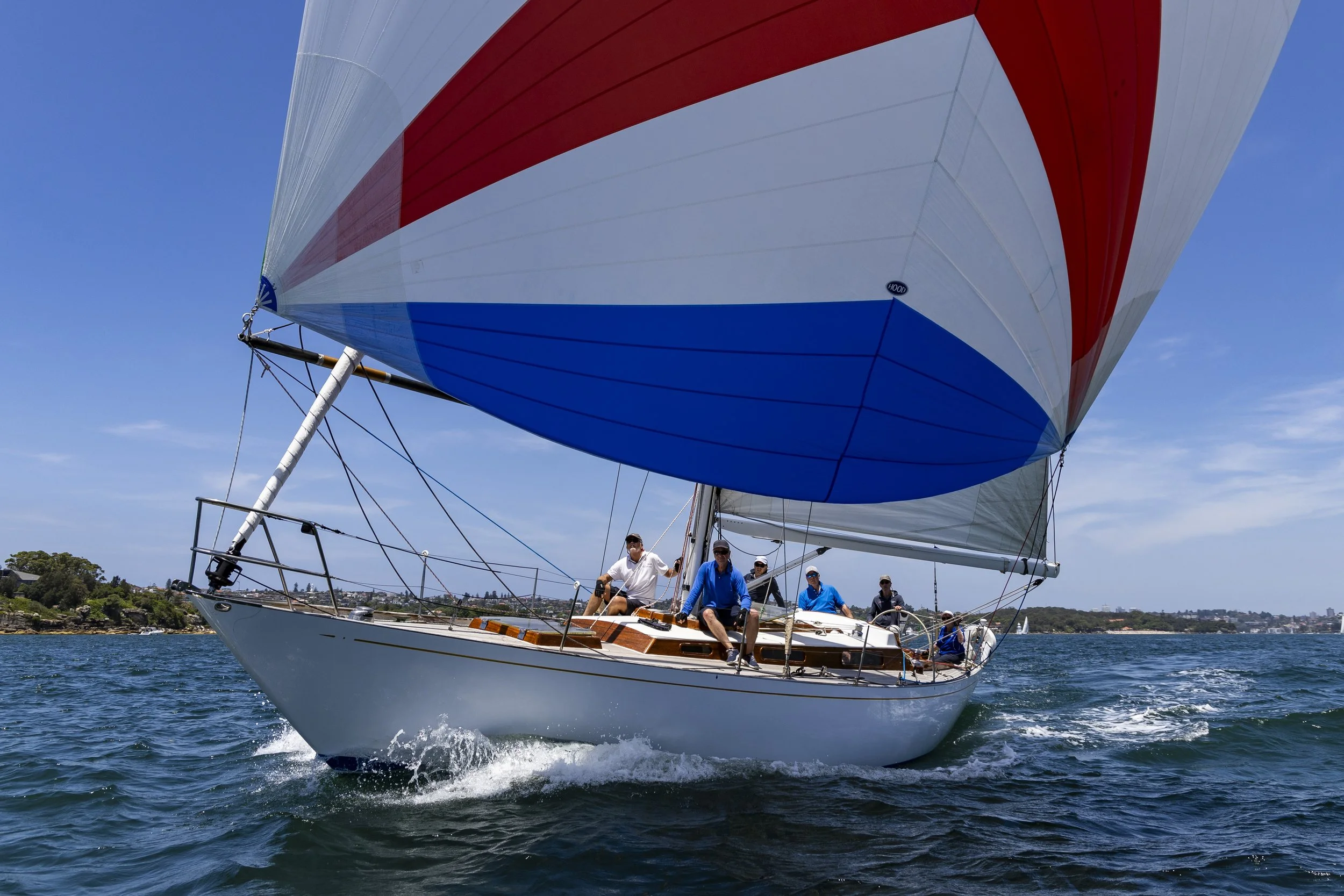
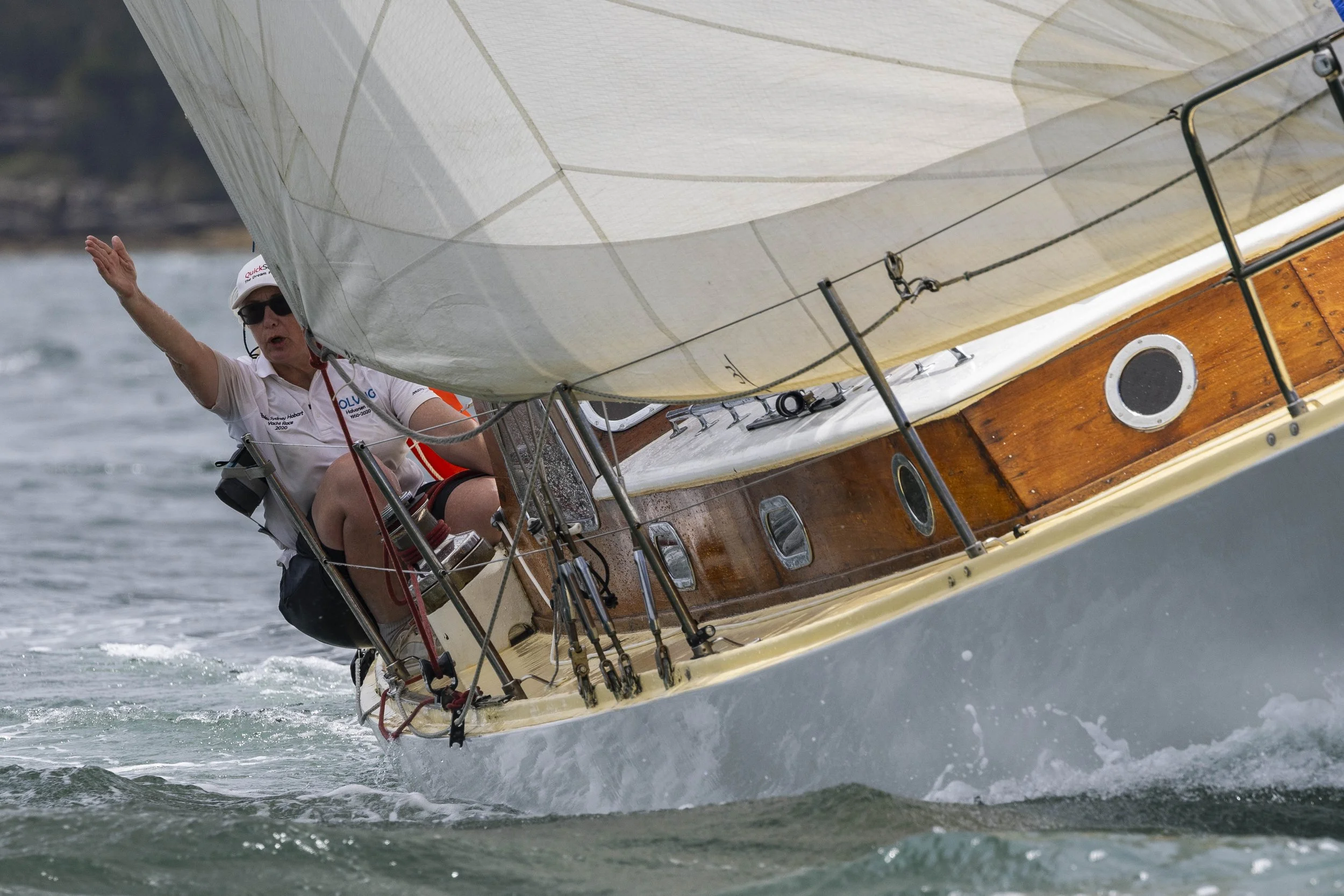
All Images Andrea Francolini/CYCA
From the CYCA Press release…
The best-looking boats in Australia will be on display this weekend (12–14 December) for the 2025 Club Marine Sydney Hobart Classic Yacht Regatta, hosted by the Cruising Yacht Club of Australia (CYCA).
A record fleet of 36 classic yachts is expected for the three-day regatta. The fleet is comprised of current and former Sydney Hobart Yacht Race competitors, all built prior to 1995. This will be the seventh edition of the event since its inception in 2019.
Former Sydney Hobart Overall and Line Honours winners return
Many yachts in this year’s fleet are etched deep in Sydney Hobart folklore. Many boats in the fleet are former Sydney Hobart Overall and Line Honours winners, still racing more than 50–70 years after their first Sydney Hobart.
Headline entries with Sydney Hobart Yacht Race Line Honours and Overall wins include:
Fidelis (1964) – 1966 Line Honours winner
Margaret Rintoul (1948) – Line Honours winner 1950 & 1951; set a race record in 1951
Nerida (1933) – 1950 Overall winner
Anitra V (1956) – 1957 Overall winner; placed second Overall in 1956, 58 and 59; sailed in the inaugural 1945 race
Love & War (1973) – Love & War was the Overall winner of the 1974, 78 and 2006 Sydney Hobart. The yacht will also compete in the Grand Veterans Division in the 80th edition of the Rolex Sydney Hobart
Wild Oats (1985) – Overall winner in 1993 and 2014
Solveig (1950) – 1953 Line Honours winner and 1954 Overall winner
“These boats hold some of the greatest stories in Australian yachting,” said David Champtaloup, Chair of the CYCA Classic Yacht Committee. “The level of care owners put into restoring and racing them keeps the history of the Sydney Hobart alive. They are spectacular to watch under sail.”
Champtaloup will compete on board his own classic yacht, the Robert Clark-designed Caprice of Huon (1951).
A 99-year-old proves age is just a number
One of the biggest human-interest stories of the weekend will be 99-year-old Australian yachting icon Gordon Ingate, racing on board Jasnar (1947).
Ingate, a former America’s Cup helmsman and multiple world champion, is regarded as one of the CYCA’s most decorated sailors.
Regatta schedule
Friday 12 December – Invitation Race, 1400hrs
Saturday 13 December – Pursuit Race, 1200hrs
Sunday 14 December – Scratch starts for all divisions, from 1200hrs
Sunday’s race will start at Cannae Point, Manly — the original starting line of the Sydney Hobart Yacht Race
Sunday 14 December – prizegiving at around 1530 at the Sydney Race Village
A Signet needs a home
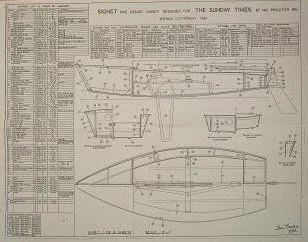
If you are in Western Australia, (or even if you are not) there’s a Signet dinghy being given away.
I wonder why they chose to spell it that way?
The Signet dinghy is a classic British sailing dinghy design that emerged in the mid-1950s. Designed by Ian Proctor in 1956, it was intended as an inexpensive, accessible boat that families and sailing newcomers could build themselves—often from kits supplied by Bell Woodworking. Its characteristic single-chine plywood construction kept costs low and made amateur building practical, while still delivering a lively and responsive sailing experience.
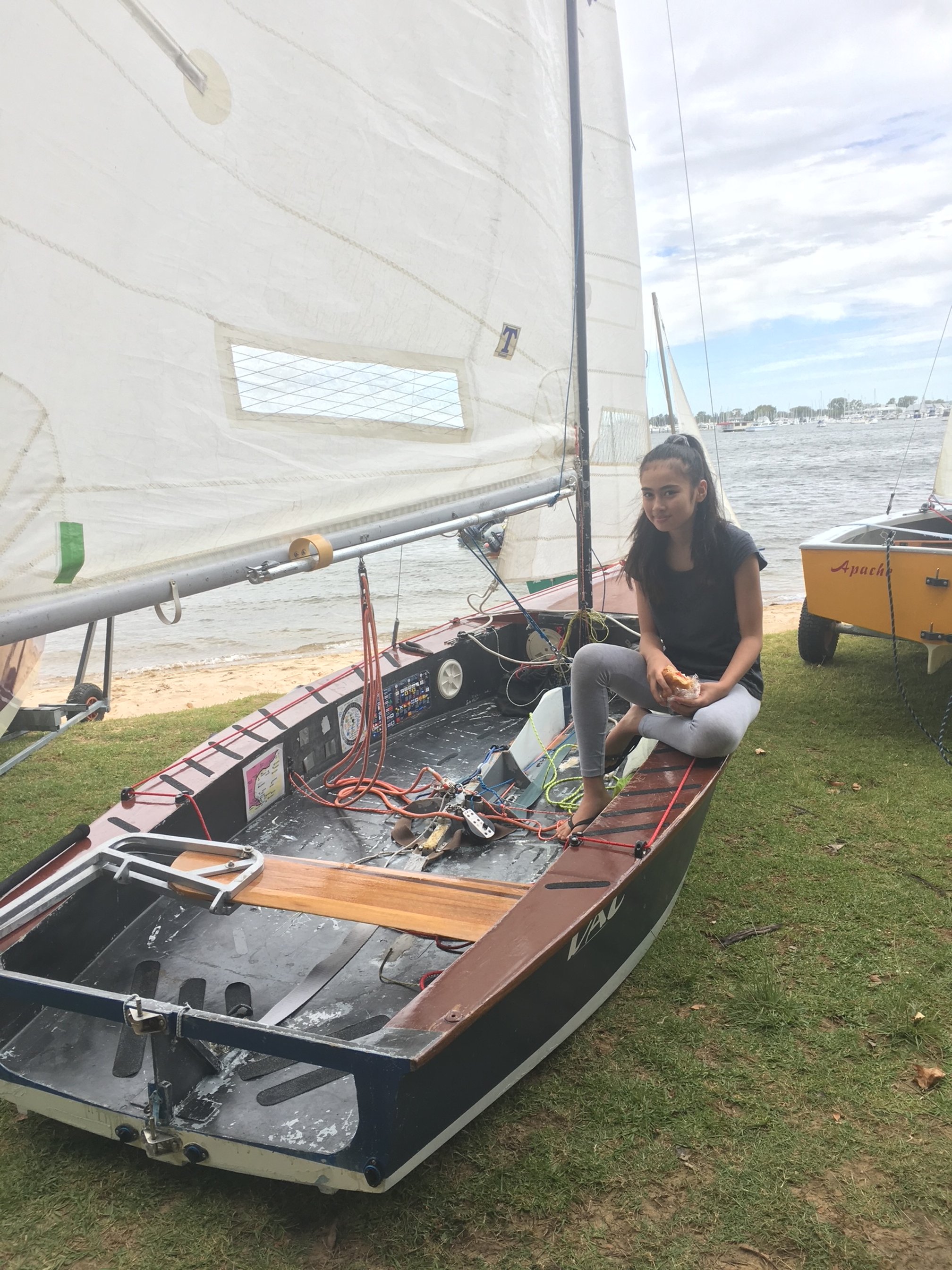
This one is in Kenwick, Perth and is complete apart from needing a new set of sails. Contact Mark Mackay to arrange pick up or delivery.
Students Navigate Toward Hawaiʻi’s Future
From Civil Beat, a news organization dedicated to cultivating an informed body of citizens, all striving to make Hawaiʻi a better place to live.
By Kevin Fujii
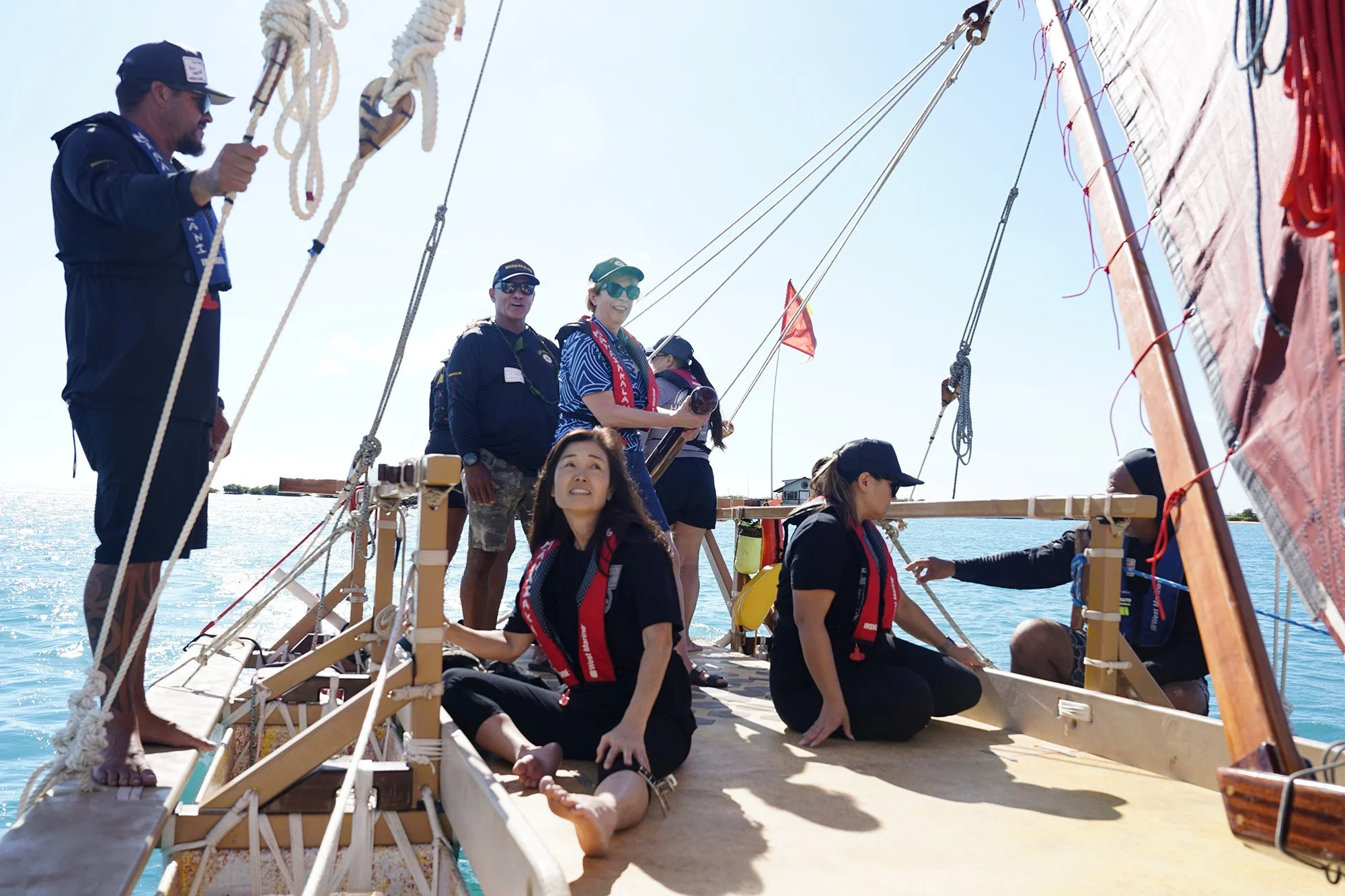
Kevin Fujii/Civil Beat/2025
Teaching students Hawaiian voyaging traditions brings cultural practices and place-based learning to the forefront of their educational journey. It also helps those students develop a “navigator’s mindset,” which can boost their confidence and leadership skills, plus emphasize being stewards of the ocean, land and those around them.
That’s the impetus behind the state Department of Education’s burgeoning Hoʻākea initiative, which is already bringing hundreds of local students aboard the decks of double-hulled voyaging canoes lashed and fashioned in the ways of Hawaiʻi’s kūpuna, or ancestors.
“We are witnessing something extraordinary in Hawaiʻi: the power of community, teachers and students coming together through the groundbreaking Hoʻākea programs,” Polynesian Voyaging Society CEO Nainoa Thompson said in a statement ahead of the latest such event held last week on Mauliola Ke‘ehi, or Sand Island. “What’s happening here is transforming education in ways that are profound and deeply positive.”
“Hoʻākea has galvanized our teachers and communities around the importance of ʻāina-based and waʻa-based learning and the impact has been remarkable,” Thompson added. “It’s inspiring to see students being introduced to a way of learning that integrates science, culture, tradition and place. These lessons are strengthening our communities and, most importantly, empowering our children with the knowledge and courage to make choices that will care for Hawaiʻi and the world.”
Getting the most out of Modern Materials using Old-World Rigging Techniques
The AWBF continues to release its 2025 Symposium talks. This week its Bob Downes, a rigger based in Port Townsend, Washington, USA. He has a background working as a shipwright and shipboard engineer, and has been focused on rigging since 2013.
With experience gained rigging modern and traditional vessels with Brion Toss, his recent projects include the spars and rig of the 17th century reproduction Maryland Dove and the restoration of 1910 English cutter yacht Tally Ho.
The constant challenge in designing a modern “traditional rig” is to balance aesthetics with robustness, periodicity with longevity, ease of maintenance with economy, et cetera. The most elegant solutions tend to include a blend of old-world techniques with modern materials, or vice versa. The features of high modulus fiber rope products are well understood, and combining them with traditional skills like seizing, service and selvagees is about more than just covering them up – it can maximise their versatility and enhance their best qualities to the fullest.
Listen to rigger Bob Downes talk about why new materials should bring old techniques back into the ditty bags of modern professional riggers, using as an example some of the design decisions made while rigging Tally Ho.