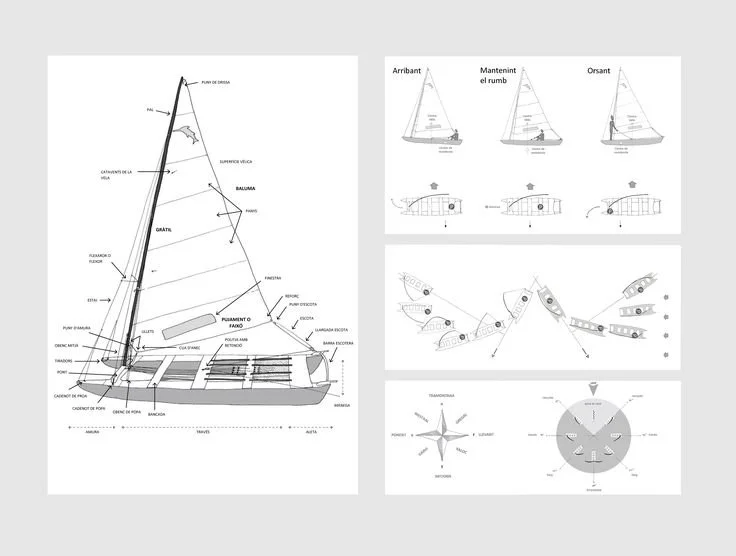
Patín a Vela
Last week I was in Barcelona. It’s a long story but we had a couple of days to fill. We walked up the hill just to the south west of the port called Montjuic, with stunning views over the town and the Mediterranean.
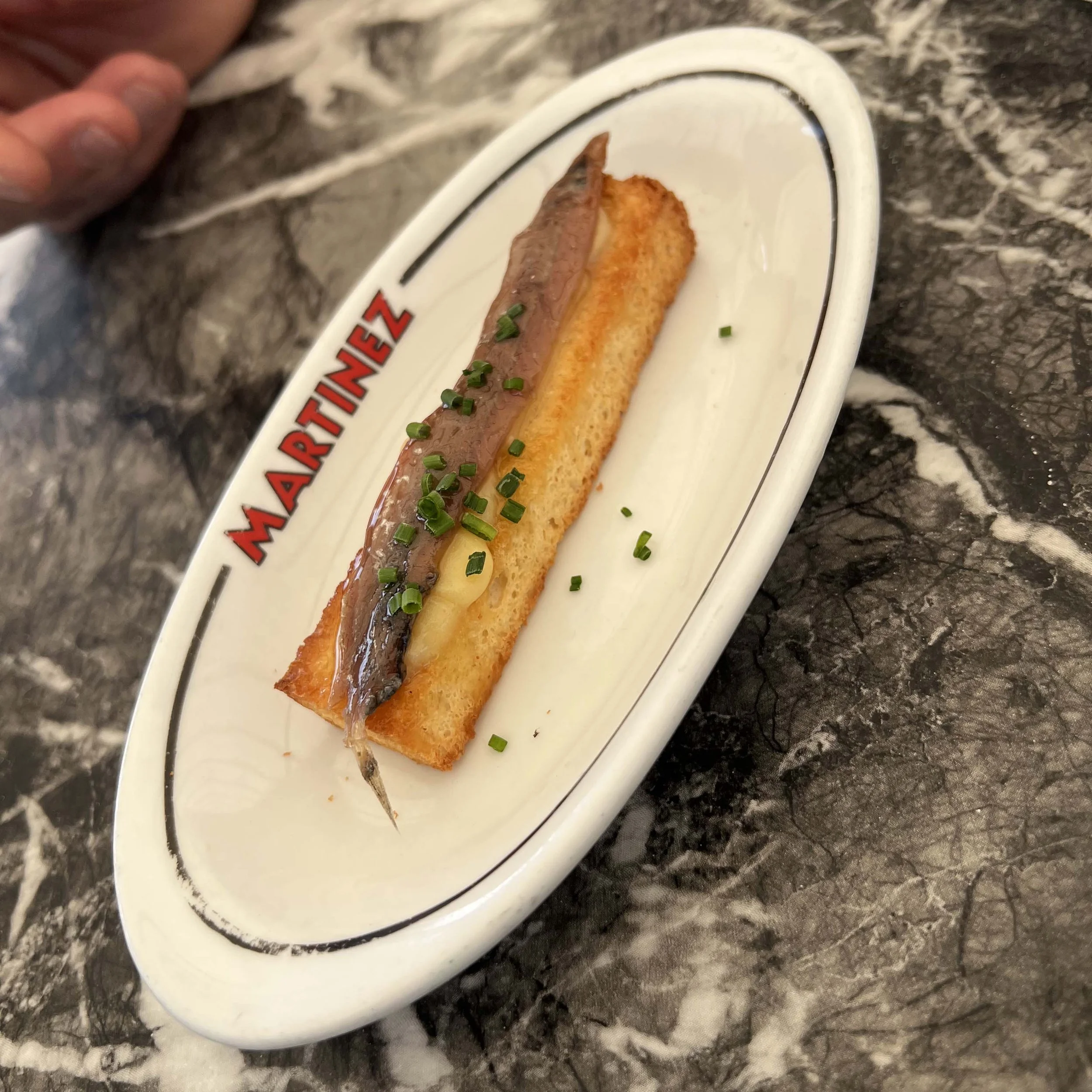
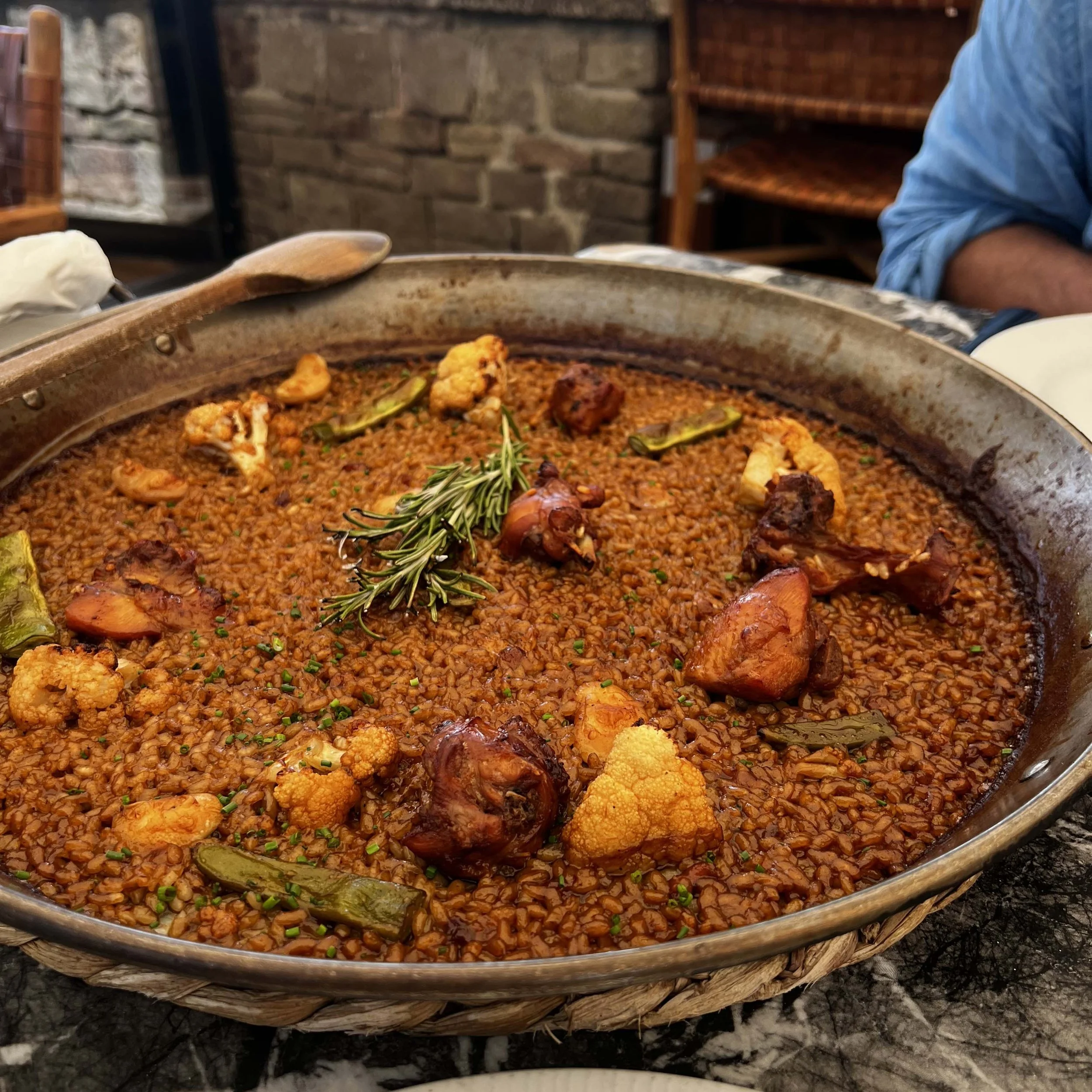
There’s a small restaurant at the top called Martinez. It’s a cliche, but we ordered Paella for lunch (rabbit and chicken and a few big white beans but NEVER chorizo or mussels) and it arrived simmering and crunchy, understated and richly satisfying.
After the meal we donned our metaphorical tourist hats and descended to the port on the cable car that runs from Montjuic to the beach at La Barceloneta. While rolling through the sky, I looked out the the south where more than a dozen identical sails were racing. It was hard to tell what the class was at this distance. They were about the size of an Etchells or a Star. But that didn’t seem right. The rig was too far forward and the lines of the hull looked wrong. They were like nothing I had ever seen.
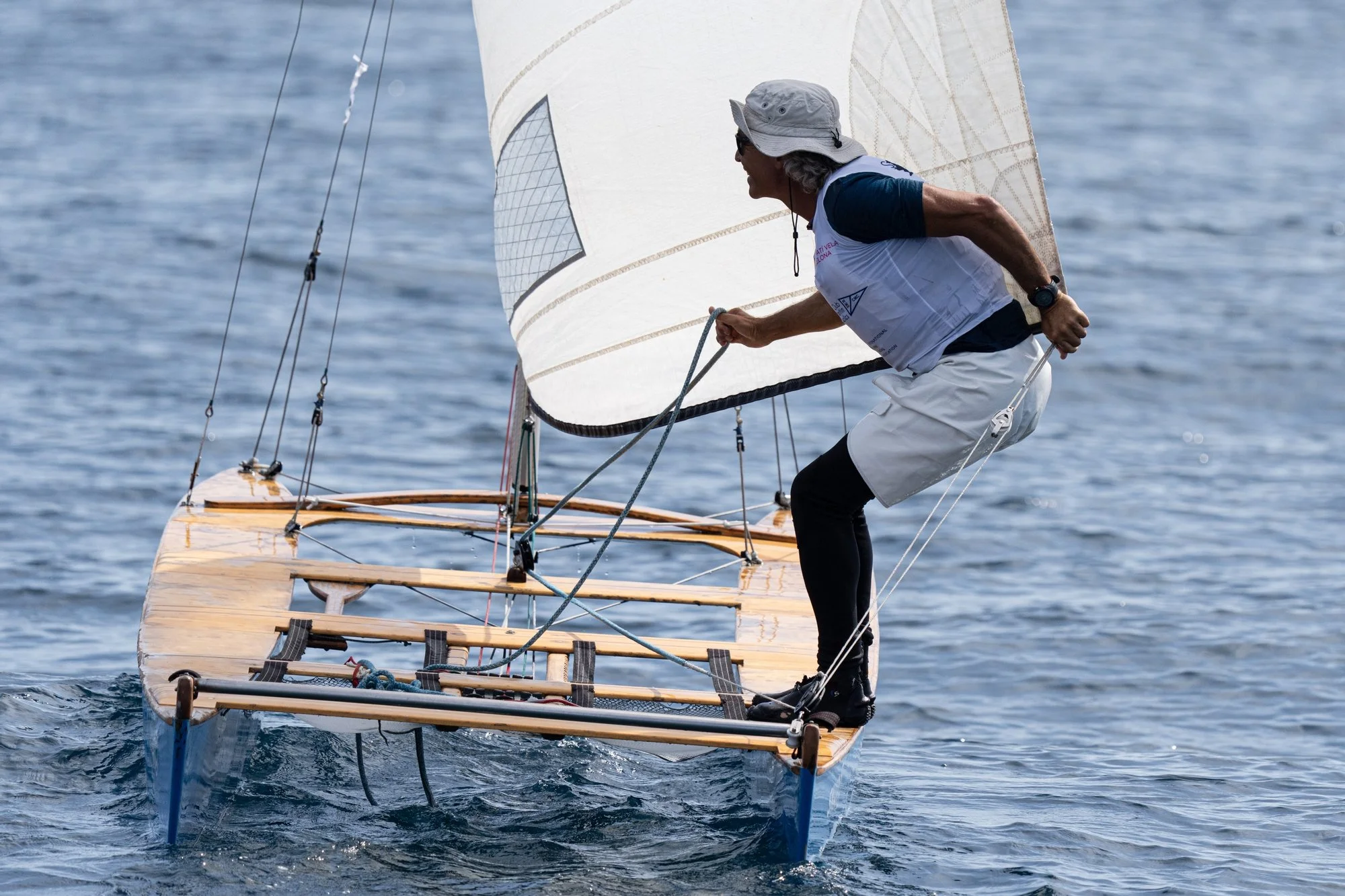
Several times a week in Barcelona, dozens of amateur sailors get together to enjoy racing a distinctly Catalonian craft whose origins date back to the beginning of the last century.
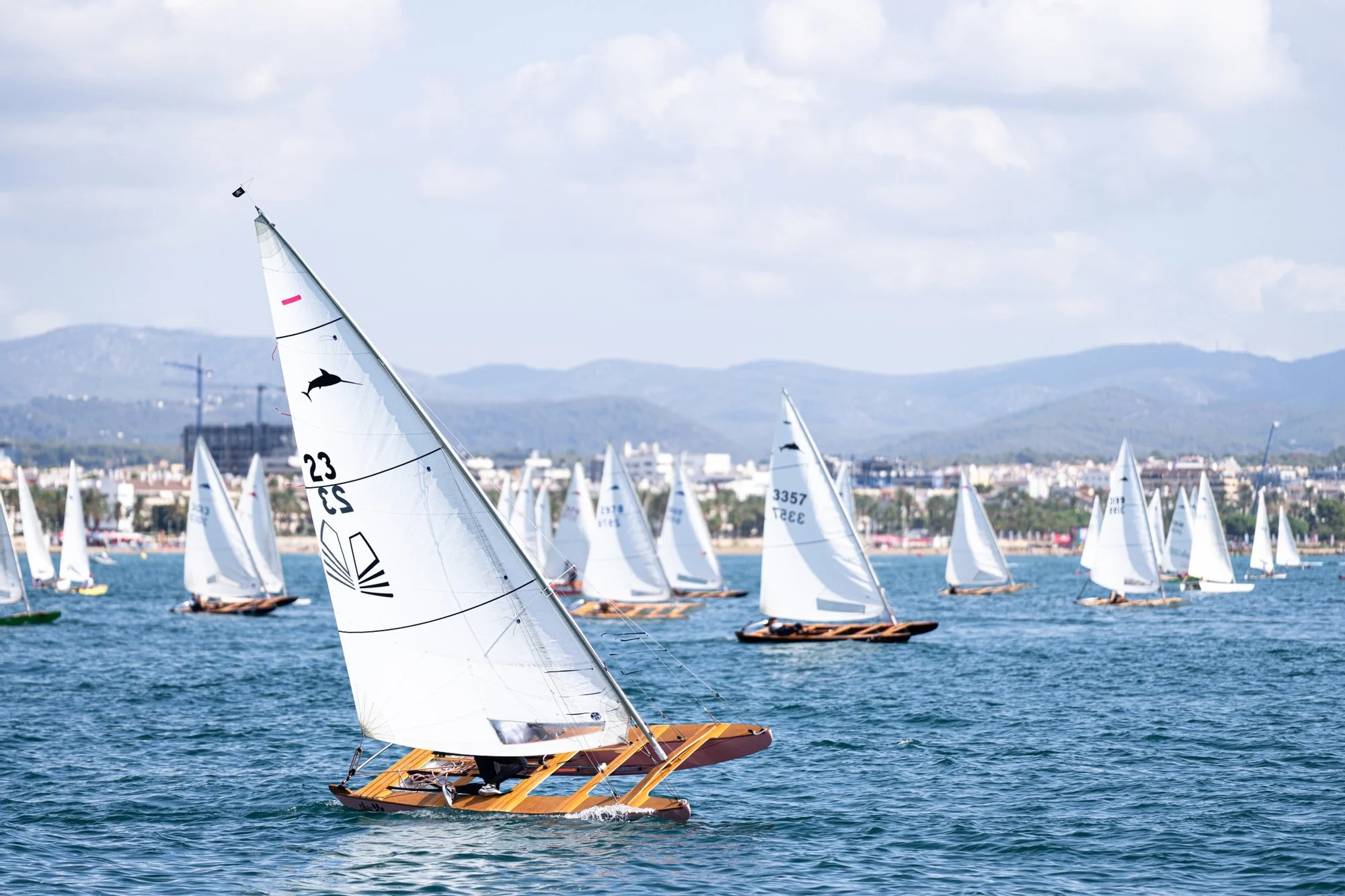
In 1942, the Mongé brothers from Catalonia first started experimenting with wooden masts and sails, placing the foot of the mast far forward and introducing the dovetail mainsail. The addition of a steel rack across the stern, a feature that is still there today, allowed the batten-less mainsail to be sheeted wide but could, crucially, be flattened for upwind work.
As the techniques developed so did the control lines and on today’s craft, the Patí de Vela ‘skates’ feature an array of control systems that can alter the forestay tension on each tack (the boats have two forestays, one mounted on each hull) to control the bend of the mast and aid direction.
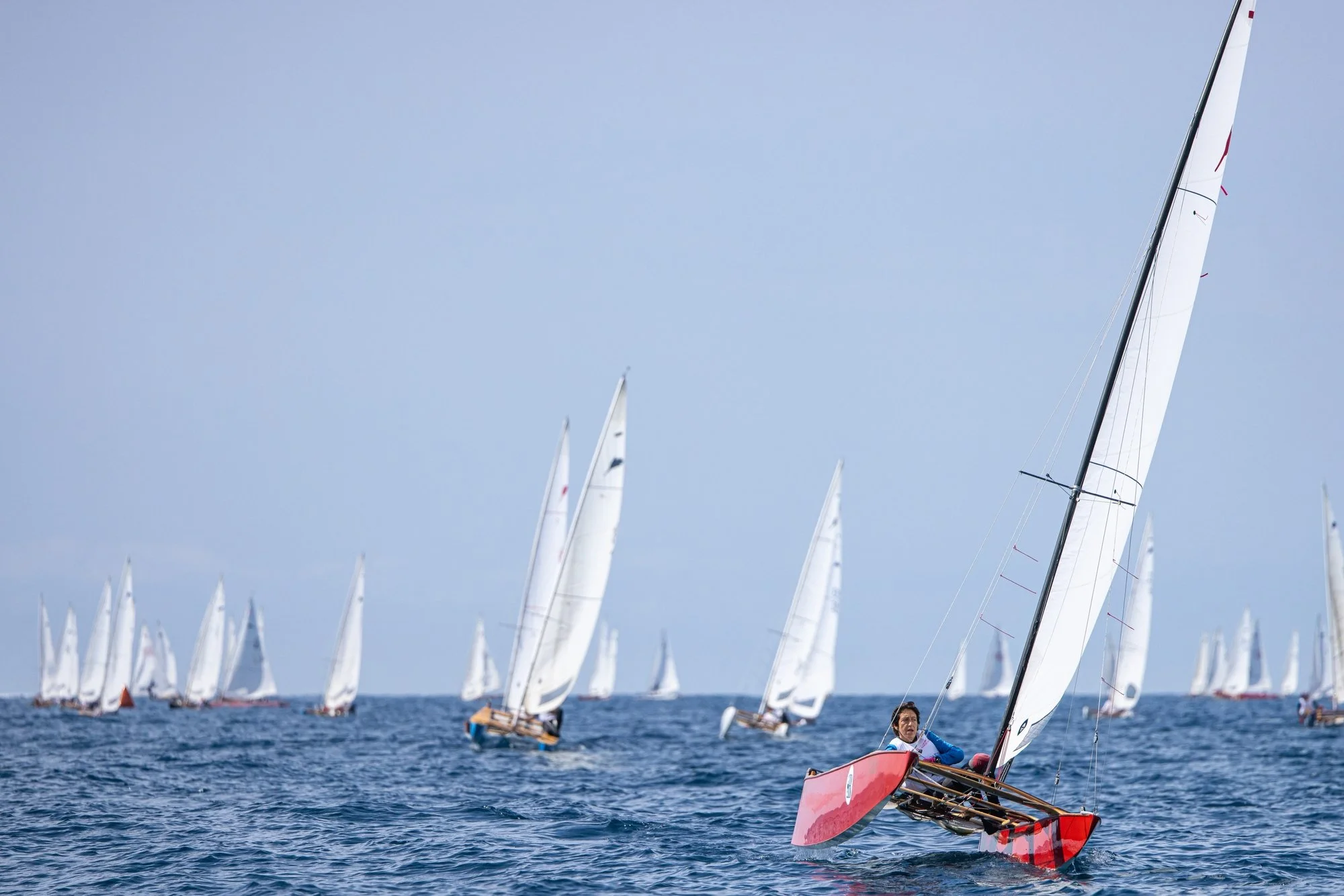
About 40 ‘skates’ are built every year and although the original boats were built entirely of wood (hull and mast), now hybrid skates have gained ground, with fiberglass floats, a wooden deck and an aluminium mast.
The biggest factor for controlling these boats is body weight. Moving forward to luff-up and aft to bear-away with the single sailor moving across the five beams that support the hulls. The sailing style has naturally adapted with the ages as in early videos, sailors can be seen standing upright and precariously stepping forwards and back.
Today, the sailors of these fascinating craft are more often found lying across the five hull planks and making small body movements and ‘crawls’ to shift distribution. In lighter airs there is still a beautiful balancing technique of standing up whilst flying the windward hull that proves to be very fast upwind with minute adjustments on the mainsail to keep the boat at optimum pace.
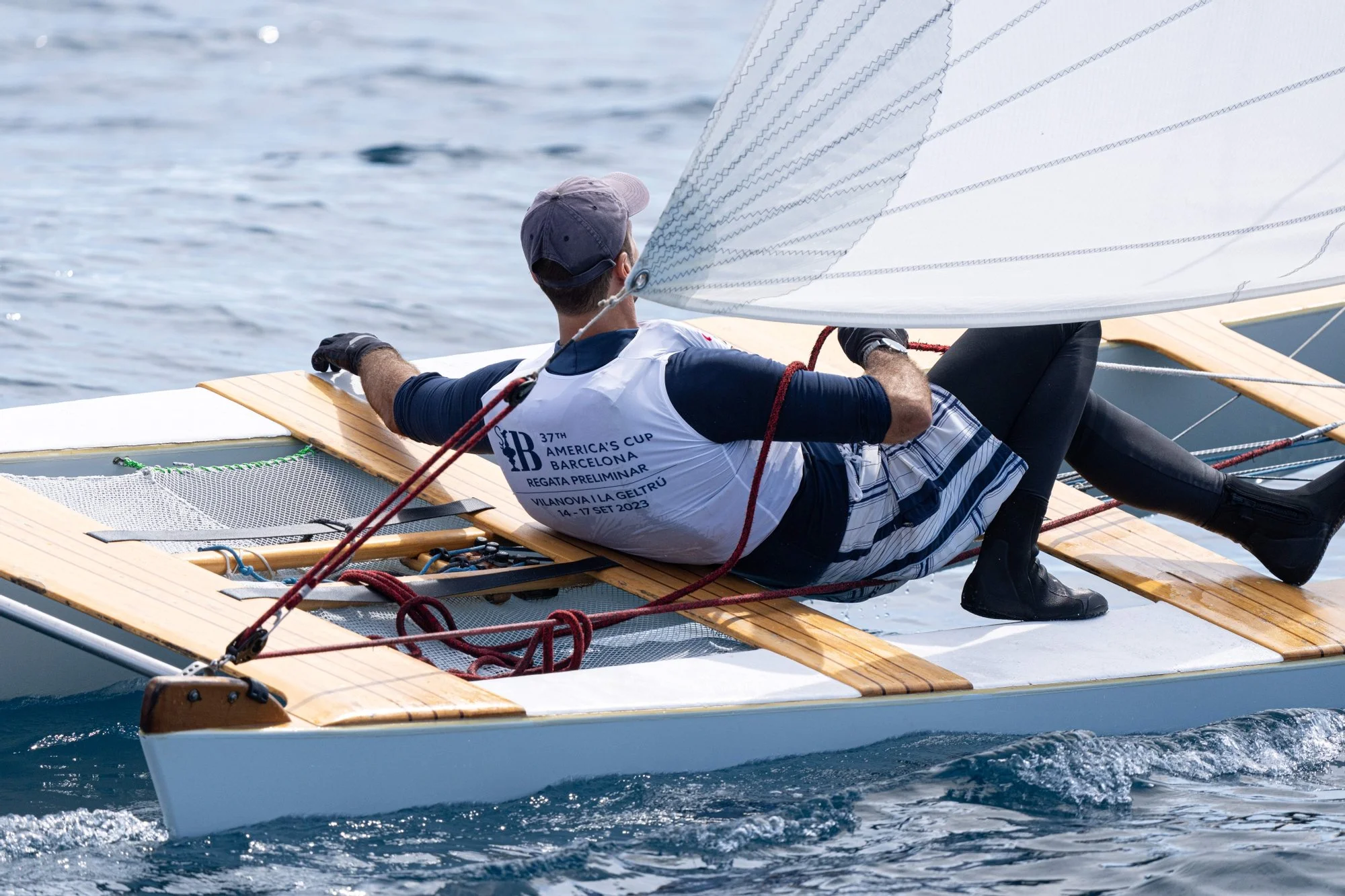
All the control systems lead back to the ‘piano’ an area at the midpoint of the craft between the hulls on the crossbeams that delivers the crucial free-flying cunningham and stay adjustments whilst the mainsheet feeds forward and is trimmed from just aft of the mast so the helm can keep looking forward. It’s a boat that rewards technique with many sailors spending a lifetime perfecting their balance and control, whilst the racing is fast and desperately close all the way through the fleet.
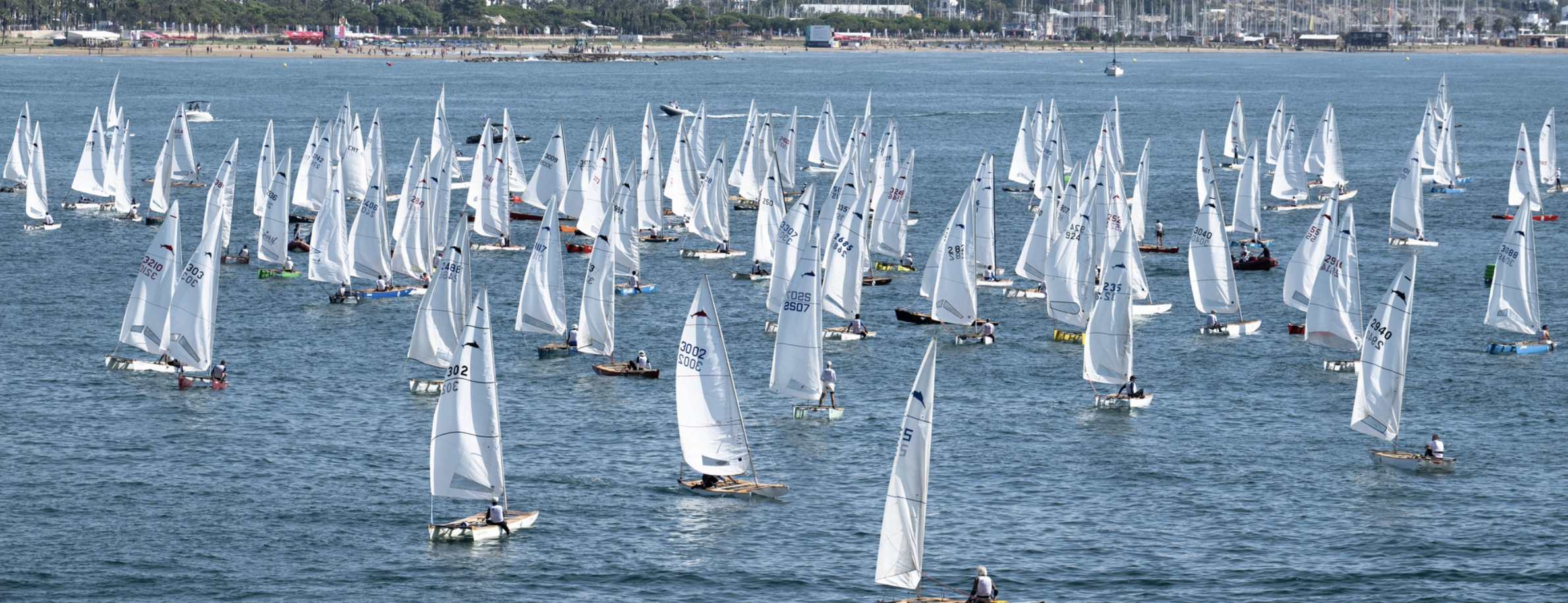
As we walked from the base of the cable car, north east up towards the Olympic Port, where Mitch Booth and John Forbes won a bronze medal in the Tornado Class in 1992, the small catamarans finished their last race and started coming ashore. The few English speakers amongst the skippers were happy to talk about their unique craft. Explaining the steering and trim and advocating for these eccentric machines. They mentioned that there are now fleets in France, Holland and Belgium. How about we build a few here in Australia!