
'Slick' Survival Move Jesus May Have Tried
We love this piece of writing by Peter Swanson AKA Loose Cannon
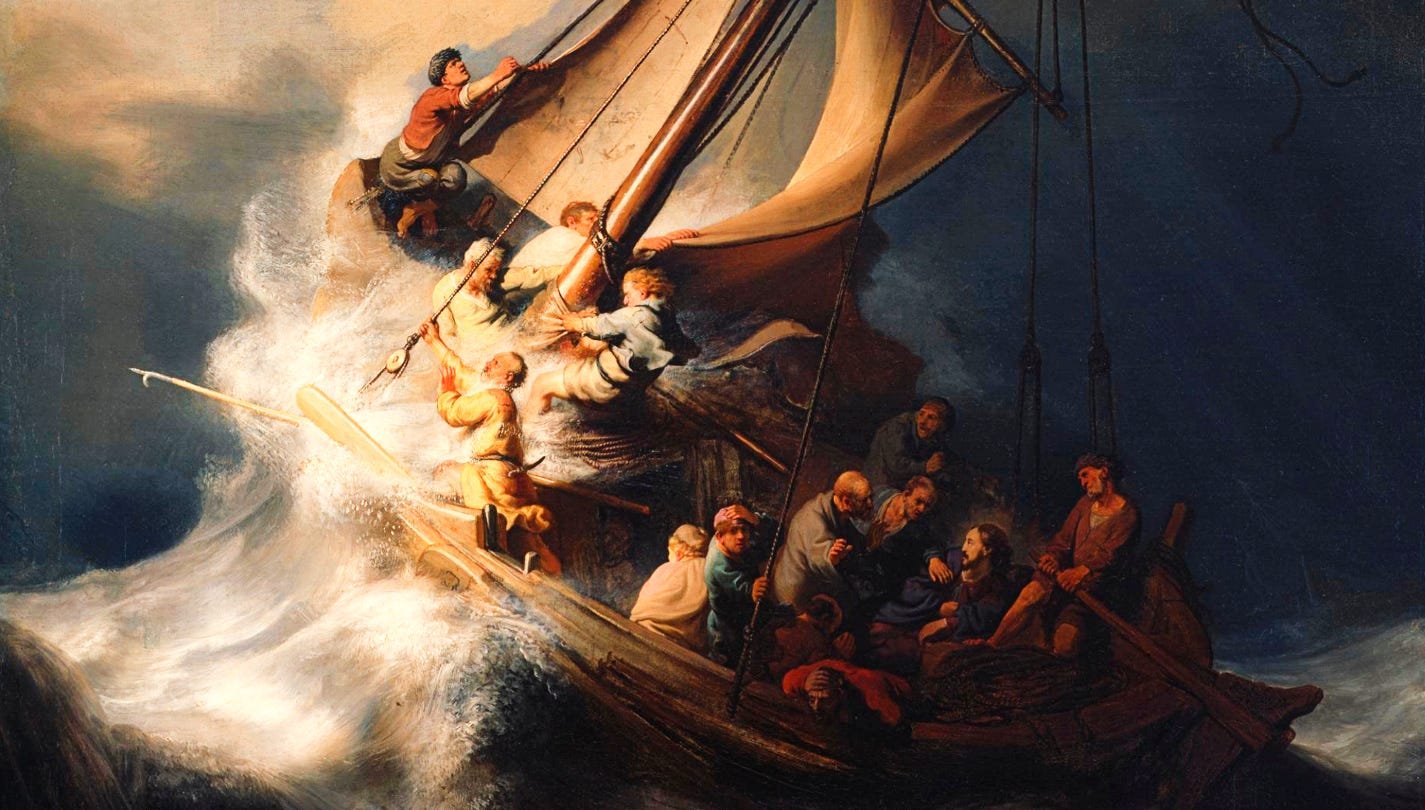
Christ in the Storm on the Sea of Galilee is a 1633 oil-on-canvas painting by the Dutch Golden Age painter Rembrandt. It was based a description of the Gospel of Mark about how Christ calmed the water. A rational explanation is that Jesus—the only calm guy on the boat—had applied the old sailors’ trick of using “storm oil,” which helps prevent waves like this one from breaking. One scholar has suggested oil may also have played a role in preserving the vessel that ran into foul weather while carrying St. Paul to Rome.
While writing a story recently about a harbor plagued by petroleum spills, I was reminded of being a kid and reading about mariners using oil to help survive offshore storms. It was the 1960s, so the magazine might have been in Yachting before it transmogrified into the sop to billionaires it is today.
“Storm oil” could be deployed upwind in a container attached, for example, to a sea anchor, from which it slowly released its contents. Like nutmeg on butternut squash, storm oil was effective even when applied in tiny amounts.
And, as the painting above was meant to suggest, the technique has been used since biblical times (the Sea of Galilee is notoriously subject to sudden violent wind-driven waves). As recreational boating was trending upward in the last century, boating magazines were launched to serve the new market, and one service to readers was to pass along wisdom of professional mariners.